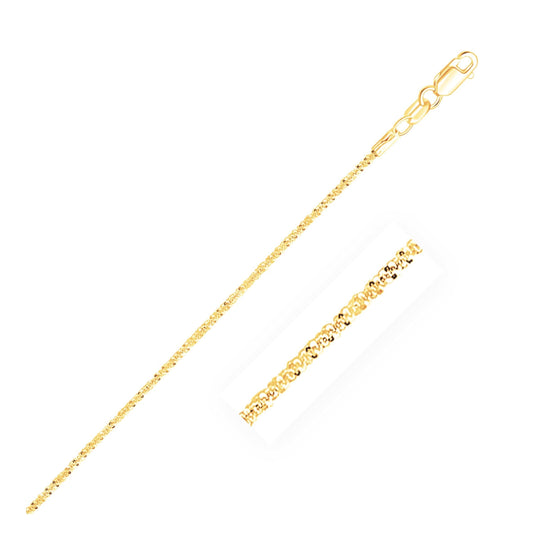
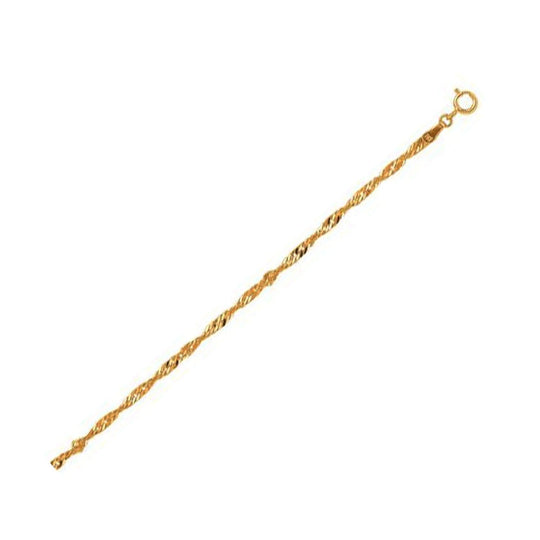
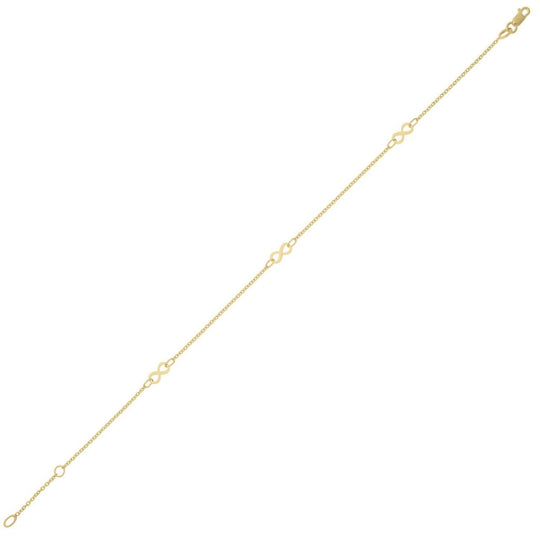
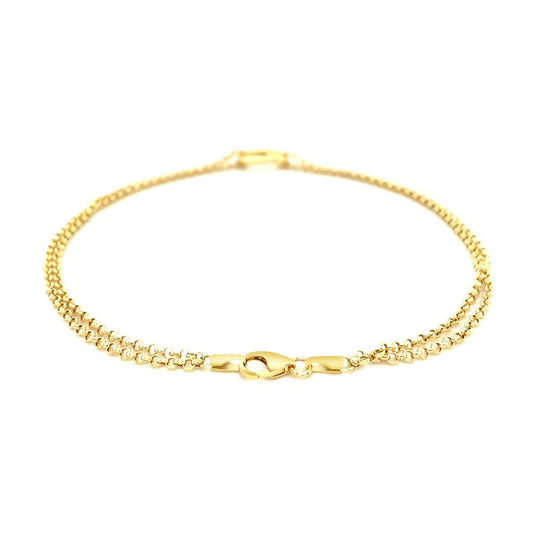
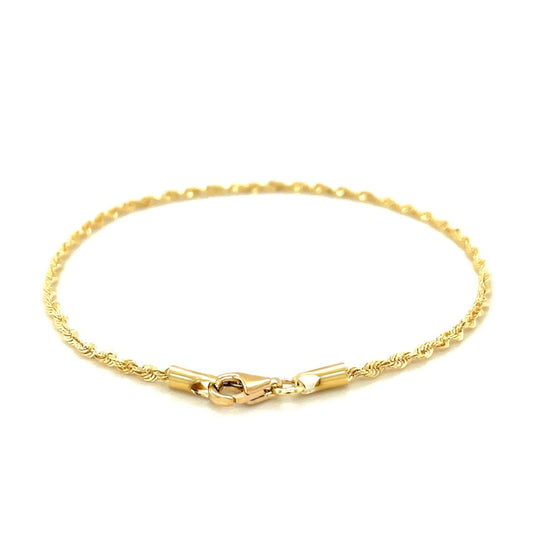
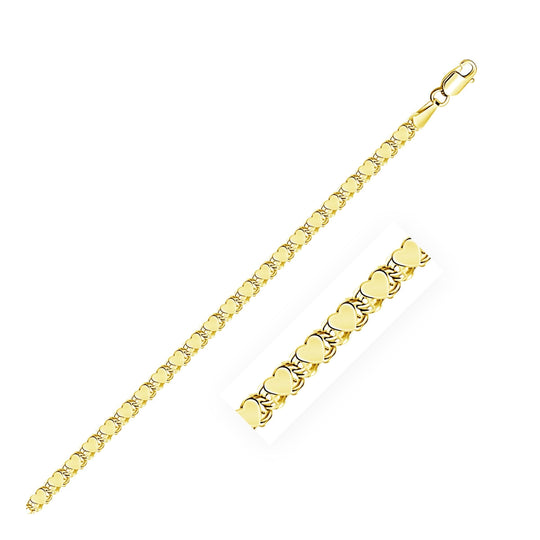
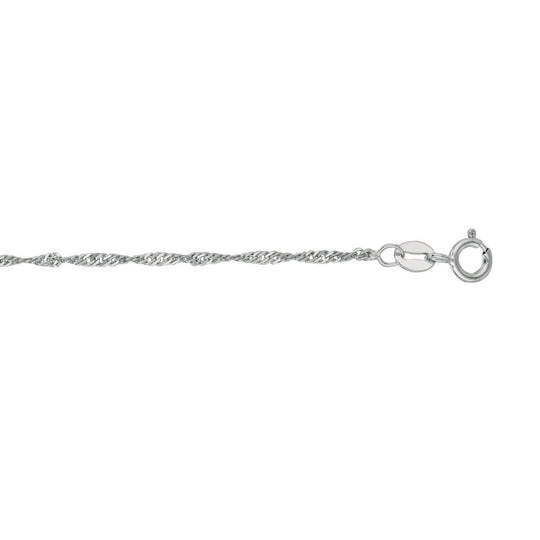
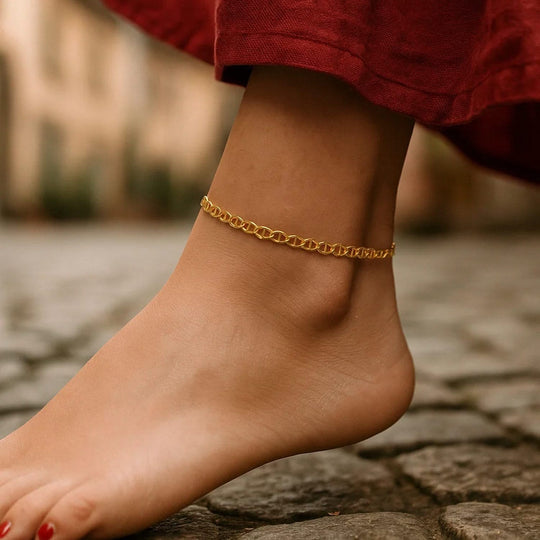
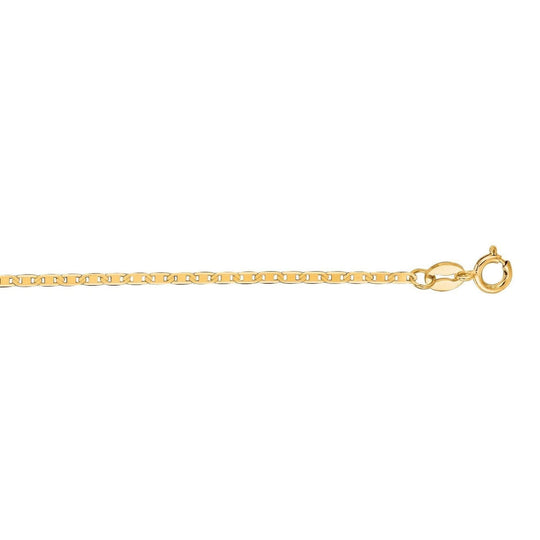
Anklets require a metal that holds up to consistent movement and occasional contact, and 10K gold's alloy content handles daily wear reliably. Oath's 10K gold anklets are available in yellow, white, and rose gold in plain and stone-accented designs. Ships free on every 10K gold anklet order, returns accepted within 30 days.
What Are the Advantages of 10k Gold Anklets for Daily Wear?
10k Gold Anklets and Why Alloy Hardness Matters at the Ankle
10k gold contains 41.7% pure gold, with the remainder being alloy metals that increase hardness and scratch resistance. At the ankle position, where jewelry is exposed to more incidental surface contact than rings or necklaces, alloy hardness is a more practical consideration than it might be at other wear positions. 10k gold's higher alloy content produces a harder construction that better resists the surface marking that accumulates over time through daily ankle wear. For a flat, interlocking anklet style suited to this kind of daily ankle wear, browse mariner anklets.
10k Gold Anklets vs. the Same Style in Rings
10k gold in a ring and 10k gold in an anklet are the same alloy: 41.7% pure gold with the same hardness, colour, and tarnish resistance. The karat grade does not change between jewelry categories. An anklet and a ring made from 10k yellow gold will match in tone and wear characteristics, making them natural companions in a coordinated 10k fine jewelry set. For the complete range of ankle jewelry styles across all karat grades and metals, browse anklets.
10k Gold vs. Sterling Silver for Ankle Jewelry
Sterling silver is harder than 10k gold in practical terms, resisting surface marking effectively, but is prone to tarnish with air and moisture exposure. 10k gold does not tarnish and maintains its colour without polishing or anti-tarnish storage. For buyers who want ankle jewelry that requires minimal maintenance beyond occasional cleaning, 10k gold has a practical advantage over silver despite the higher initial cost. For buyers building a coordinated 10k fine jewelry set, rings shows how the same karat reads in the most widely worn fine jewelry category.
10k vs. 14k Gold Anklets: The Practical Differences
10k gold is harder and more scratch-resistant than 14k but has a lighter, less warm tone with lower gold content. 14k gold provides a richer colour and higher material value in a still-practical alloy for daily ankle wear. The choice between 10k and 14k for ankle jewelry comes down to preference for maximum durability versus richer gold appearance. Both are proven daily-wear alloys. For anklets that pair yellow and white gold in a single piece, browse two tone gold anklets. Every order ships free with a 30-day return policy.
Frequently Asked Questions
What does 10k gold mean in an anklet?
10k gold contains 41.7% pure gold, the remainder being alloy metals such as silver, copper, and zinc. In the United States, 10 karat is the minimum gold content permitted for a piece to be legally sold as gold jewelry. The higher alloy content makes 10k gold harder and more scratch-resistant than higher-karat gold alloys. For ankle jewelry, which is exposed to more surface contact than most worn pieces, this hardness is a practical advantage.
Is 10k gold durable enough for ankle wear?
10k gold is among the most durable gold alloys for ankle jewelry because the lower pure gold content produces a harder alloy that resists surface scratching and deformation better than 14k or 18k. Ankle jewelry is exposed to more incidental contact with footwear, floors, and outdoor surfaces than rings or necklaces, making alloy hardness a more relevant consideration than at other jewelry positions. The trade-off is a lighter, less warm gold tone compared to higher karat grades.
How does 10k gold compare to other gold karat grades?
10k gold contains 41.7% pure gold, 14k contains 58.3%, and 18k contains 75%. Higher karat grades have richer colour and higher material value but are softer alloys more prone to surface marking. 10k gold's harder alloy makes it practical for daily-wear ankle pieces but produces a lighter, less saturated gold tone. Browse gold jewelry for a full view of gold karat grades across jewelry categories.
Is 10k gold used in other fine jewelry beyond anklets?
10k gold is used across most fine jewelry categories including pendants, rings, earrings, and bracelets, not just anklets. The karat grade applies to any gold construction regardless of jewelry type. Browse 10k pendants for pendant options in 10k gold, which use the same alloy standard and carry the same durability advantages as 10k ankle jewelry.
Do 10k gold bracelets use the same alloy as 10k anklets?
10k anklets and 10k gold bracelets use the same alloy: 41.7% pure gold with the same hardness, colour, and tarnish resistance across both jewelry positions. A 10k yellow gold bracelet worn on the wrist and a matching 10k anklet at the ankle create a coordinated fine jewelry set with identical material standards. The same care requirements, tarnish resistance, and wear characteristics apply at both positions. Browse bracelets for 10k gold bracelet options suited to coordinating with a 10k ankle piece.
Can a 10K gold anklet be worn while swimming?
10K gold anklets can be worn while swimming in fresh water or the ocean without risk of damage to the metal. 10K gold does not tarnish or corrode from water exposure under normal conditions. Chlorinated pool water is a more relevant concern because extended exposure to high chlorine concentrations can gradually degrade gold alloys over time; occasional pool exposure is unlikely to cause visible damage, but regular swimmers are better served by removing fine gold jewelry before entering treated water.
How do I measure for an anklet size?
Anklet sizing starts with the ankle circumference measured at the narrowest point, then adding 0.5 to 1 inch for comfortable drape. The result gives the target finished anklet length. Standard anklet lengths range from 9 to 11 inches, with 10 inches suiting the widest range of ankle sizes. Buyers with smaller ankles typically fit 9 to 9.5 inches; buyers with larger ankles or who prefer lower-riding placement often fit 10.5 to 11 inches.
What 10K gold chain styles pair with an anklet?
10K gold anklets are available in chain styles including Cuban link, rope, box link, and cable link. Cuban link and rope chains are the most commonly purchased because their interlocking construction provides flexibility at the ankle without excessive bulk. Box link and cable chain anklets are popular for a lighter, more delicate look. The gauge determines visual weight: 1.5 to 2mm gauges read as fine jewelry; 3mm and above read as a statement piece.
Do 10K gold bangles and anklets work as a matched set?
10K gold bangles and anklets share the same alloy grade, which means the metal tone and finish match across both pieces without karat mismatches. A yellow 10K bangle worn at the wrist coordinates visually with a yellow 10K anklet at the ankle, producing a matched pair from wrist to foot. The rigid form of a bangle contrasts the flexible chain construction of most anklets, giving the pairing a varied texture at different points on the arm and leg. For bangle options in 10K gold, browse the bangles category.
What is an oval-link bracelet and how does it differ from anklet chain styles?
10K anklet chains differ from oval-link bracelets in link pattern and drape. Ankle chains typically use tighter link patterns such as Cuban, rope, or box links, which provide flexibility and close drape at the ankle. Oval-link construction uses elongated open rings connected end to end, producing a wider, flatter silhouette more common at the wrist. Both styles can be worn at either position, though oval-link is the less common anklet format. For oval-link designs, browse the oval bracelets category.
Use left/right arrows to navigate the slideshow or swipe left/right if using a mobile device
choosing a selection results in a full page refresh
press the space key then arrow keys to make a selection