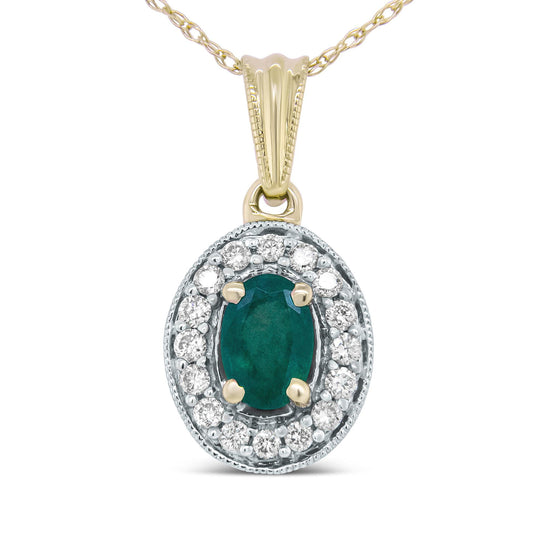
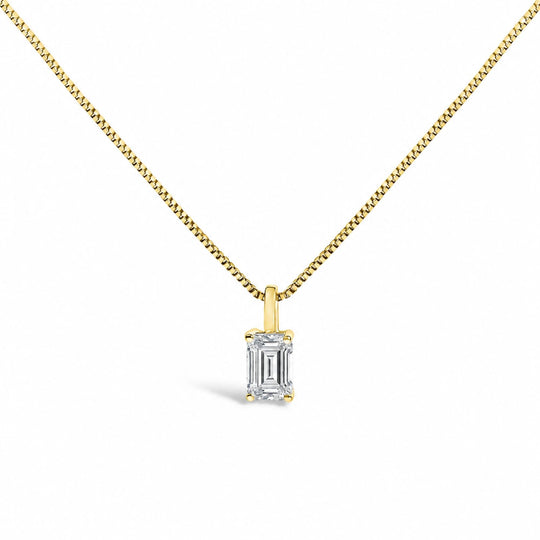
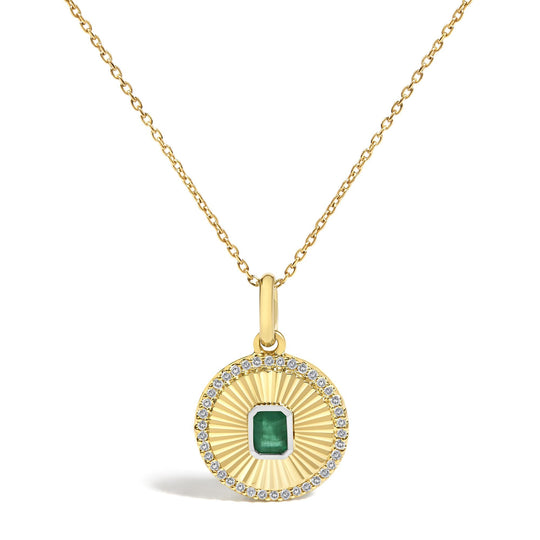
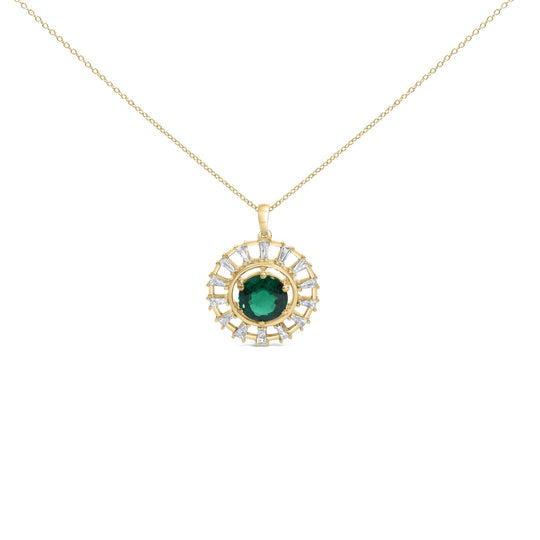
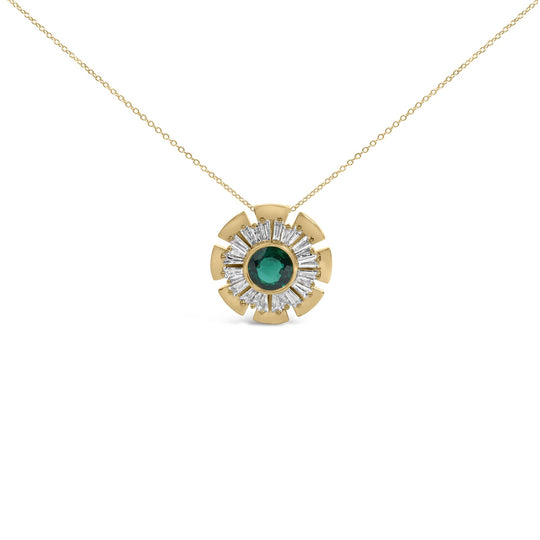
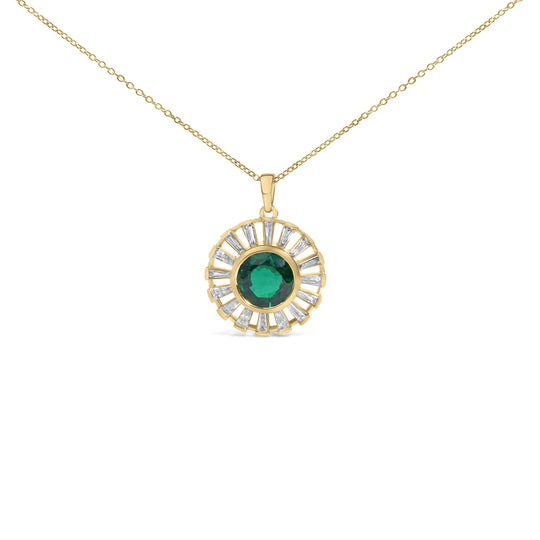
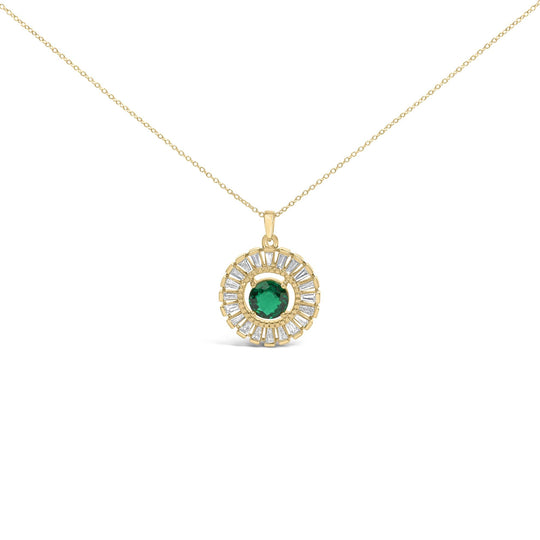
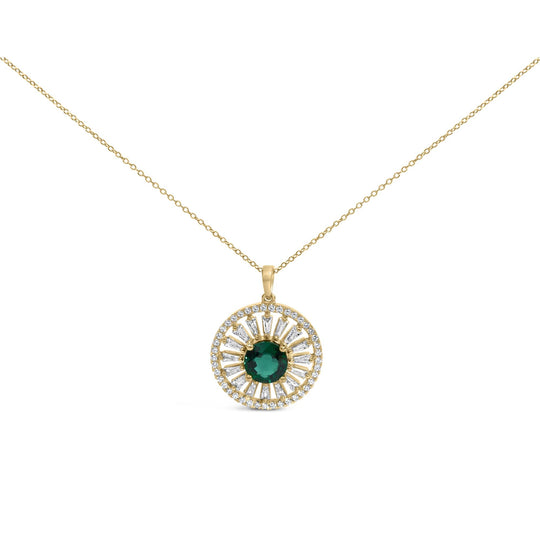
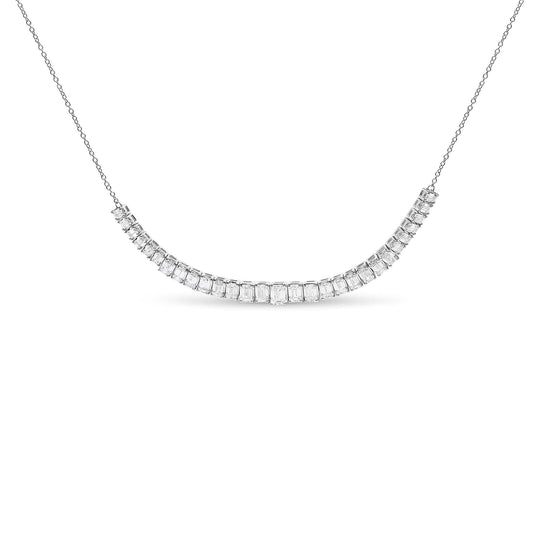
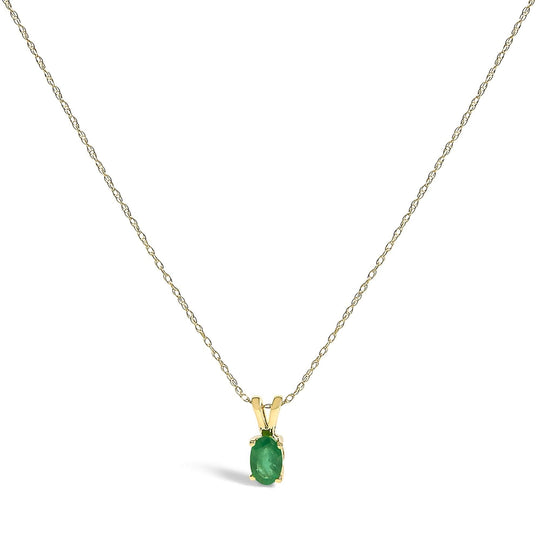
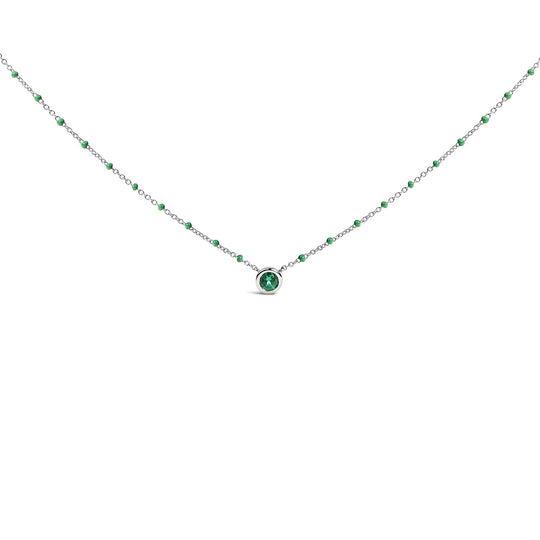
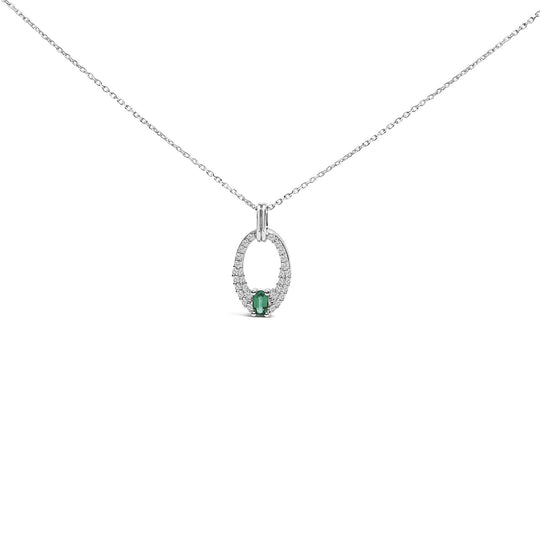
Emerald's vivid green color is among the most recognizable in fine jewelry, and it reads clearly in necklace settings whether worn as a single pendant or in a more layered design. Oath's emerald necklaces are set in 10K, 14K, and 18K gold and sterling silver, with genuine emeralds throughout. Every emerald necklace ships free, with a 30-day return policy.
Choosing Emerald Necklaces: Color, Setting, and Why Pendants Suit This Stone
Why Emerald Suits Necklaces Better Than Rings
Emerald's 7.5 to 8 Mohs hardness makes it one of the more care-intensive gemstones for ring wear, but pendants and necklaces change the equation significantly. A pendant emerald hangs freely, makes minimal surface contact, and avoids the repeated bumps and friction that a ring stone experiences daily. Buyers who want to wear emerald regularly and without constant concern about damage are better served by an emerald pendant than an emerald ring. The color performs just as powerfully at the neckline as it does at the hand. For the full emerald range, the emerald jewelry range covers the full selection.
Emerald Color and Why the Necklace Position Shows It Well
The most prized emerald color is a vivid, medium-dark bluish-green with strong saturation and good transparency, historically associated with Colombian emeralds. At the neckline, this rich green creates a warm, botanical focal point that reads as distinctly different from blue sapphire or red ruby. Emerald's color tends to look richer in warm incandescent light and can appear slightly different under fluorescent or cool daylight. Buyers should view a pendant stone under multiple lighting conditions before purchasing. For context on emerald in ring settings, the emerald rings range covers the full ring selection.
How Emerald Necklaces Compare to Sapphire Necklaces
Sapphire and emerald necklaces share the pendant format but create entirely different visual effects. Sapphire brings cool, classic blue; emerald brings warm, rich green. Sapphire at 9 Mohs is more durable in any jewelry type; emerald at 7.5 to 8 is practical for pendant wear where hardness concerns are reduced. For buyers choosing between the two, the decision is primarily one of color preference and the overall aesthetic they want at the neckline. The sapphire necklaces range covers the full selection for comparison.
Metal and Chain Choices for Emerald Necklaces
Yellow gold is the traditional and most widely used metal for emerald necklaces, creating the richly botanical aesthetic historically associated with fine emerald jewelry. White gold or platinum create a more contemporary look where the green reads against a cool neutral backdrop. Chain weight should match pendant size: a small emerald under 6mm needs a delicate chain; a larger stone above 8mm requires 2mm or more for proper proportion and hang. The gold necklaces range covers every chain style and length. Every order ships free with a 30-day return policy.
Frequently Asked Questions
Are emeralds good for necklaces?
Emerald necklaces are a practical jewelry choice, and significantly more suitable for daily wear than emerald rings. As a pendant, emerald hangs freely without surface contact, avoiding the repeated friction and impact that cause surface wear in harder-use jewelry types. The stone's color performs equally well at the neckline as it would in a ring, and the care requirements are less demanding. Buyers who love emerald's green but are concerned about its relative softness will find necklaces the most practical application of the gemstone.
What size emerald works best in a pendant necklace?
Emeralds between 6mm and 10mm in diameter represent the most practical range for pendant necklaces worn regularly. Emerald's rich green creates strong visual presence: a 6mm stone reads with more color impact than a similarly sized colorless stone. Buyers should be aware that most natural emeralds in larger sizes will show more visible inclusions, so quality screening matters as size increases. For buyers who want clean, inclusion-minimal stones at larger sizes, lab-created emeralds are worth considering.
How do you care for an emerald necklace?
Warm water, a very soft brush, and a small amount of mild soap are the recommended cleaning approach. Never use ultrasonic cleaners or steam: most natural emeralds are treated with oil or resin to fill fractures, and these cleaning methods remove the treatment and can worsen existing fractures. Avoid contact with perfumes, hairsprays, and household chemicals. Have the chain and setting inspected annually. Remove before swimming and before applying products to the neckline area. Store in a soft pouch to prevent the stone contacting harder jewelry.
Do emeralds fade or change color over time?
Natural emerald color is stable and does not fade with light exposure. However, most emeralds are treated with oil or resin to fill fractures and improve apparent clarity; this treatment can degrade over time with exposure to heat, chemicals, and cleaning products, which may change the stone's apparent clarity rather than its color. Re-oiling by a jeweler restores the original appearance. Keeping the stone away from harsh cleaners and chemicals significantly slows this process.
What chain length is best for an emerald pendant?
Emerald pendant necklaces suit an 18-inch chain for the most versatile positioning, placing the stone just below the collarbone on most body types. At 16 inches, the stone sits higher at the collarbone where detail can be appreciated. At 20 inches, the stone drops to mid-chest, which suits larger pendants or low necklines. Emerald's rich color means it creates visual presence even at collarbone position with a modest stone size, so the practical starting point for most buyers is 16 to 18 inches.
What is the difference between natural and lab-created emerald necklaces?
Natural and lab-created emeralds are chemically identical: both are beryl with chromium and vanadium producing the green color. Lab-created emeralds have significantly fewer inclusions and more consistent color than most natural stones, and are available at substantially lower cost. Natural emeralds of fine quality from Colombian mines carry premiums for rarity and origin. For necklace applications where color and appearance are the primary goals, lab-created emeralds deliver the same or better visual quality at a lower cost. For a fuller comparison of the two origins, read natural vs lab-grown emerald.
What metal is best for an emerald necklace?
Yellow gold is the classic choice for emerald necklaces, creating a warm, botanically rich aesthetic. White gold produces a more contemporary high-contrast result. Rose gold can work with lighter-toned emeralds but competes with vivid deep greens. Yellow gold is almost always the more harmonious pairing for most emerald tones.
What emerald earrings coordinate with emerald necklaces?
Emerald stud earrings in matching metal pair naturally with an emerald pendant necklace, creating stone color consistency across necklace and ear. When the pendant is the primary focal piece, keep earring stones modest; a small emerald stud at a size smaller than the pendant stone maintains the necklace as the visual anchor. Metal consistency between earrings and chain is the most straightforward coordination rule. The emerald earrings range covers earring options.
How do emerald and ruby necklaces compare?
Both are colored gemstone pendants that bring vivid gem color to the neckline, but they create entirely different visual effects. Emerald brings rich, warm green; ruby brings intense, vivid red. Ruby at 9 Mohs is harder than emerald at 7.5 to 8, making ruby more durable in any setting, though both are low-risk at the pendant position.
What emerald bracelets complete an emerald jewelry look?
An emerald bracelet in matching metal brings the green to the wrist and completes a coordinated emerald set across neck, ear, and wrist. Accent bracelets with smaller emerald stones work well alongside a statement emerald pendant; proportional scale keeps each piece from competing. For an understated look, a single emerald charm or station bracelet on a fine chain balances the necklace cleanly. The emerald bracelets range covers wrist options.
Use left/right arrows to navigate the slideshow or swipe left/right if using a mobile device
choosing a selection results in a full page refresh
press the space key then arrow keys to make a selection