Choosing Ruby Earrings: Color, Setting, and Everyday Wearability
Why Ruby Creates a Different Effect in Earrings Than Other Gemstones
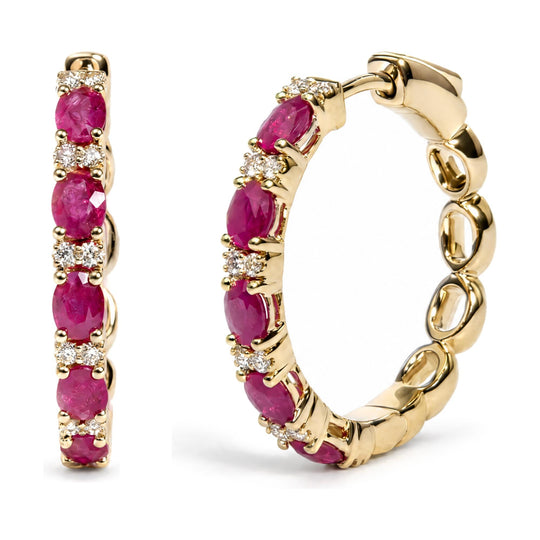
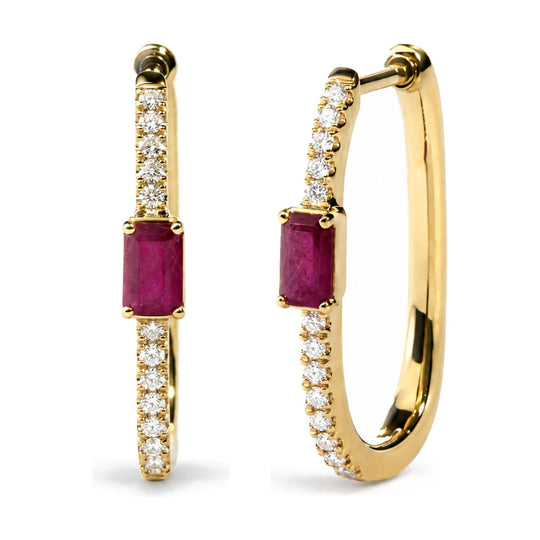
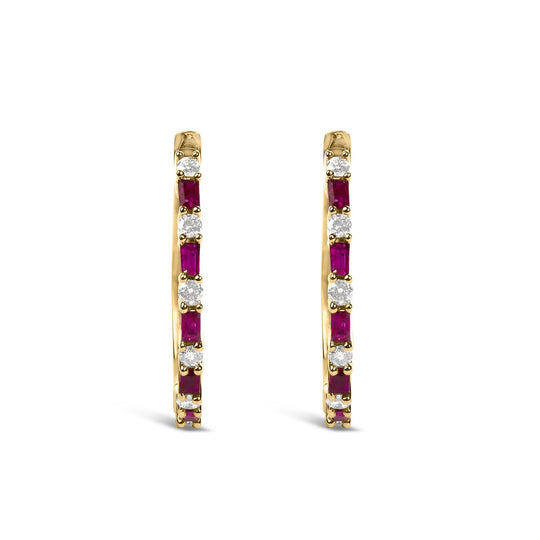
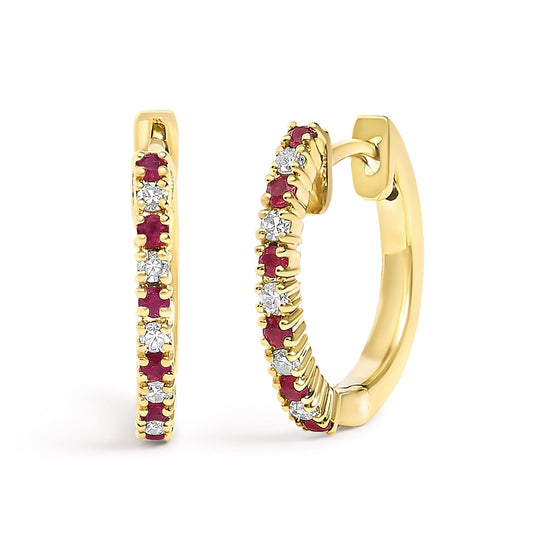
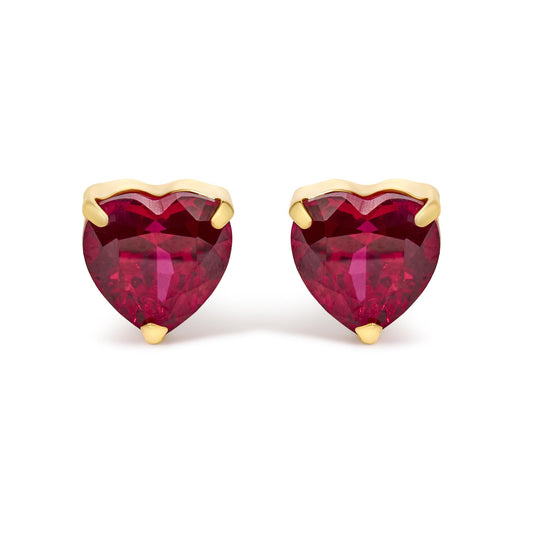
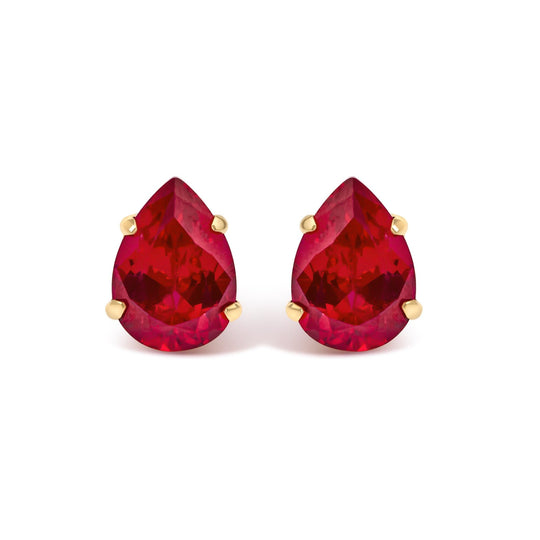
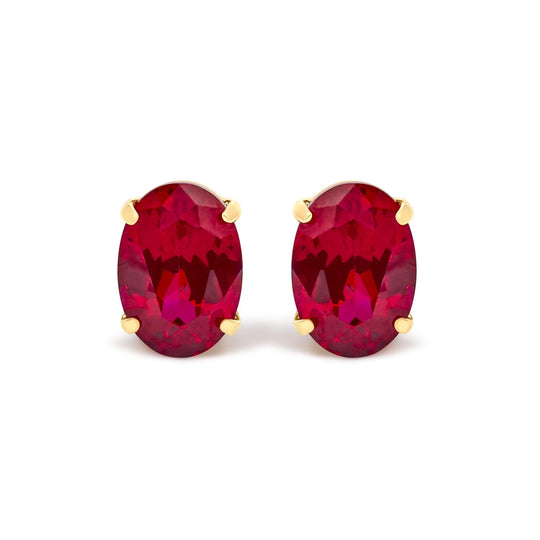
Ruby's deep, vivid red creates one of the strongest color accents in jewelry, particularly in earrings where the stone sits close to the face. A small ruby stud at the ear carries more visual impact than a similarly sized stone in many other colors because red is the color with the highest natural attention-drawing quality. This means buyers can achieve significant presence with modest stone sizes. Deep red rubies read as formal and sophisticated; slightly pinkish-red rubies read as warmer and more casual. Browse ruby jewelry for the full ruby range across all jewelry types.
Ruby Earrings vs. Sapphire Earrings: How to Choose
Ruby and sapphire earrings share the same hardness, the same care requirements, and the same setting options. The choice between them is entirely about color: ruby brings bold red; sapphire brings deep blue or other colors. Red reads as more overtly passionate and energetic; blue reads as more calm and classic. Ruby earrings pair best with black, white, and navy clothing where the red stands out most clearly. Browse sapphire earrings for the sapphire alternative.
Setting Styles for Ruby Stud Earrings
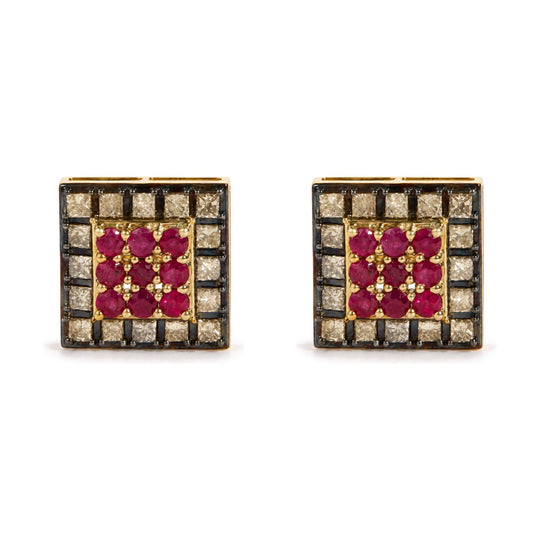
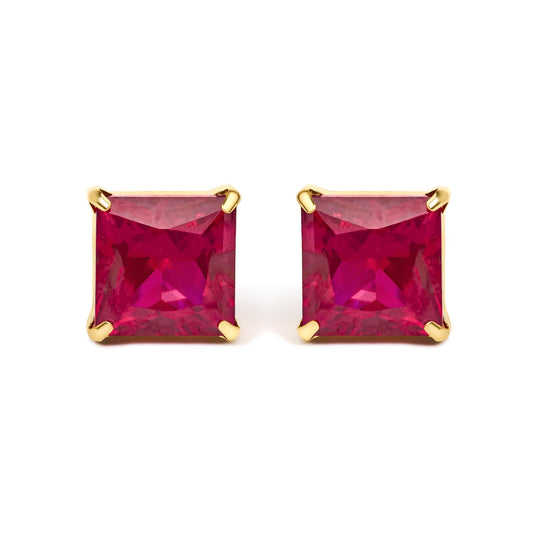
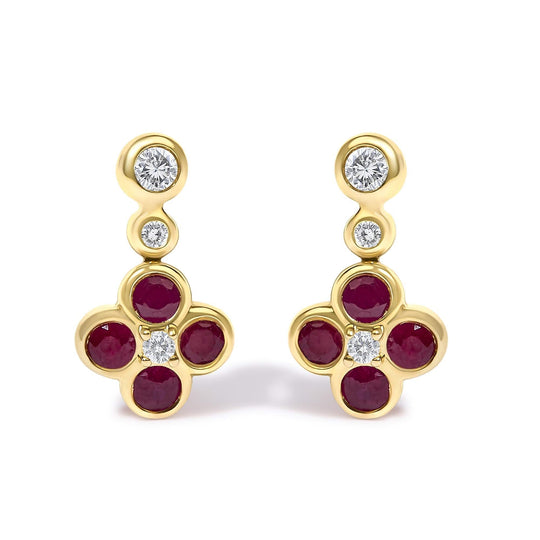
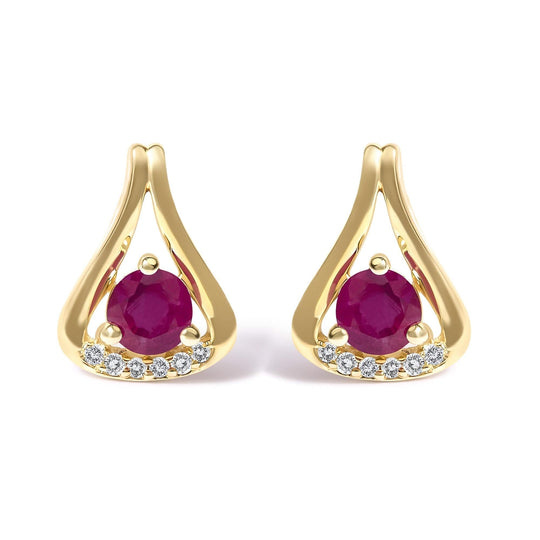
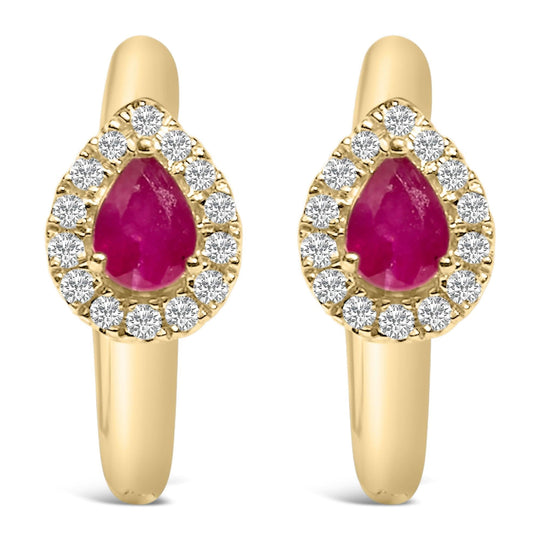
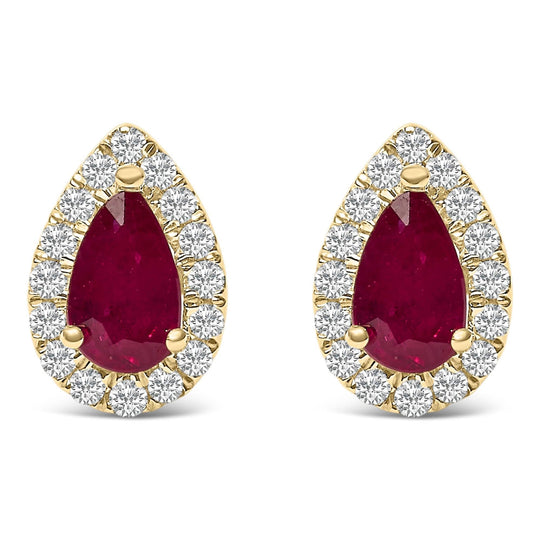
Prong settings are the most common for ruby studs because they lift the stone away from the metal, allowing light to enter from multiple angles and enhancing color depth. Four-prong and six-prong settings differ primarily in security: six prongs hold the stone more firmly but cover slightly more of its surface. Bezel settings wrap the stone in metal for maximum protection, suiting daily active wearers. Halo settings add a border of smaller diamonds, which creates sparkle contrast that makes the ruby's color appear more vivid by comparison. Browse gold earrings for the full gold earring range.
What Quality to Look for When Buying Ruby Earrings
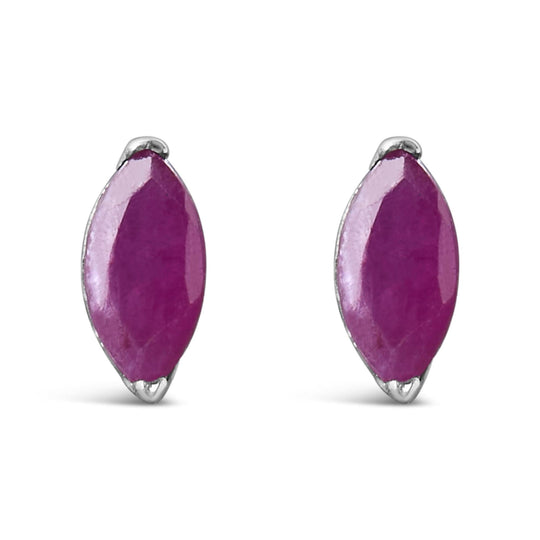
For earrings, color is the paramount quality criterion. A vivid, evenly saturated red with good transparency reads most strongly at earring distance. Inclusions that don't disrupt transparency are acceptable and expected in natural stones. The primary concern for earring pairs is color matching: the two stones should match in hue, saturation, and tone closely enough that they read as the same color at normal viewing distance. Browse ruby rings for a reference on what quality ruby looks like in a ring context. Every order ships free with a 30-day return policy.