Skip to content
Every order ships free with a 30-day return policy  ·  Browse new arrivals

Lab Grown Diamond Rings

Lab Grown Diamond Rings in Solitaire, Halo, and Band Styles

Lab grown diamond rings offer the same diamond quality as mined diamond jewelry in solitaire, halo, eternity band, and fashion ring configurations. Oath's lab grown diamond rings are set in 14k and 18k gold. Ships free on every order, with a 30-day return policy.

  • Genuine Gemstones
  • Free Shipping
  • 30-Day Returns

Lab Grown Diamond Rings Across Solitaire, Halo, and Band Styles

Lab Grown Diamond Solitaire Rings

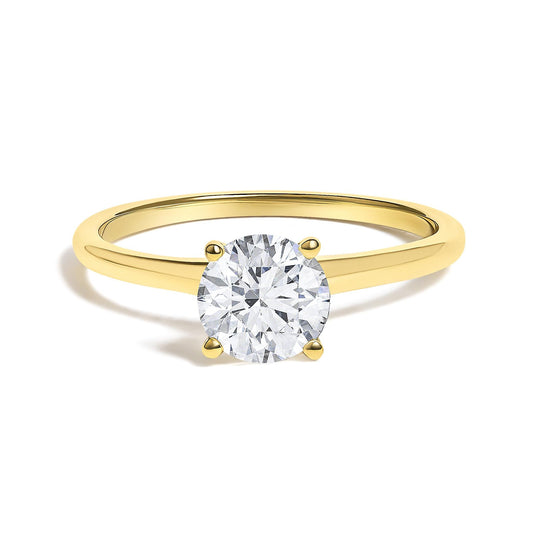
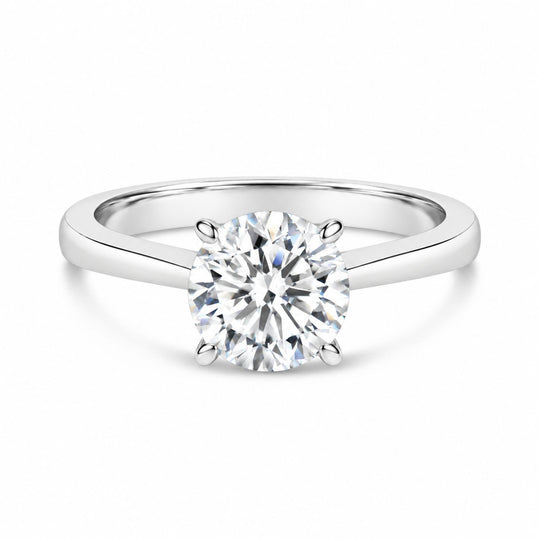
Solitaire settings place a single center stone in a prong or bezel mount with no additional accent stones. At solitaire ring scale, the center stone's cut, color, and carat weight are the entire visual experience. Lab grown diamonds are a common choice in solitaires for buyers who want to prioritize a larger center stone, since the single-stone setting puts carat size at the center of the design. Browse diamond rings for the full diamond ring range across settings and stone shapes.

Halo Settings for Lab Grown Diamond Rings

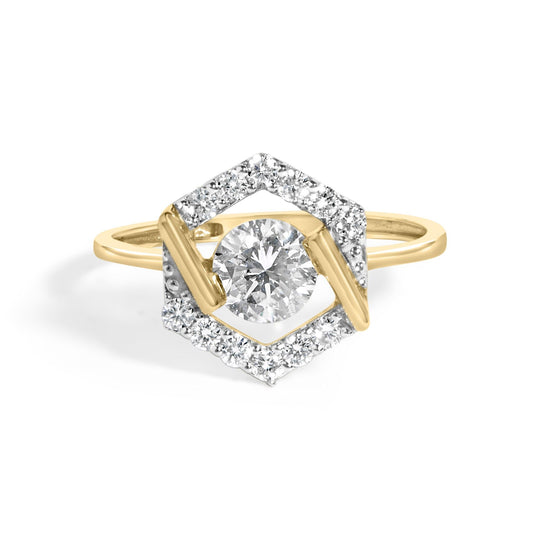
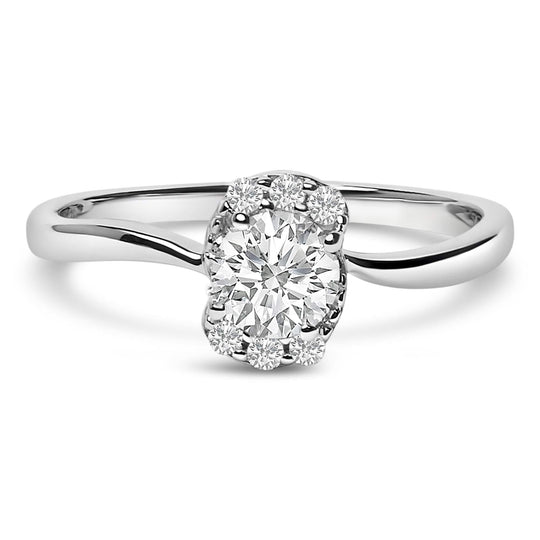
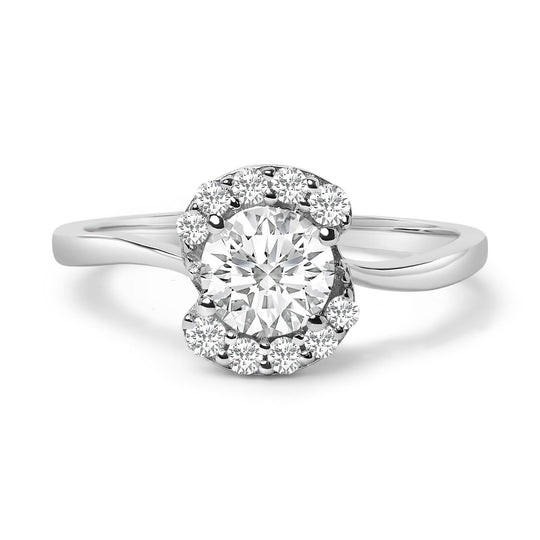
Halo ring settings surround a center stone with a ring of smaller accent diamonds, increasing the total visual size of the cluster and adding surface sparkle around the center. Lab grown diamonds are a popular choice for halo configurations, where both the center stone and the surrounding accent stones contribute to the look. Browse halo rings for halo ring styles across center stone shapes.

Lab Grown Diamond Eternity Bands

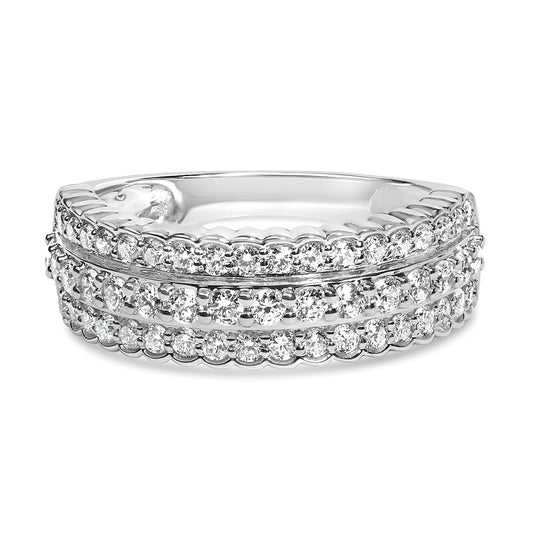
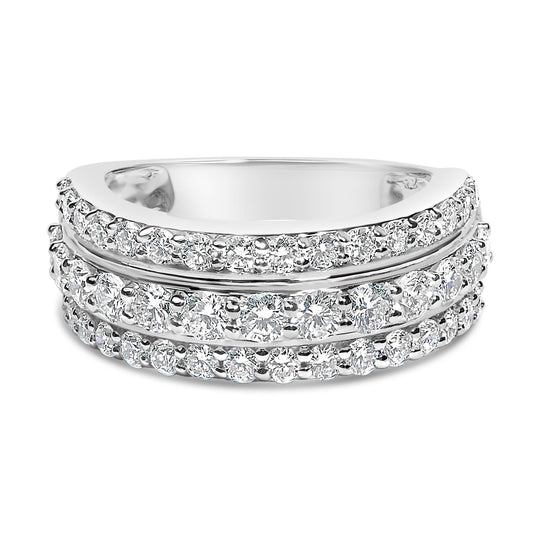
Eternity bands set diamonds continuously around the full circumference of the band, requiring consistent stone quality across all settings for the band to read evenly. Lab grown diamonds are a common choice for full eternity bands, where a continuous line of matched stones carries meaningful total carat weight. Browse eternity rings for eternity band styles across stone types and setting configurations.

Lab Grown Diamond Rings Within the Full Lab Grown Range

Lab grown diamond rings represent the largest share of the lab grown diamond market because rings offer the greatest visual impact from center stone size. For the complete lab grown diamond jewelry selection across all jewelry types, browse lab grown diamond jewelry. Every order ships free with a 30-day return policy.

Frequently Asked Questions

What are lab grown diamond rings?

Lab grown diamond rings are fine jewelry rings set with diamonds grown in a controlled laboratory environment rather than mined from the earth. The diamonds share the same chemical structure (pure carbon crystallized at Mohs hardness 10), the same optical properties, and the same gemological grading criteria as mined diamonds. Lab grown diamond rings are available in the same styles and settings as natural diamond rings across all price points.

How do lab grown diamond rings compare to mined diamond rings?

Lab grown diamond rings and mined diamond rings are visually identical: the stones share every material and optical property. The difference is origin and price. Lab grown diamonds are priced 50 to 70 percent lower than comparable mined diamonds, allowing buyers to purchase a larger center stone or higher quality grade at the same budget. A lab grown diamond ring cannot be distinguished from a mined diamond ring by sight or touch; specialized equipment is required to detect origin.

What ring styles are available with lab grown diamonds?

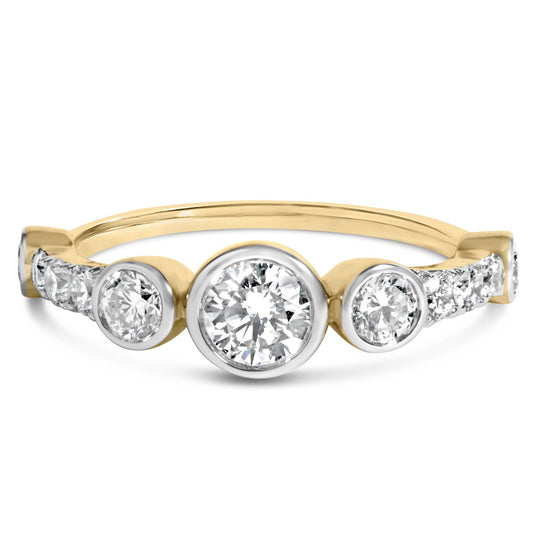
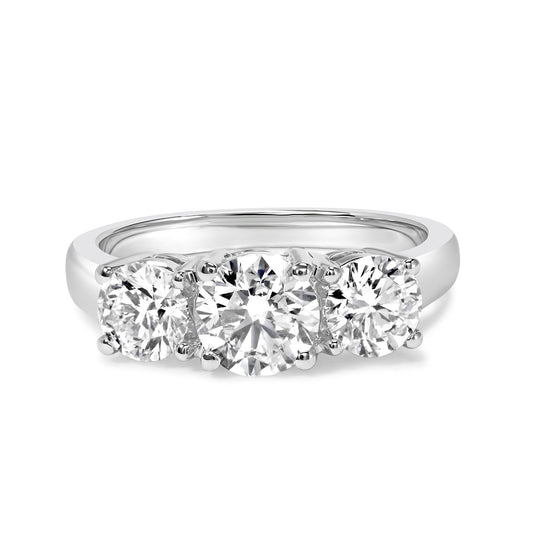
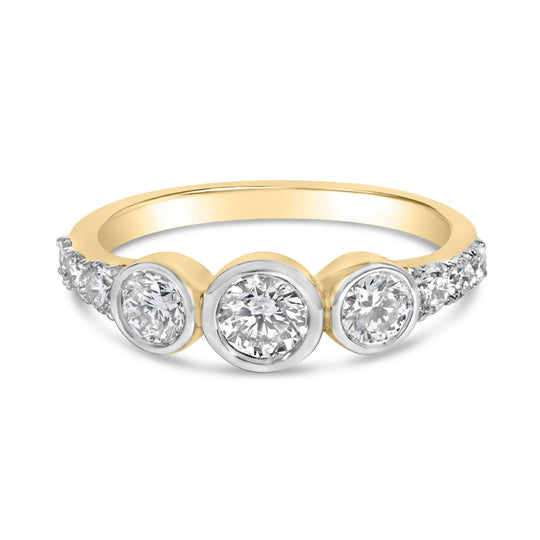
Lab grown diamond rings are available in solitaire, halo, three-stone, eternity band, pave band, cluster, and bezel configurations. Solitaire styles use a single center stone in a prong or bezel mount. Halo styles add accent stones around the center. Three-stone styles place stones of different sizes in a linear arrangement. Eternity bands set stones continuously around the band. All styles are available across round brilliant, oval, cushion, princess, and other standard diamond cuts in lab grown grade.

Are lab grown diamond rings appropriate for engagement rings?

Lab grown diamond rings are appropriate for engagement rings and have become a mainstream choice. The stone's physical equivalence to mined diamonds means the appearance, durability, and long-term wearability of the ring are the same. Many buyers specifically choose lab grown diamonds for engagement rings because the price advantage allows a larger center stone within budget. The choice depends on whether the buyer or recipient places significance on the stone's natural origin.

What carat weight lab grown diamond rings are available?

Lab grown diamond rings are available from approximately 0.10 total carats for accent-set bands to 3 or more total carats for substantial solitaire center stones. The price advantage is most impactful in center stone rings: a 1.00 carat lab grown round brilliant in a standard solitaire setting is available at a price point that would represent a 0.40 to 0.60 carat mined diamond at comparable quality. Center stone weight in the 0.50 to 2.00 carat range is the most widely purchased.

What metals are lab grown diamond rings available in?

Lab grown diamond rings are available in 14k and 18k yellow gold, white gold, and rose gold, with some styles available in platinum. 14k white gold is the most popular setting because the neutral metal tone maximizes colorless diamond brilliance and the alloy hardness provides good durability at the ring position, which receives the most daily contact stress of any jewelry position. Platinum offers the highest durability but at increased cost and weight.

How do I care for a lab grown diamond ring?

Lab grown diamond rings require the same maintenance as mined diamond rings: clean every few weeks with warm water, dish soap, and a soft brush. Inspect prong settings regularly; prongs at a ring position experience more stress from daily contact than prongs at earring or necklace positions. Annual professional inspection and prong tightening is recommended for daily-wear diamond rings. Remove the ring when working with chemicals, during heavy manual work, and before contact sports.

Can lab grown diamond rings be resized?

Lab grown diamond rings in standard gold settings can typically be resized up or down by a jeweler using the same techniques used for mined diamond ring settings. Full eternity bands where stones run the full circumference cannot be conventionally resized without removing stones. Prong-set solitaires and most fashion ring styles accommodate resizing within a standard range. Browse rings for the full ring range across lab grown and other diamond configurations.

What gold tone is most popular for lab grown diamond rings?

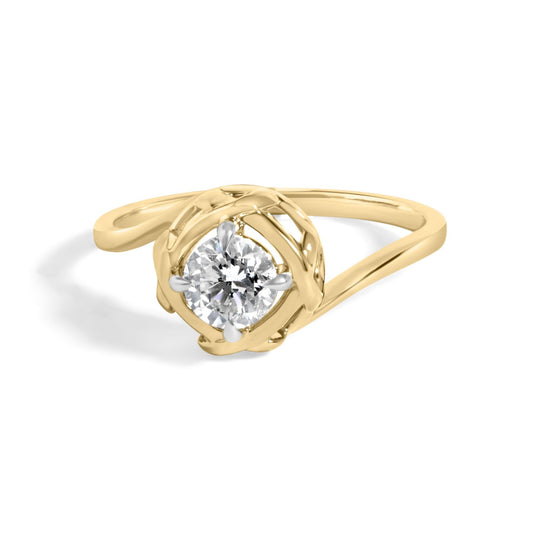
White gold is the most popular setting for lab grown diamond rings because the neutral cool tone creates visual continuity with colorless diamonds and maximizes their brilliance. Yellow gold is the most traditional setting and creates a warm, high-contrast look that has grown in popularity for vintage-inspired lab grown ring styles. Rose gold is increasingly popular for its warm contemporary aesthetic, particularly with round brilliant center stones. Browse gold rings for gold ring options across metals and diamond configurations.

Can lab grown diamond rings be stacked with other rings?

Lab grown diamond bands and slim solitaire settings stack effectively alongside other rings because their low-profile construction sits flush against adjacent rings without significant bulk or discomfort. A lab grown diamond eternity band pairs well alongside a plain gold band on either side, allowing the stone coverage to read clearly between simpler band elements. Mixing lab grown and natural diamond bands in a stack is visually seamless because the stones are indistinguishable. Browse stackable rings for ring styles designed to pair alongside other rings in a stack.

Your Bag
Subtotal (tax excl.) $0
 
Example
Example
Example
(0 )
Example
View detail
Example
Example
Option1
Option2
Option3
Option1
Option2
Option3
Sold out
Quantity
Add To Cart
Buy Now
Compare
Add Wishlist
Share:
0
0