Genuine Gemstones
Free Shipping Over $99
Easy 30-Day Returns
Wedding Bands for Him and Her
Choosing a Wedding Band Style That Fits Your Life
Wedding bands are the most consistently worn piece of jewelry, which makes practical wear characteristics as important as appearance. Comfort-fit interiors, a slightly domed or flat profile, and surface finish all affect daily wearability. For buyers uncertain about style or fit, a return window removes the risk of a first purchase. For the complete ring range across all metals and silhouettes, browse rings.
Eternity Bands as Wedding Rings
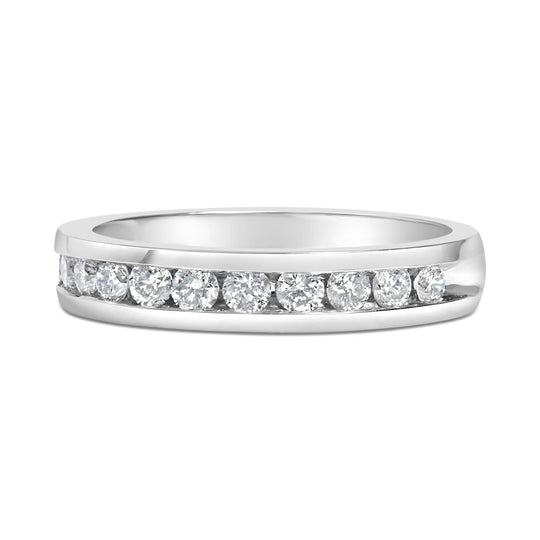
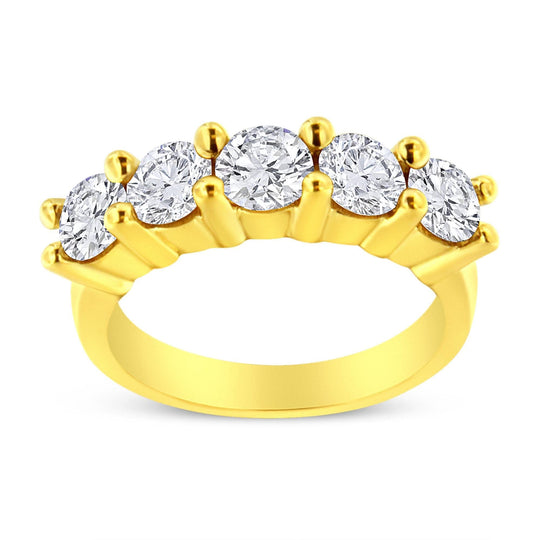
Eternity bands make natural wedding band choices because the continuous stone setting carries significance aligned with lifelong commitment. Full eternity styles feature stones around the entire circumference; half-eternity designs place stones only along the top face, which allows for easier resizing over time. Both formats layer naturally against solitaire engagement rings or worn solo. For the complete continuous-set band range, browse eternity rings.
Diamond Wedding Band Setting Styles Compared
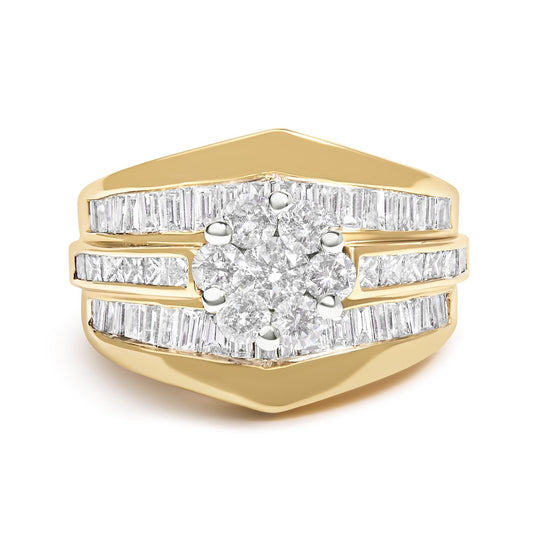
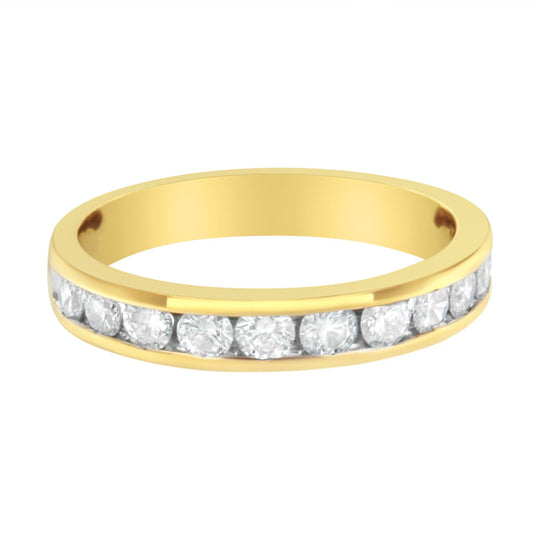
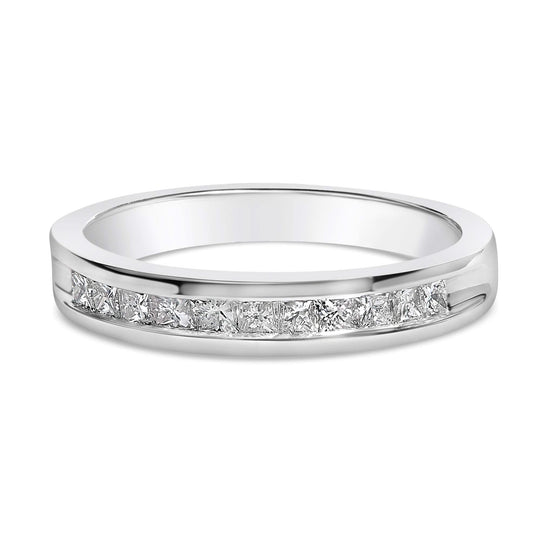
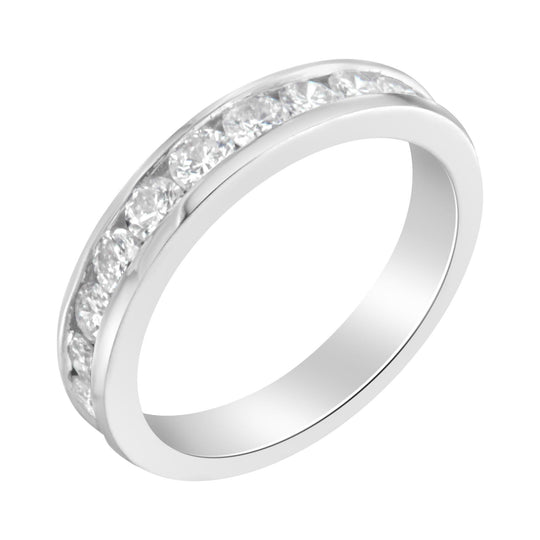
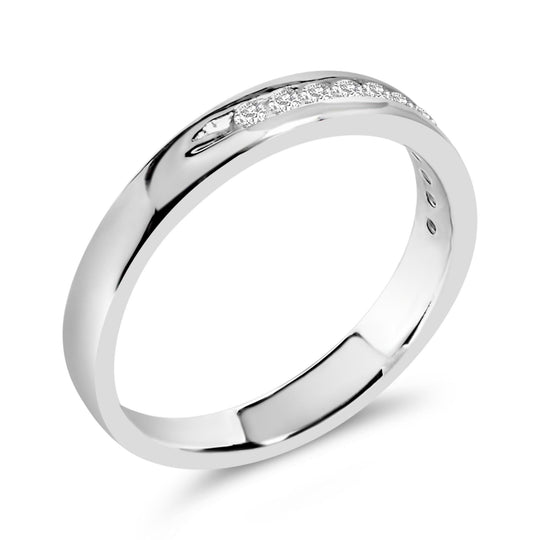
Diamond wedding bands use channel, pave, or bezel settings, each with distinct wear characteristics. Channel settings protect stones inside a continuous metal rail, which makes them well suited for daily wear alongside active lifestyles. Pave settings distribute smaller stones closely across the band surface, creating a textured, light-catching result without adding significant height. For the full diamond ring range across setting styles, browse diamond rings.
Men's Wedding Band: Finish and Width Considerations
Men's wedding bands in the 6 to 8mm width range are the most common choice, with matte and satin finishes preferred for their resistance to visible minor scratches compared to high-polish surfaces. Comfort-fit interiors curve slightly inward along the band's inner face, which improves the feel of wider bands during daily wear. For the complete men's ring selection, browse men's rings.
Frequently Asked Questions
What are wedding bands?
Wedding bands are rings exchanged during a wedding ceremony to symbolize the formal commitment between partners. Unlike engagement rings, which are typically worn before the ceremony, wedding bands are designed for continuous daily wear across years and decades. They range from plain metal bands to stone-set styles and are available in yellow gold, white gold, rose gold, and sterling silver.
What metals are wedding bands typically made from?
Wedding bands are most commonly made from yellow gold, white gold, rose gold, or sterling silver, each available in different purity levels. Yellow gold at 14 karat offers a balance of durability and warmth. White gold achieves its color through alloying with palladium or nickel, then rhodium plating for a bright finish. Rose gold gets its tone from a higher copper content in the alloy.
How is a wedding band sized correctly?
Wedding band sizing should account for finger width and the band's profile because wider bands typically require a half to a full size up from a standard ring size. Finger size can also change throughout the day due to temperature and activity. A ring sizer from a jeweler is the most accurate approach; online size guides using a paper strip or an existing ring as a reference are practical alternatives when in-person sizing is not an option.
What is the difference between a wedding band and an engagement ring?
Wedding bands and engagement rings serve distinct roles in ring-wearing tradition. An engagement ring is given as a proposal gift and typically features a center stone. A wedding band is exchanged during the ceremony, worn on the same finger, and is often designed to sit flush against or complement the engagement ring. Some couples choose a single band that functions as both.
Can a wedding band be worn alone without an engagement ring?
Wedding bands can be worn as standalone pieces without an engagement ring, and many people prefer a single band for practical daily wear. Plain metal bands, eternity styles, and textured or milgrain bands all read as complete pieces on their own. This is a common preference for those in physically active roles or workplaces where a prominent center stone is not practical.
How wide should a wedding band be?
Wedding band width depends on finger size, personal preference, and whether the band will be worn alongside an engagement ring. Widths between 2mm and 4mm suit narrower fingers and stack comfortably next to most engagement ring profiles. Widths from 5mm to 8mm suit those who prefer a more substantial band or a standalone style. Measuring the available space on the finger against an engagement ring helps narrow the choice.
Do wedding bands need to match between partners?
Wedding bands do not need to match between partners, and mixed-metal or different-style combinations are common. Many couples coordinate one element, such as metal tone or a shared texture detail, without choosing identical bands. Others select entirely different styles that reflect individual preferences. The main practical consideration is whether each band will be comfortable alongside any other jewelry regularly worn on the same hand.
What gold options are available in wedding band styles?
Gold wedding bands are available in yellow gold, white gold, and rose gold, typically in 10, 14, and 18 karat options. Higher karat gold is purer and holds a richer color tone, but 14 karat is the most common choice for daily-wear bands because it balances gold content with long-term scratch resistance. For the full range of gold ring styles, browse gold rings.
What necklaces complement a wedding band for a cohesive look?
Necklaces that pair most naturally with a wedding band are those in matching metal tones to maintain a consistent palette across the hand and neck. Delicate chain styles or pendant necklaces with minimal profile keep the focus on the ring while adding presence at the neckline. For necklace options in coordinating metals and styles, browse necklaces.
What bracelet styles work alongside a wedding band?
Bracelets worn on the opposite wrist from a wedding band present no compatibility challenge and can be chosen independently of the ring's metal tone. Bangles or cuff bracelets in matching metals complement the ring's palette while adding visual balance on the other hand. For bracelet options to coordinate with wedding band styles, browse bracelets.
Use left/right arrows to navigate the slideshow or swipe left/right if using a mobile device