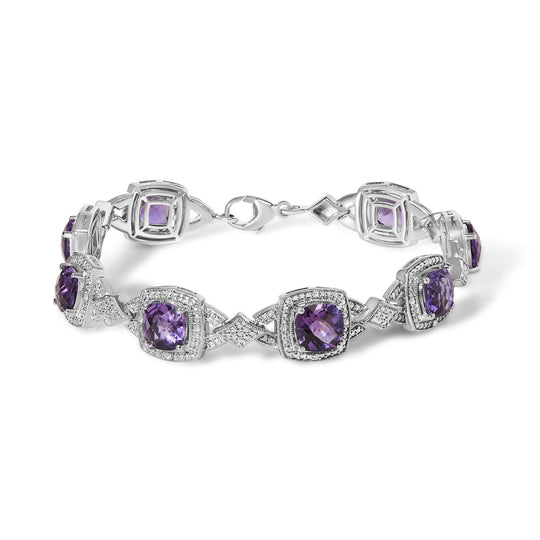
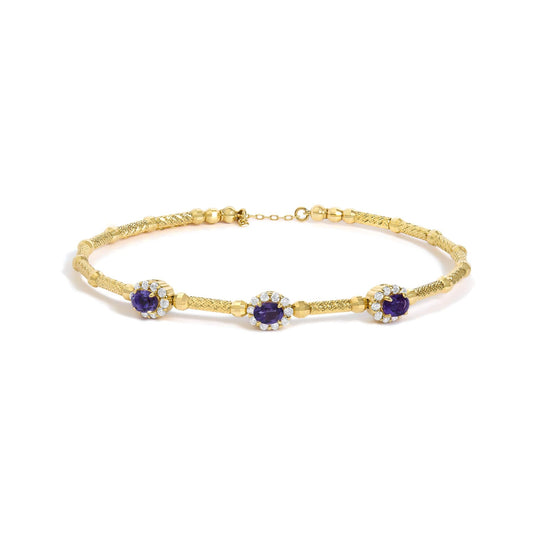
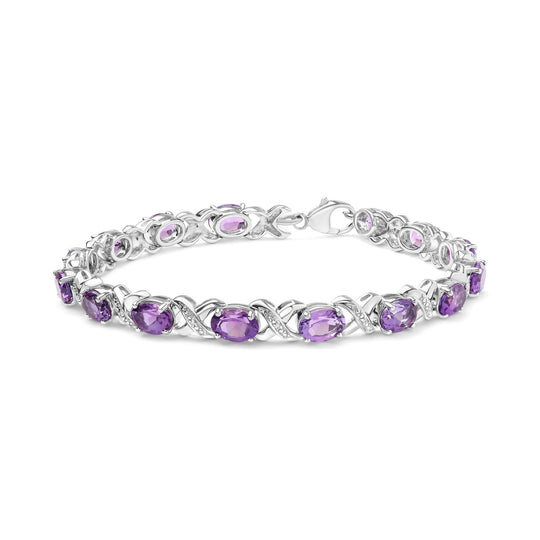
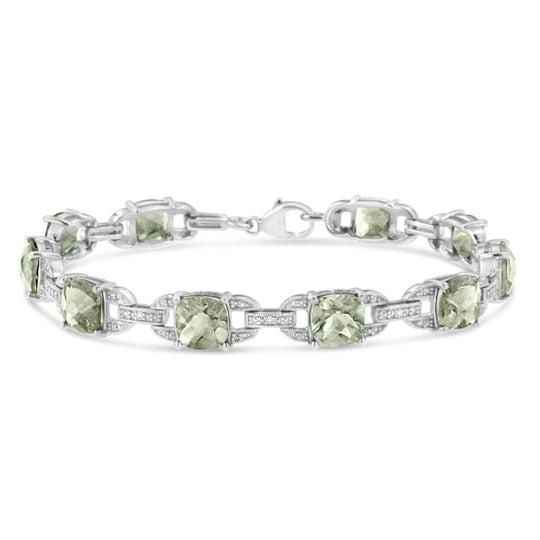
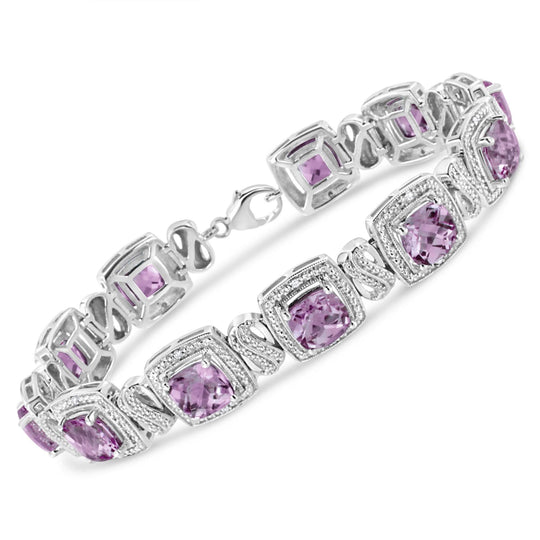
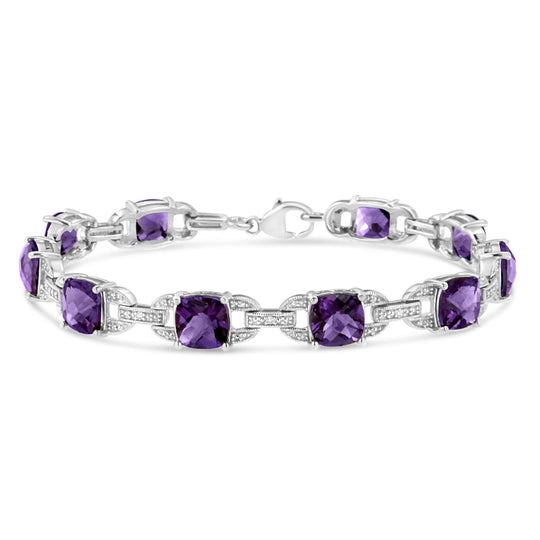
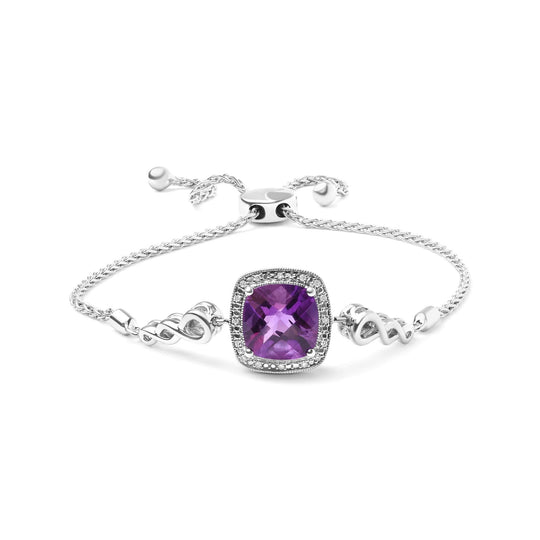
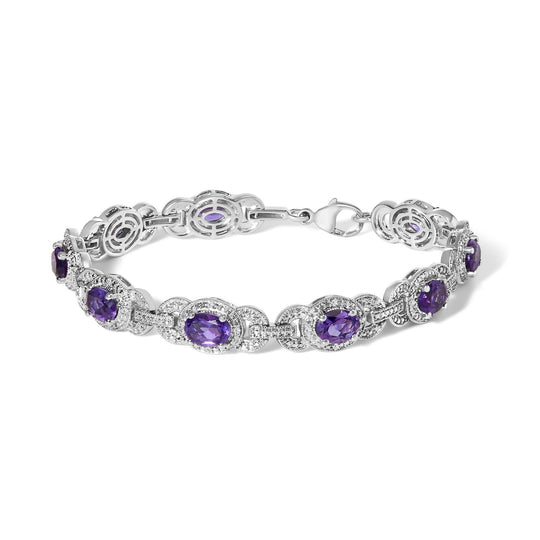
Amethyst Bracelets in Fine Gold and Sterling Silver
Amethyst's violet tones sit naturally against both gold and silver settings, which makes it one of the more versatile colored gemstones for bracelets worn regularly. Oath's amethyst bracelets are set in 10K, 14K, and 18K gold and sterling silver, with genuine amethyst across a range of styles. Every amethyst bracelet order arrives with free shipping and a 30-day return policy.
Bracelets face more direct contact than pendants or earrings, which means stone hardness and setting security matter more for this jewelry type. Amethyst at 7 on the Mohs scale is adequate for bracelets with normal care, though it benefits from protective bezel settings rather than high-profile prongs. The stone's purple color, ranging from pale lavender to deep violet, works particularly well in bracelet formats because it is visible in motion and from the natural viewing angle at the wrist. The full amethyst jewelry hub shows how the stone translates across all jewelry types.
Bracelet Styles That Work Best with Amethyst
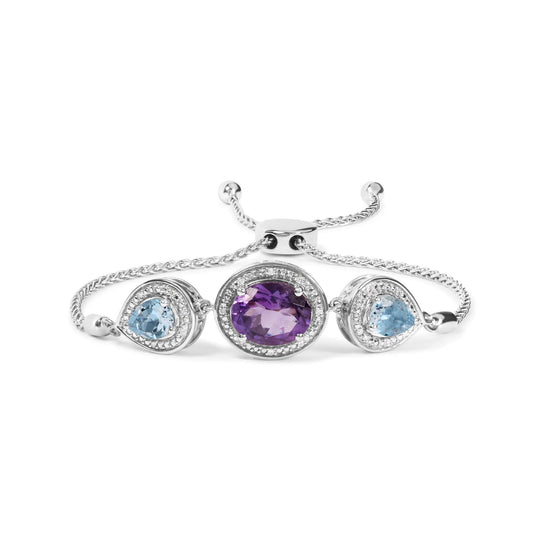
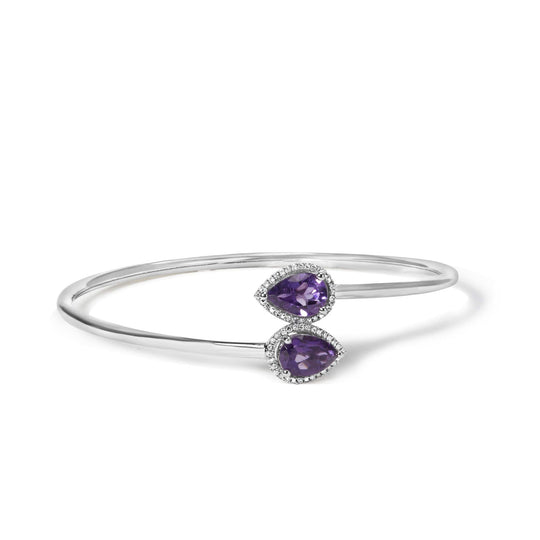
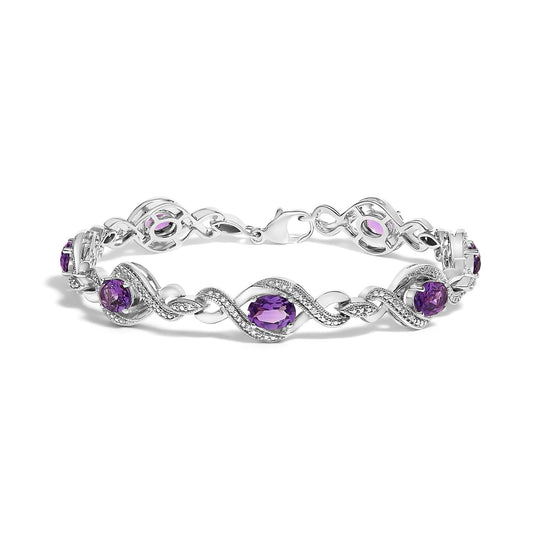
Tennis bracelets with multiple amethyst stones create a continuous line of color across the wrist that reads as polished and substantial. Single-stone station bracelets distribute color at intervals for a more relaxed look. Bangle styles with an embedded amethyst work for buyers who prefer a rigid silhouette. For buyers who stack jewelry, an amethyst bracelet pairs naturally with amethyst rings worn on the same hand, as the shared stone color creates a cohesive effect without requiring matching metal weights.
Gold or Silver: Choosing the Right Metal for an Amethyst Bracelet
Yellow gold deepens the warm tones in amethyst, creating a traditional combination that suits both classic and vintage-inspired bracelet designs. White gold and sterling silver contrast cleanly against the purple for a more contemporary result. Rose gold is a strong choice for amethyst because the blush-pink warmth plays well against purple without competing with the stone's color. The gold bracelets page shows how different gold shades handle gemstone settings in bracelet formats.
Fit, Weight, and Daily Wearability
A bracelet's fit matters more than it does in other jewelry types because a poorly sized piece moves continuously during wear, increasing stress on stones and settings. Adding half an inch to your measured wrist circumference gives a comfortable daily fit for most chain and link styles. Heavier bracelet styles with large stones suit occasion wear more naturally than daily use. For everyday amethyst jewelry in a more practical format, amethyst earrings face less wear stress and suit daily use more directly. Every order ships free with a 30-day return policy.
Frequently Asked Questions
How do I measure my wrist for an amethyst bracelet?
Amethyst bracelets are sized by measuring the wrist with a soft tape measure or a piece of string, then measuring the string against a ruler. For a comfortable fit on a standard link or chain bracelet, add half an inch to one inch to your wrist measurement depending on how loosely you prefer to wear it. Bangle bracelets need to pass over the knuckles, so measure across your knuckles with fingers pressed together for the minimum diameter required. Most product listings specify whether sizing is based on wrist circumference or bangle diameter.
What bracelet style works best with amethyst stones?
Amethyst bracelets in tennis formats create an uninterrupted line of purple across the wrist, which is the most visually impactful style for the stone. Station bracelets space multiple amethysts along a chain for a lighter, more casual look. Bangles with a single amethyst work for buyers who prefer a rigid silhouette. For daily wear, bezel-set stones are more practical than prong settings, which can snag on fabric and face greater stress over time. Heavier, high-profile styles suit occasion wear over everyday use.
Is amethyst durable enough for a bracelet worn daily?
Amethyst at 7 on the Mohs scale is adequate for bracelets with reasonable care, though it faces more wear than it would as a pendant or in earrings. The primary risk is direct impact against hard surfaces, which can chip the stone's edges. A bezel or channel setting reduces chip risk by providing a protective metal border around each stone. Avoid wearing an amethyst bracelet during activities that bring the wrist into regular contact with hard surfaces. With sensible care, daily wear is achievable. For a full guide to choosing amethyst worth buying, read how to buy amethyst jewelry.
What does an amethyst bracelet symbolize as a gift?
Amethyst is associated with calm, balance, and inner clarity, making it a meaningful choice for someone navigating a significant transition or milestone. As the February birthstone, it is a natural February birthday gift. The 6th wedding anniversary is traditionally associated with amethyst, making a bracelet a purposeful option for that occasion. Beyond specific milestones, amethyst bracelets work well as thoughtful gifts for anyone who responds to the stone's distinctive purple color and the steady, positive associations it carries.
How do I care for an amethyst bracelet?
Amethyst bracelets are cleaned with warm water, mild dish soap, and a soft brush around each stone and setting. Rinse thoroughly and dry with a lint-free cloth. Store in a padded box or pouch away from harder stones that could scratch the surface. Remove before swimming, exercise, and any activity that brings the wrist into contact with hard surfaces. Amethyst without significant fractures is generally safe in an ultrasonic cleaner, but avoid steam cleaning. Avoid prolonged direct sunlight exposure to preserve the stone's color over time.
Can amethyst bracelets include diamond accents?
Amethyst bracelets with diamond accents combine the stone's distinctive purple with the brilliance of white diamonds. In tennis bracelet formats, alternating amethyst and diamond stations create a two-tone pattern that reads as more formal than a single-stone design. A halo of small diamonds around each amethyst in a station bracelet maximizes brilliance without requiring large diamonds. White sapphires are a cost-effective alternative that produces a similar effect. The diamond-to-amethyst size ratio determines whether the purple or the white brilliance leads the look.
How does an amethyst tennis bracelet differ from a station bracelet?
Amethyst tennis bracelets differ from amethyst station bracelets in how the stones are distributed across the wrist. A tennis bracelet format features stones set continuously edge-to-edge across the full length, creating an unbroken line of color. A station bracelet spaces individual stones at intervals along a plain chain, which is lighter and easier to stack. Tennis bracelets are more formal and visually substantial; station bracelets are more flexible and casual. For amethyst specifically, the tennis format shows the stone's color most impressively because the purple reads as a continuous band rather than intermittent accents against plain metal.
What jewelry pairs best with an amethyst bracelet?
Amethyst bracelets pair most naturally with jewelry in the same metal without replicating the stone size. A small amethyst stud or drop earring coordinates without duplicating the bracelet's visual weight. For a color-consistent look extending from wrist to neck, browse amethyst necklaces in matching metal.
How do I stack an amethyst bracelet with other bracelets?
Amethyst works best as the color anchor in a bracelet stack because the purple reads clearly against metal and other stones without needing support. Pair with thin plain chains or bangles in the same metal to fill out the wrist without competing for visual attention. Keep stone-heavy pieces to one per wrist to avoid bulk.
Is a tennis bracelet a good format for amethyst?
Amethyst works particularly well in the tennis bracelet format because the continuous line of color shows the purple across the full wrist, which is more impressive than intermittent stones. Amethyst's relative abundance means a full tennis bracelet with multiple well-matched stones is achievable. The key quality factors to check across the stones in a set are consistent color, matching saturation, and uniform cut. For the full range of tennis bracelet options in various stones and metals, tennis bracelets is the best starting point.
Use left/right arrows to navigate the slideshow or swipe left/right if using a mobile device
choosing a selection results in a full page refresh
press the space key then arrow keys to make a selection