Skip to content
Every order ships free with a 30-day return policy  ·  Browse new arrivals

Amethyst Rings

Amethyst Rings in Gold and Silver

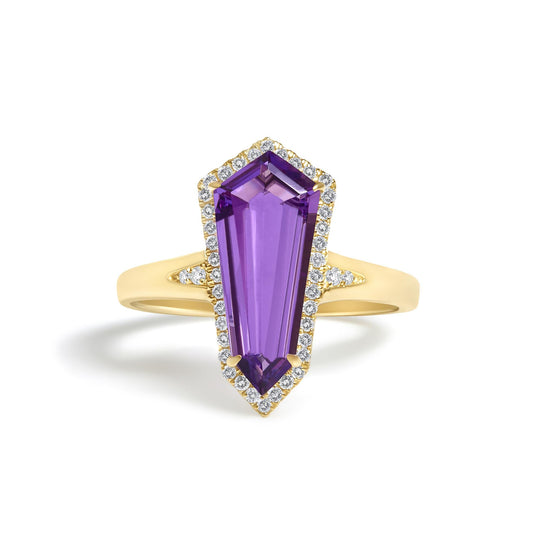
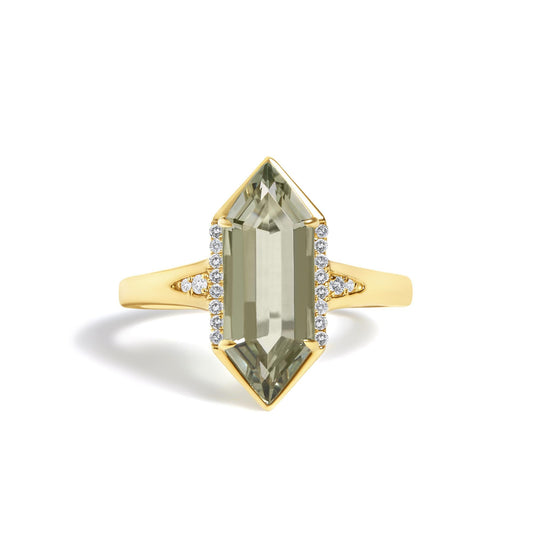
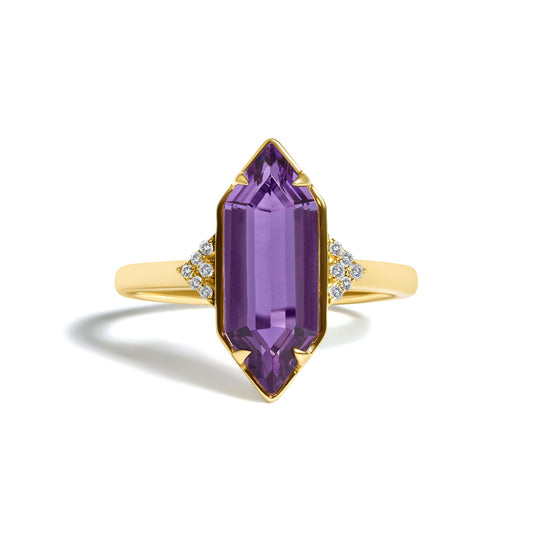
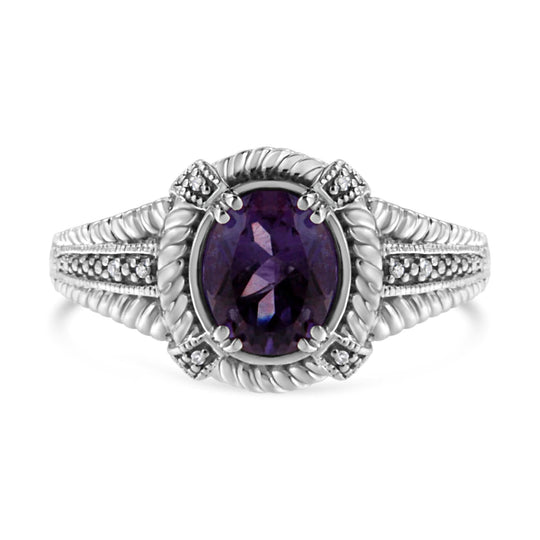
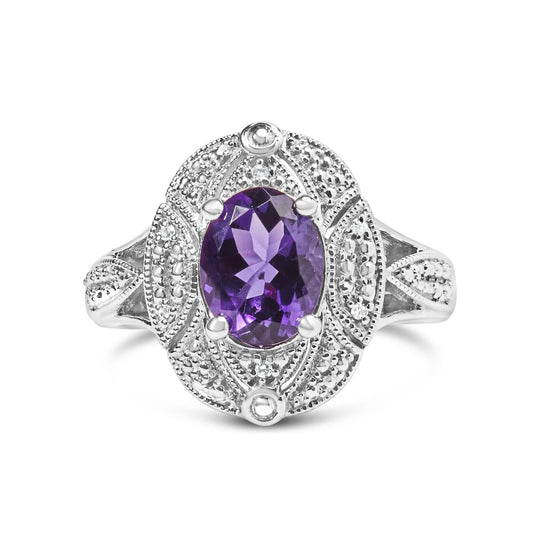
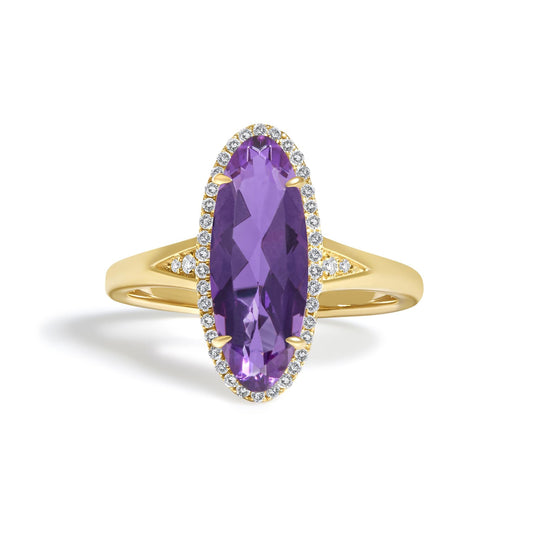
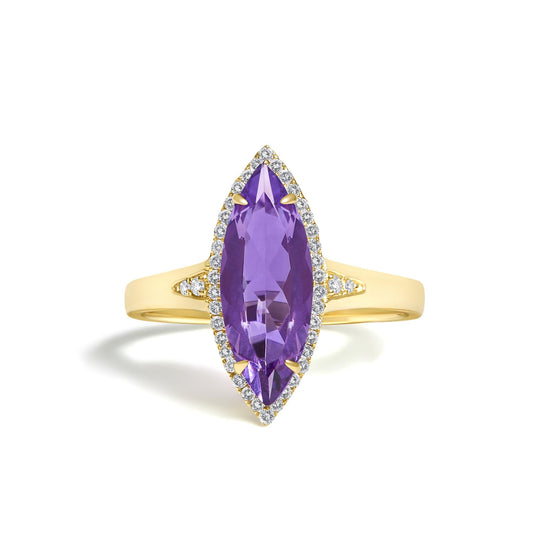
Amethyst's deep purple color has made it one of the most chosen colored gemstones for rings, from simple solitaire settings to more detailed multi-stone designs. It is February's birthstone. Oath's amethyst rings are set in gold and sterling silver, with genuine amethyst. Ships free on every amethyst ring order, with a 30-day return policy.

  • Genuine Gemstones
  • Free Shipping
  • 30-Day Returns

Buying Amethyst Rings: Color, Hardness, and What to Know

Why Amethyst Is One of the Most Accessible Fine Gemstone Rings

Amethyst is a purple variety of the mineral quartz, rated 7 on the Mohs hardness scale. Unlike ruby, sapphire, and emerald, which are rare at fine quality, amethyst is abundant in nature: large, deeply colored, gem-quality amethyst is found in quantity in Brazil, Uruguay, and Zambia, making it one of the most affordable fine gemstones available. This abundance allows buyers to acquire vivid, richly colored purple stones in sizes and qualities that would be prohibitively expensive in corundum or beryl at equivalent visual presence. Amethyst is the February birthstone and associated with the 6th and 17th wedding anniversaries. For the full amethyst range, see the amethyst jewelry hub.

Amethyst Color: What to Look for and the Varieties Available

Amethyst color ranges from pale lilac (called Rose de France in the trade) to deep, saturated purple. The most prized amethyst displays a vivid, medium-dark purple with a reddish-blue undertone, found most consistently in Uruguayan and Zambian stones. Brazilian amethyst tends toward lighter, cooler purple tones. For rings, deep to medium purple provides the most visual presence. Rose de France amethyst in pale lavender creates a softer, more romantic effect that suits buyers who prefer understatement. For a setting that frames the stone between protective metal walls, browse channel set rings.

Amethyst vs. Sapphire Rings: Choosing Between Purple Stones

Purple sapphire and amethyst are the two main options for purple gemstone rings, differing significantly in hardness, rarity, and cost. Purple sapphire is rated 9 Mohs and is considerably rarer than amethyst, carrying much higher per-carat cost. Amethyst at 7 Mohs is more susceptible to surface wear over time in ring settings but is highly accessible in terms of cost. For buyers who want the most durable purple ring for continuous daily wear, purple sapphire is the stronger choice. For buyers who want vivid purple at an accessible price point, amethyst provides excellent value. See sapphire rings for comparison.

Amethyst Ring Settings and Metal Choices

Yellow gold creates a warm, richly regal pairing with deep purple amethyst, a combination with strong historical precedent in royal and ecclesiastical jewelry. White gold and platinum create a cooler, contemporary look that emphasizes the purple's blue tones. Rose gold creates a romantic, warm look that pairs well with Rose de France pale lavender amethyst. Prong settings show the stone's color most fully by maximizing light entry; bezel settings provide more protection for active wearers. For amethyst's role in the engagement ring alternative context, see the rose gold engagement rings page. Every order ships free with a 30-day return policy.

Frequently Asked Questions

Are amethyst rings durable for everyday wear?

Amethyst rings are durable for everyday wear with standard care. Amethyst is rated 7 on the Mohs hardness scale, harder than most materials encountered in daily life, though it can scratch from contact with quartz dust, harder jewelry, and some ceramics. A protective setting reduces edge chip risk. Amethyst is considerably more forgiving than emerald for regular ring use, and far more durable than pearl.

How do you care for an amethyst ring?

Amethyst rings are cleaned safely with warm water, mild soap, and a soft brush. Amethyst is resistant to most household chemicals at normal concentrations. Avoid prolonged exposure to heat or direct sunlight, as extended heat exposure can fade the color over time. Ultrasonic cleaning is generally safe for untreated amethyst but should be avoided if the stone shows significant fractures. Store separately from harder gemstones such as sapphire or diamond to prevent surface scratches.

What is the best amethyst color for rings?

Amethyst rings display their color most strongly when the stone is deep to medium purple with a reddish-blue undertone, the most prized shade. Uruguayan and Zambian amethysts are known for producing this deep, saturated tone. Brazilian amethysts tend toward lighter, cooler purple tones that are still attractive but read with less visual intensity. Rose de France amethyst in pale lavender creates a softer, more delicate effect that suits buyers who prefer understatement. View stones under multiple lighting conditions: deep amethyst shifts between more reddish-purple in warm light and more blue-purple in cool light.

What is the difference between natural and lab-created amethyst rings?

Natural and lab-created amethysts are chemically identical: both are quartz with iron that produces the purple color, and both carry the same 7 Mohs hardness. Unlike ruby or sapphire, natural amethyst is already very affordable because it is abundant in nature. The premium for natural amethyst over lab-created is minimal compared to the corundum gemstones. Buyers choosing between them are primarily making a philosophical choice about natural origin rather than a significant financial one.

Can amethyst change color with heat exposure?

Amethyst rings can change color with extended heat exposure. Temperatures above approximately 250 degrees Celsius can transform amethyst into citrine, as both are quartz varieties. This is unlikely during normal jewelry wear but is relevant for ring resizing and repairs (jewelers work carefully with amethyst for this reason) and for storage in very hot environments. Avoid leaving amethyst jewelry in direct sunlight or in a car on a hot day for extended periods. For how heat and other treatments affect colored stones, read understanding gemstone treatments.

What metal is best for an amethyst ring?

Amethyst rings suit all three precious metal tones. Yellow gold creates a warm, richly regal aesthetic with deep purple amethyst, a combination found in royal and ecclesiastical jewelry across cultures. White gold and platinum create a cooler, contemporary look that emphasizes the purple's blue tones. Rose gold pairs well with Rose de France pale lavender amethyst. Yellow gold is typically the most harmonious for deep, vivid purples.

How do amethyst rings compare to sapphire rings in value?

Amethyst rings are substantially more affordable than sapphire rings of similar size and quality because amethyst is abundant in nature while fine sapphire is genuinely rare. The tradeoff is hardness: sapphire at 9 Mohs is significantly more durable in ring wear than amethyst at 7 Mohs. For buyers choosing between them, the decision is whether the premium for sapphire's durability and rarity is worth it, or whether amethyst's value and accessibility better suit the budget and intended use.

What amethyst earrings pair with an amethyst ring?

Amethyst rings pair most cohesively with amethyst stud earrings in matching metal, which extend the stone color from hand to face without competing visually. When the ring is the primary focal piece, keep earring stones smaller so the ring remains the visual center. Matching the amethyst color tone between ring and earring stones creates the most coordinated effect. See amethyst earrings for matching options.

What amethyst necklaces complement an amethyst ring?

Amethyst rings extend naturally to a coordinated look when paired with a simple amethyst pendant in matching metal that carries the gemstone color to the neckline. Amethyst is particularly effective in pendant designs because the stone's rich purple creates a vivid color accent with excellent value relative to other purple gemstones. Metal consistency between ring and necklace is the most important coordination decision. See amethyst necklaces for options.

How do amethyst rings compare to ruby rings?

Amethyst rings differ from ruby rings entirely in color, hardness, rarity, and cost. Ruby delivers vivid red and is rated 9 Mohs with genuine fine-quality rarity; amethyst delivers rich purple and is rated 7 Mohs with abundant natural supply. Ruby rings at fine quality carry significant premiums; amethyst rings are accessible at all budget levels.

×
Your Bag
Subtotal (tax excl.) $0
 
Example
Example
Example
(0 )
Example
View detail
Example
Example
Option1
Option2
Option3
Option1
Option2
Option3
Sold out
Quantity
Add To Cart
Buy Now
Compare
Add Wishlist
Share:
0
0