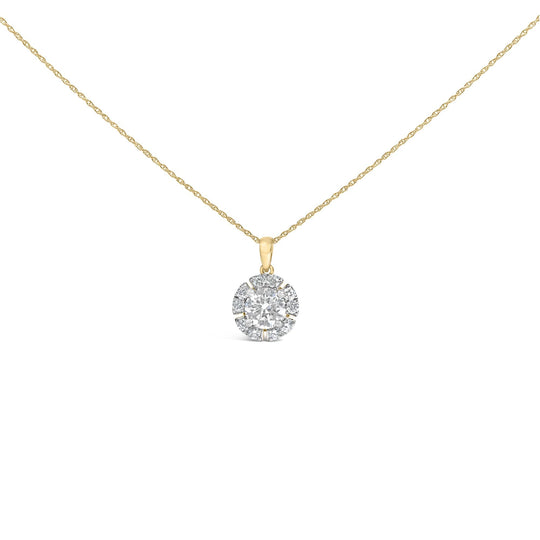
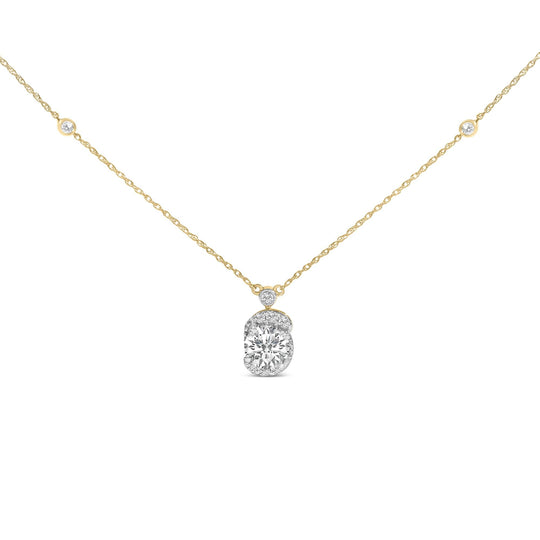
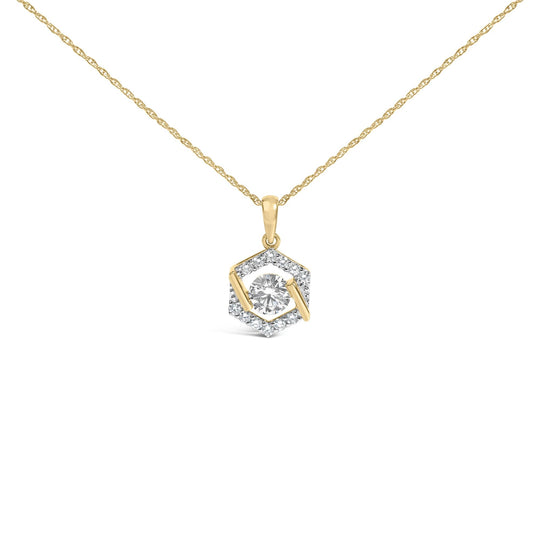
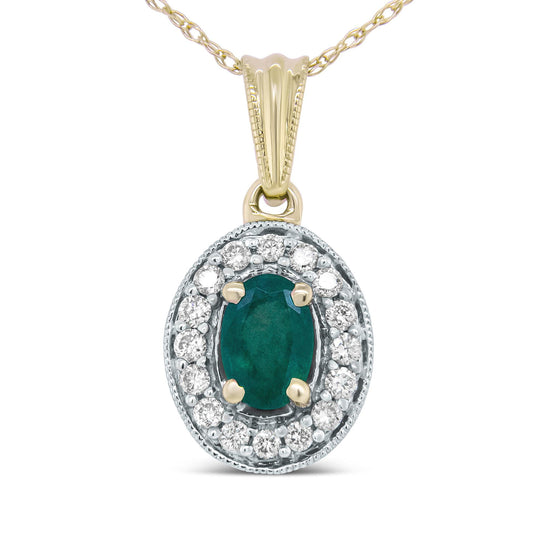
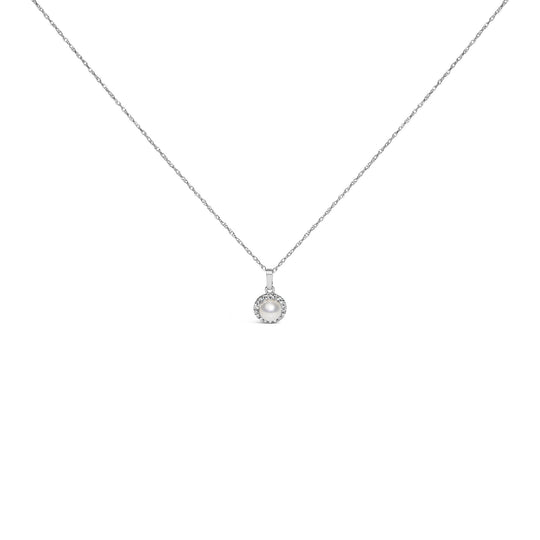
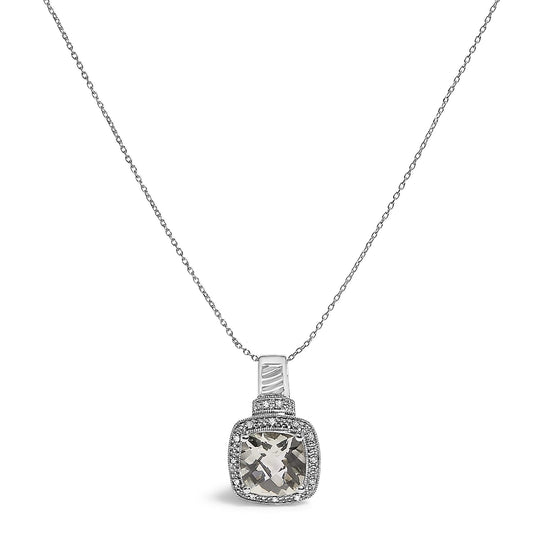
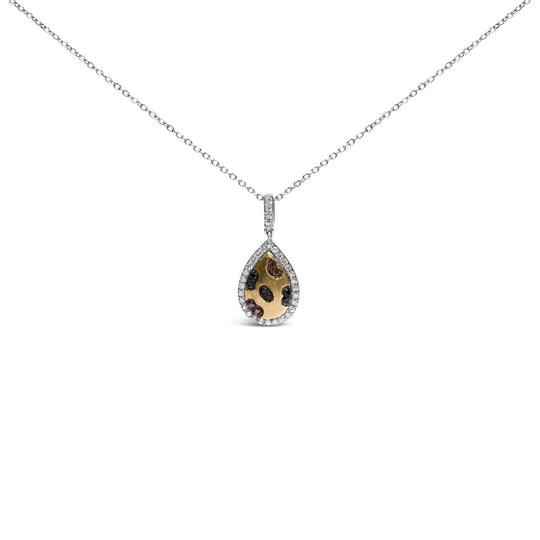
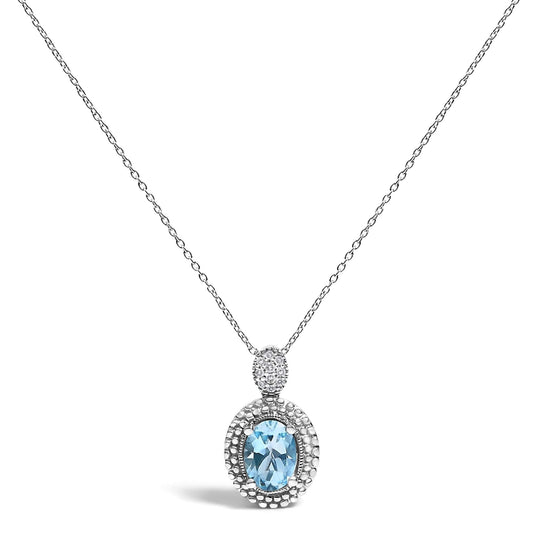
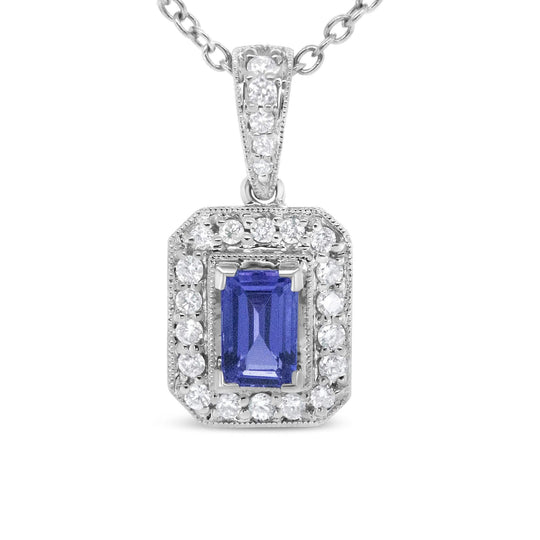
Halo pendants feature a center stone surrounded by a ring of smaller stones, creating a larger combined visual footprint than the center stone alone and adding depth and dimension to the setting. Oath's halo pendants collection covers diamond and gemstone options in yellow gold, white gold, and rose gold in 10K, 14K, and 18K, available with or without a matching chain. Every halo pendant order ships free, with returns accepted within 30 days.
Choosing a Halo Pendant: What the Setting Does and How to Buy Right
Why Diamond Halo Pendants Deliver More Visual Size
The halo setting surrounds a center stone with a ring of smaller pave-set diamonds, creating the appearance of a significantly larger center stone than the carat weight alone would suggest. The surrounding stones also increase total light output because more diamond surface is exposed. A 0.25ct center stone in a halo setting reads comparably to a 0.5ct plain solitaire at conversational distance. The tradeoff is a more complex setting that requires periodic inspection to confirm the pave stones remain secure. For the full range of diamond pendant styles across setting configurations, browse diamond pendants.
Gold Metal Options for Halo Pendants
White gold is the most widely chosen metal for halo pendants because its neutral tone creates visual continuity with colorless diamonds, keeping the focus on stone brilliance. Yellow gold creates a warmer context that suits lower-color-grade diamonds and colored center stones particularly well. Rose gold is increasingly popular in halo pendants and pairs naturally with morganite, pink sapphire, and other warm-toned stones. All three are available in 14K and 18K. For the full range of pendant styles in gold across colors and karats, browse gold pendants.
Halo Pendants and Chain Pairing
A halo pendant is only as effective as its chain pairing. A lightweight pendant at 16 to 18 inches sits at the collarbone and is visible at the decolletage, which is the most natural position for diamond-set pieces. A more substantial pendant at 18 to 20 inches drops to the chest, which works better for larger halo designs where the setting's detail is visible at a further distance. Delicate cable or Singapore chains suit smaller halos; box or snake chains support heavier settings without deforming. For coordinating chain and pendant combinations, browse pendant necklaces.
Halo Pendants Within the Broader Pendant Category
The halo setting is one configuration within a full pendant category that includes plain bezel, prong-set, drop, and charm styles. The halo's defining characteristic is its surrounding ring of accent stones, which amplifies the center stone's apparent size and brilliance. Buyers comparing pendant types should consider whether the halo's visual amplification justifies its higher maintenance requirements compared to simpler settings. For the full pendant range across settings, stones, and metals, browse pendants. Every order ships free with a 30-day return policy.
Frequently Asked Questions
What is a halo pendant?
A halo pendant is a necklace pendant featuring a center stone, typically a diamond or colored gemstone, surrounded by a ring of smaller accent stones, usually diamonds. This surrounding ring is the halo. The halo setting is designed to increase the apparent size of the center stone and add distributed sparkle around it. Halo pendants are available in multiple center stone shapes including round, oval, cushion, pear, and heart, and across a range of metals and chain styles.
What center stones work well in halo pendants?
Diamonds are the most common center stone for halo pendants, particularly round brilliant cuts that maximize the visual synergy between the center and the surrounding halo diamonds. Colored gemstones also work well in halo settings because the white diamond halo creates a bright contrast that makes the center color more saturated and vivid. Sapphires, rubies, emeralds, and morganite are among the most popular colored center stones. Birthstones in halo pendants are a common choice for personalized gifting.
How should I care for a halo pendant?
Soak the pendant in warm water with a small amount of mild dish soap for 10 to 15 minutes. Use a soft toothbrush to clean gently around the halo prongs and under the center stone, where residue accumulates. Rinse thoroughly and dry with a soft, lint-free cloth. Avoid ultrasonic cleaners for pendants with emeralds, pearls, or opals, as these stones are sensitive to vibration and heat. Inspect the halo prongs annually to confirm small stones remain secure.
What karat gold is best for a halo pendant?
14K gold is the most practical choice for a halo pendant worn regularly. The 58.3% gold content provides sufficient durability for a setting with small, closely spaced stones. 18K gold has a richer colour but is softer, making the fine prongs of a halo setting slightly more vulnerable to bending with regular contact. White gold at 14K provides the neutral, diamond-enhancing tone most associated with halo designs at a practical durability level.
How does a halo pendant differ from a halo ring setting?
The halo setting in both cases surrounds a center stone with a ring of smaller diamonds. The primary difference is wear context and resulting structural requirements. A halo pendant hangs suspended on a chain and experiences only low-impact movement and occasional contact. A halo ring is in constant contact with surfaces and requires more robust prong construction to protect the small halo stones. The halo effect is visually identical in both, but pendants can use finer pave settings than rings without the same risk of stone loss from wear. Browse halo rings to compare the setting directly in a ring context.
Are halo pendants appropriate for everyday wear?
Yes, for most designs. A well-made halo pendant in 14K gold with a secure pave setting handles daily wear without concern under normal conditions. Removing the pendant before contact sports, heavy physical work, or swimming in heavily chlorinated water preserves the setting's integrity. Very fine, delicate halo designs with very small pave stones are better suited to occasional wear; mid-weight designs with stronger prong work are practical for daily use. For halo pendants with colored center stones, browse gemstone jewelry.
What size halo pendant is right for me?
Pendant size selection depends primarily on the wearer's frame and the intended chain length. Delicate halos at 8 to 12mm total diameter suit finer frames and shorter chains at the collarbone. Pendants at 12 to 18mm total diameter are more versatile and read clearly at most chain lengths. Pendants above 20mm are statement pieces suited to lower necklines and longer chains. A round 0.25 to 0.5ct center stone with a single halo falls in the 12 to 16mm range, which suits the widest variety of wearers. For chain options and necklace styles to pair with pendant pieces, browse necklaces.
What metal color suits a colored gemstone halo pendant best?
Colored gemstone halo pendants in sapphire, emerald, and morganite pair most naturally with yellow gold or rose gold. The warm metal context creates contrast with cool-toned stones and enhances the warmth of pink and peach stones. White gold or platinum produces a cooler surround that allows the stone's color to read without competing warm undertones. For blue sapphire specifically, white gold is a widely used pairing because the neutral metal lets the stone's blue saturation read without interference from the metal color.
Is a halo pendant suitable as a gift for a younger recipient?
A halo pendant in 14K gold with a small center stone is appropriate for recipients from late teen years onward. The pendant's scale and construction handle regular wear at that stage, and a smaller halo at 10 to 14mm total diameter reads as age-appropriate without being overtly formal. Diamond halos are a common milestone gift at graduation or significant birthday occasions. Colored gemstone halos using the recipient's birthstone add personalization well suited to a gifting context for a younger wearer.
What is a double halo pendant?
A double halo pendant features two concentric rings of accent stones surrounding the center stone rather than one. The inner halo closely follows the profile of the center stone. The outer halo adds a second larger ring of stones outside the first, increasing total stone count and the overall apparent size of the pendant. Double halos produce a more saturated, elaborated look than single halos. They require more precise setting work and typically carry a higher price point for comparable center stone specifications.
Use left/right arrows to navigate the slideshow or swipe left/right if using a mobile device
choosing a selection results in a full page refresh
press the space key then arrow keys to make a selection