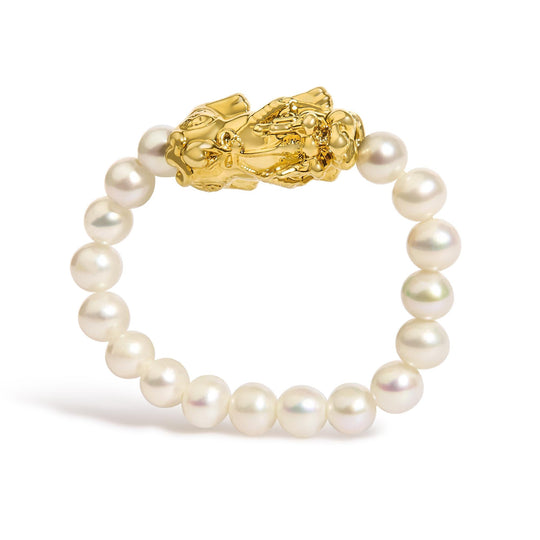
What to Know Before Buying a Pearl Ring
What Makes Pearl Different from Other Gemstone Rings
Pearl stands apart from most gemstones in ring settings because it forms organically inside mollusks rather than in the earth. The result is a smooth, lustrous surface that reflects light differently from any faceted stone. In ring settings, pearl's nacre surface is more vulnerable to daily contact than harder stones, which makes setting choice particularly important. Freshwater pearls are the most available and practical for ring use. For buyers comparing pearl rings against other colored stone options, the full range of gemstone jewelry covers all stone types and categories.
Pearl Rings vs. Sapphire Rings
Pearl and sapphire rings both suit buyers interested in non-diamond options, but they create entirely different visual effects. Pearl provides an organic, lustrous surface with soft color variation, while sapphire delivers a vivid, faceted blue with brilliant light return. Sapphire is significantly harder at 9 on the Mohs scale, making it the more practical choice for daily ring wear. Pearl suits buyers who value its distinctive organic quality and lower-key aesthetic. For buyers who prefer the harder, more vivid option, sapphire rings represent the clearest contrast to pearl in the colored stone ring category.
Metal for Pearl Rings: White Gold vs. Yellow Gold
White gold is the most contemporary setting for pearl rings and suits bright white and cream pearls because the neutral metal allows the nacre's natural tone to read without competition. Yellow gold is the classic traditional pairing that creates warmth beneath the pearl's surface, complementing cream and warm-white tones. Rose gold works naturally with pink and champagne pearls where the metal's warmth echoes the stone's tone. Sterling silver is a practical lower-cost alternative with a similar visual effect to white gold. The full range of gold rings covers all these metal colors across ring styles and settings.
Pearl Ring Durability and What to Expect
Pearl at 2.5 to 4.5 on the Mohs scale is the softest material in fine jewelry ring settings, which means surface care matters more for pearl rings than for any other ring type. Bezel settings protect the nacre surface most effectively by encasing the stone within a metal rim rather than leaving it exposed on prongs. Rings encounter significant daily contact with surfaces, which over time can dull or abrade a pearl's surface without consistent care. With appropriate settings and regular maintenance, pearl rings hold up well through daily wear. The full rings category covers all gems and metals. Every order ships free with a 30-day return policy.
Frequently Asked Questions
What types of pearls are used in pearl rings?
Freshwater pearls are the most common in pearl rings because they are available in a wide range of sizes, colors, and shapes at accessible price points. Akoya pearls, saltwater cultured pearls from Japan and China, produce rounder, brighter stones that suit higher-end ring settings. South Sea pearls are larger and more expensive, typically used in statement ring settings. Tahitian pearls produce dark tones ranging from charcoal to green. All are cultured, meaning grown with human assistance inside live mollusks, and are widely used in genuine fine jewelry.
What karat gold works best for pearl rings?
14K white gold is the most popular setting for pearl rings because the neutral metal allows the pearl's natural color to read without tonal interference, and 14K provides good durability for a ring that encounters daily contact. Yellow gold in 14K creates warmth under the pearl that suits cream and warm-toned stones. 18K gold has richer color but is slightly softer, making it better suited to lower-impact settings. Sterling silver is a practical lower-cost option with a similar visual effect to white gold for pearl rings.
How durable are pearls in ring settings?
Pearls are the softest material commonly used in fine jewelry rings, ranking 2.5 to 4.5 on the Mohs scale. Rings encounter more daily contact with surfaces than any other jewelry type, which makes pearl ring care more demanding than pearl pendant or earring care. Bezel settings are strongly recommended because they protect the nacre edges from direct impact. Prong settings leave the pearl more exposed and require more careful handling. With consistent care and appropriate settings, pearl rings last well through regular wear. For a full guide to choosing pearls worth buying, read how to buy pearl jewelry.
How do I care for a pearl ring?
Wipe the pearl after each wear with a soft, damp cloth to remove skin oils and any surface residue. Avoid exposing the ring to perfume, hairspray, lotion, and household chemicals, which degrade nacre over time. Never use ultrasonic cleaners or steam on pearl rings. Rings accumulate more residue than most jewelry types given daily contact with skin and surfaces, so more frequent wiping and occasional gentle washing with mild soap keeps the stone at its best. Store the ring separately from harder gemstones to prevent surface scratching.
What occasions suit pearl rings?
Pearl rings suit both everyday wear and formal occasion contexts, depending on the setting style. Simple solitaire pearl rings in plain gold or silver settings suit everyday wear and most professional contexts. More elaborate settings with accent stones suit occasion wear, bridal jewelry, and formal events. June birthday gifts are the most common occasion-driven purchase given pearl's birthstone status, but pearl rings also suit anniversary gifts and milestone occasions where the stone's associations with elegance are appropriate.
Is pearl a June birthstone?
Pearl is the traditional birthstone for June, shared with alexandrite and moonstone. It is associated with Gemini and Cancer in zodiac traditions. Pearl rings are a particularly meaningful June birthday gift because rings display the stone prominently throughout daily wear. The stone's softness of color and distinctive nacre luster make it a recognizable and appreciated gift choice. The birthstone connection adds meaning for June recipients, and pearl's broad aesthetic appeal means it is worn throughout the year.
Can pearl rings be worn every day?
Pearl rings can be worn daily with consistent care, though they require more attention than most ring stones given pearl's softer surface. Bezel settings are the most practical for everyday pearl ring wear because they protect the nacre from direct surface contact. Simple daily habits, such as removing the ring before washing hands or applying hand cream, protect the nacre surface significantly over time. With appropriate settings and regular care, a pearl ring holds up well through daily use. Prong settings are more vulnerable and require more careful handling.
How does a pearl ring compare to a pearl pendant?
Pearl rings and pearl pendants showcase the stone at different positions on the body with very different maintenance requirements. A ring displays the pearl at hand level with maximum visibility, but it encounters far more daily contact with surfaces than a pendant, which increases the risk of surface damage to the pearl's softer nacre. A pendant at neckline level faces less direct impact and is generally easier to maintain over time. Both suit pearl given the stone's luster, but buyers who want low-maintenance pearl jewelry often start with a pendant. For buyers who want pearl at neckline level with lower maintenance, see pearl pendants.
Why is white gold a popular setting for pearl rings?
White gold creates a neutral, contemporary backdrop that allows the pearl's natural color and luster to read without any competing warmth from the metal. Where yellow gold adds warmth that complements cream and warm-toned pearls, white gold lets bright white pearls read at their clearest brightness. White gold also reads as more modern than yellow gold in pearl settings, which suits buyers who want pearl without older associations of yellow gold and pearl combinations. White gold ring settings are available in 10K, 14K, and 18K. The full range of white gold ring settings is available in white gold rings.
Are pearl rings a good choice for women?
Pearl rings are a strong choice for women because the stone's soft color, distinctive luster, and birthstone associations make them meaningful across a range of gifting contexts. The June birthstone connection adds meaning for recipients born in that month. Simple solitaire pearl rings in white or yellow gold suit a wide range of personal styles and occasions without appearing overly formal. Pearl is also a traditional choice for bridal and engagement jewelry.
Use left/right arrows to navigate the slideshow or swipe left/right if using a mobile device