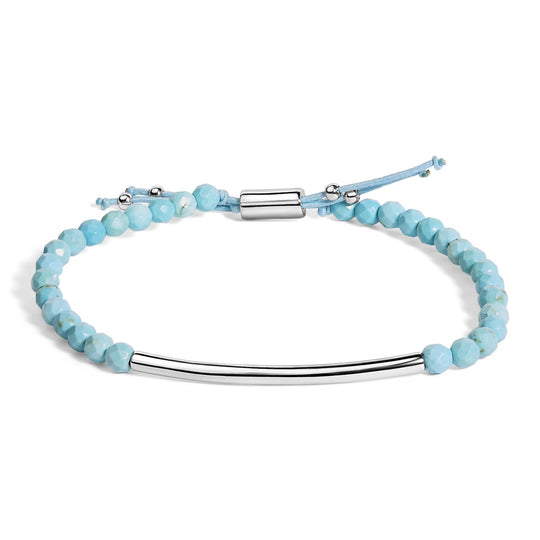
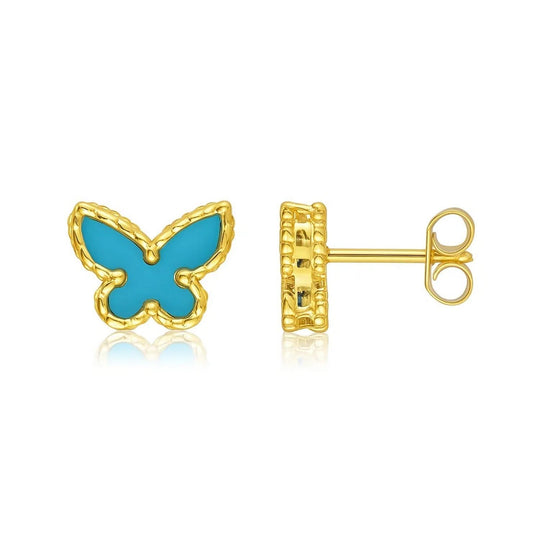
Turquoise Jewelry in Gold and Silver
What Turquoise Jewelry Is and What Makes Turquoise Distinctive
Turquoise is an opaque hydrous phosphate mineral ranging from pale sky blue to deep blue-green with natural matrix veining. At Mohs 5 to 6 it is softer than most fine gemstones but has been used in fine jewelry across Egyptian, Persian, Native American, and Southwest American traditions for thousands of years. December birthstone status makes turquoise jewelry a widely purchased gift for December recipients. For the full range of colored and birthstone fine jewelry, browse gemstone jewelry.
Turquoise in Gold Settings
14k yellow gold is the most traditional metal for fine turquoise jewelry because the warm-cool color contrast between gold and blue-green turquoise has historical roots in multiple fine jewelry traditions. White gold creates a cooler contemporary pairing that allows turquoise's own blue-green to read without a competing warm metal cast. For the full range of fine gold pieces, browse gold jewelry.
Turquoise Necklaces and Pendants
Turquoise in necklace format is most commonly found as a single large bezel-set pendant stone in gold or silver, as a graduated beaded turquoise strand in the Native American tradition, or as a stone-station necklace with equally spaced turquoise settings along a chain. The pendant format is the most practical for daily wear because the stone faces minimal direct contact in the chest position. For the full range of turquoise necklace and pendant styles, browse turquoise necklaces.
Turquoise Jewelry in Sterling Silver: The Most Widely Produced Format
Sterling silver is the most widely produced metal for turquoise jewelry globally because the combination has the deepest commercial and cultural history in Native American and Southwest American fine jewelry traditions. Silver's cool tone allows turquoise's blue-green to read without competition from warm metal warmth. For the full fine silver jewelry range, browse silver jewelry. Every order ships free with a 30-day return policy.
Frequently Asked Questions
What is turquoise jewelry?
Turquoise jewelry encompasses fine jewelry rings, earrings, necklaces, pendants, and bracelets featuring turquoise as the primary gemstone. Turquoise is an opaque blue-to-blue-green hydrous phosphate mineral with natural matrix veining in brown, black, or gold tones. It has been used in fine jewelry across Egyptian, Persian, Tibetan, and Native American traditions for thousands of years. Modern turquoise jewelry is produced primarily in gold and sterling silver settings, from traditional Southwest-style cuff bracelets to contemporary fine jewelry pendants.
Is turquoise a precious gemstone?
Turquoise is classified as a fine gemstone, though it is not one of the four traditionally classified precious stones (diamond, ruby, sapphire, emerald). It has significant historical value and has been treated as a precious material across multiple cultures for thousands of years. At Mohs 5 to 6 it is softer than most precious stones, which affects its durability in high-contact jewelry formats. Natural, untreated turquoise of high quality from premium sources such as Sleeping Beauty Mine and Persian Nishapur carries meaningful gemstone value.
What causes turquoise's color?
Turquoise's characteristic blue-green color comes from the presence of copper in its chemical composition. More copper relative to aluminum produces richer blue tones; more aluminum relative to copper produces greener tones. The matrix pattern comes from the host rock material present during the mineral's formation. Sky Blue turquoise is the palest variety, often with minimal matrix. Persian turquoise from Nishapur is typically a rich medium blue. Sleeping Beauty turquoise from Arizona is known for its even, pure light blue without significant matrix.
What types of turquoise jewelry are available?
The most widely available turquoise jewelry types are rings with bezel-set or prong-set turquoise in gold or silver; earrings in stud, drop, and hoop formats; necklaces and pendants with single-stone bezel-set designs or graduated bead strands; and bracelets in cuff, bangle, and link formats. Tennis bracelets and station necklaces with equally spaced turquoise settings are widely produced in fine jewelry. Turquoise is also common in cluster ring designs where multiple smaller stones create a compound surface.
Is turquoise a December birthstone?
Turquoise is the traditional December birthstone, one of three recognized modern December stones alongside tanzanite and zircon. As a December birthstone, turquoise jewelry is widely purchased as a gift for recipients born in December. The stone's accessibility at multiple price points means December birthstone jewelry in turquoise is available across most gift budgets. A bezel-set turquoise pendant in 14k gold or a silver cuff bracelet are among the most widely purchased December birthstone gift formats.
What is stabilized turquoise?
Stabilized turquoise is natural turquoise that has been treated with a colorless resin or polymer impregnated under vacuum into the stone's pore structure. The treatment increases the stone's hardness, reduces its porosity (making it less susceptible to absorbing oils and cosmetics), and often intensifies or evens out the color. Stabilized turquoise is the most widely used material in commercial turquoise jewelry because it is more durable than untreated natural turquoise and available at accessible prices. Treatment disclosure is standard practice; reputable sellers identify stabilized material clearly.
How do I care for turquoise jewelry?
Turquoise jewelry requires gentle care because the stone is porous and can absorb liquids, oils, cosmetics, and chemicals that permanently alter its color. Remove turquoise jewelry before swimming, bathing, or applying cosmetics and perfume. Clean by wiping with a soft, slightly damp cloth and drying immediately. Do not soak in water or use chemical jewelry cleaners. Store in a soft pouch separately from other jewelry to prevent scratching from harder stones or metal edges. Avoid prolonged exposure to direct sunlight, which can fade some turquoise varieties over time.
What turquoise bracelet styles are available?
Turquoise bracelets are available in several formats including cuff bracelets with a single large bezel-set stone in the traditional Southwest American style, tennis bracelets with matched stones across the full length, bangle bracelets with stone settings, and chain bracelets with turquoise station accents. Sterling silver and 14k yellow gold are the most widely produced metals for turquoise bracelet settings. For the full range of turquoise bracelet styles, browse turquoise bracelets.
What turquoise pendant styles are available?
Turquoise pendants are available in solitaire bezel, cluster, and drop formats in gold and silver settings. Solitaire bezel settings are the most widely produced format because they protect the stone's edges while keeping the full face visible at the neckline. Cluster designs use multiple smaller stones for a fuller color display. The pendant position is practical for turquoise because the stone faces minimal daily contact, preserving its softer surface. Yellow gold and sterling silver are the most commonly used metals, reflecting the stone's historical associations with both Southwest American and Middle Eastern jewelry traditions. For the full range of turquoise pendant styles, browse turquoise pendants.
Is turquoise available in ring formats?
Turquoise rings are among the most widely produced turquoise jewelry formats, particularly in the Southwest American and Native American jewelry tradition where large bezel-set natural turquoise stones in heavy silver ring settings are a defining format. In fine jewelry, turquoise rings are available as cocktail rings, stackable rings with smaller turquoise accents, and cluster rings. Bezel settings are standard because they protect the stone's edges from the impact that rings receive in daily wear. For the full range of ring styles across all gemstone types, browse rings.
Use left/right arrows to navigate the slideshow or swipe left/right if using a mobile device