Halo Bracelets: What the Setting Style Means for Wrist Jewelry
How Halo Settings Work in Bracelet Formats
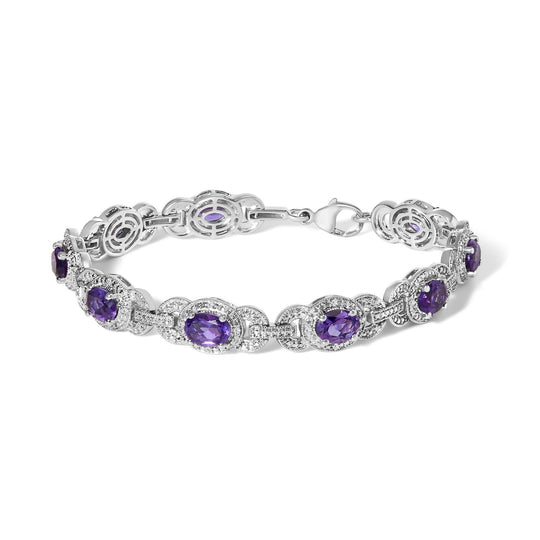
A halo bracelet applies the halo setting principle to wrist jewelry, surrounding a center stone with a ring of smaller pavé-set stones to amplify the visual presence of the main stone. The most common formats are bangle-style pieces with a single prominent halo element and line bracelets where multiple halo stations run the full length of the wrist. The halo setting increases total diamond or stone coverage relative to center stone carat weight, making it one of the most efficient settings for visual impact. For the full bracelet range across all settings and styles, browse bracelets.
Diamond Halo Bracelets: The Most Common Configuration
Diamond halo bracelets are the most widely produced style in this category. Round brilliant diamonds pair naturally with a surrounding ring of smaller round pavé stones to create continuous brilliance across the piece. White gold and platinum settings are the most popular choices because they maximize the visual flow between metal and colorless stone halos. For the full range of diamond bracelet styles across halo and other settings, browse diamond bracelets.
Gold Settings for Halo Bracelets
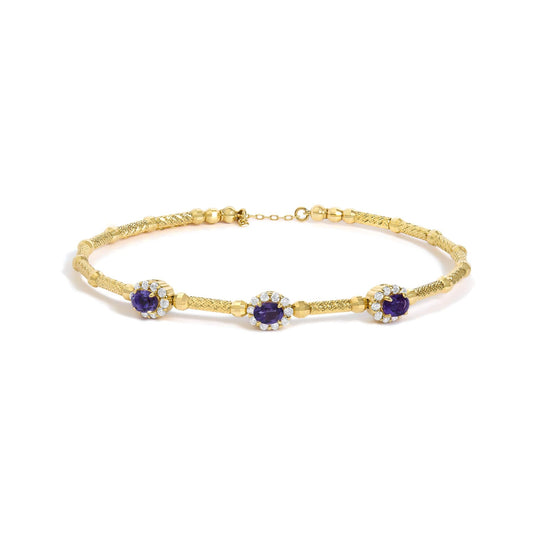
Gold is the primary setting metal for halo bracelets. 14K white gold is the most widely used because of its hardness relative to 18K and its neutral tone that suits colorless diamond halos. Yellow gold pairs naturally with champagne diamonds and colored stone halos including amethyst, citrine, and garnet. Rose gold is the most popular choice for morganite and pink sapphire halo bracelets. The setting metal should coordinate with existing jewelry the wearer already owns. For the full range of gold bracelet styles including halo and other formats, browse gold bracelets.
Halo Bracelets and the Broader Bangle Category
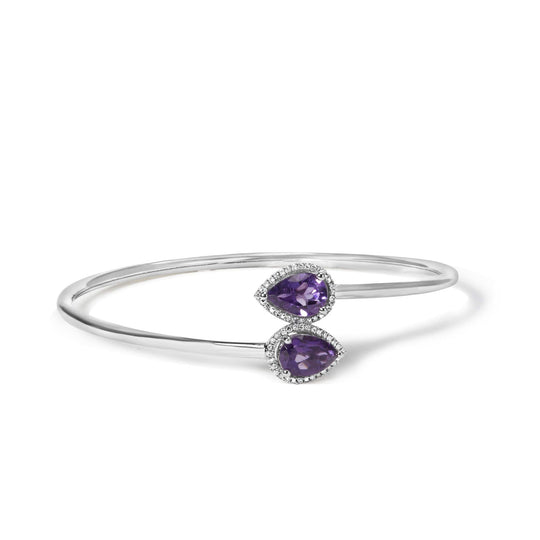
Halo bracelets that feature a single centered halo element share the rigid, over-the-hand sizing approach of bangles and are often categorized within the bangle family. The halo element adds stone presence that plain metal bangles lack, making halo bangles a practical choice for buyers who want structured wrist jewelry with significant visual impact. They stack cleanly with plain metal bangles in the same finish. For the full bangle range including plain metal and stone-set formats, browse bangles. Every order ships free with a 30-day return policy.
Frequently Asked Questions
What is a halo bracelet?
A halo bracelet is a piece of wrist jewelry where one or more center stones are each surrounded by a ring of smaller pavé-set stones, creating the appearance of a larger, more luminous center stone than the individual carat weight suggests. The halo refers to the setting technique rather than a specific bracelet construction type. Halo bracelets appear in bangle, cuff, and multi-station line formats. The setting style is most commonly used with diamonds but is also produced with colored stones including sapphire, morganite, emerald, and amethyst.
What types of halo bracelets are available?
Halo bracelets are produced in several structural formats. Bangle-style halo bracelets feature a rigid band with a single prominent halo element positioned at the top of the wrist. Multi-station bracelets set multiple halo elements along a chain or bar to distribute stone presence across the full length of the wrist. Cuff-format halo bracelets use an open c-shaped band with a centered halo motif. Bangle and cuff versions require fitting for wrist size; chain-based multi-station versions use standard bracelet lengths.
What is the difference between a halo bangle and a halo tennis bracelet?
A halo bangle is a rigid bracelet that slips over the hand and positions a halo-set stone prominently at the top of the wrist. It has a fixed circumference and requires a specific fit. A halo tennis bracelet distributes multiple halo-set stones across the full length of a flexible chain, creating continuous stone coverage along the wrist. Tennis bracelets use a clasp for sizing flexibility and tend to move more on the wrist. The bangle format makes a stronger single focal point; the tennis format creates a continuous line of stone coverage.
How does a halo bracelet differ from a standard solitaire bracelet?
A solitaire bracelet features a single stone set without surrounding smaller stones, relying entirely on the center stone's own light return. A halo bracelet surrounds that center stone with a ring of smaller pavé stones, increasing total stone surface area and creating the optical effect of a larger center stone. Halo bracelets produce more visual coverage per carat of center stone weight, while solitaire bracelets emphasize the quality and clarity of a single stone without visual augmentation.
What center stone shapes work best in halo bracelet settings?
Round brilliant stones are the most common choice for halo bracelet settings because the circular halo naturally follows the stone's outline. Oval and cushion shapes work well in halo settings, with the surrounding stones following the elongated form. Princess and emerald cuts carry halo settings in square or rectangular configurations. The most important factor is that the halo ring's geometry closely matches the center stone's outline so the surrounding stones appear intentional rather than approximate.
How should I care for a halo bracelet?
The pavé stones in a halo bracelet accumulate oils and residue faster than plain metal settings because of their close-set configuration. Clean regularly with warm water, mild dish soap, and a soft toothbrush, paying attention to the underside of each halo element where buildup collects. Rinse thoroughly and dry with a lint-free cloth. Inspect pavé settings annually to confirm individual stones remain secure. Avoid ultrasonic cleaners for bracelets with fracture-filled or treated stones. Store separately to prevent abrasion from harder jewelry pieces.
Are halo bracelets suitable for everyday wear?
Halo bracelets in 14K gold with diamonds or hard colored stones such as sapphire and ruby handle everyday wear without significant concern. The pavé-set halo elements require more regular inspection than plain metal pieces because small surrounding stones can work loose over time from consistent contact. Bracelets with softer stones such as emerald, opal, or pearl in halo settings are better suited to occasional rather than daily wear. For everyday use, 14K gold with diamond or sapphire halos in a secure channel or shared-prong setting is the most practical choice.
What ring styles coordinate with a halo bracelet?
Halo bracelets coordinate most naturally with other pieces that use the same setting style. A halo ring on the same hand as a halo bracelet creates visual consistency through the shared design element. Plain metal bands and slim chain bracelets on either side of the halo bracelet create a clean frame without competing for attention. Keeping metals consistent across the full wrist and hand produces the most cohesive result. For halo-set ring options that coordinate with a halo bracelet, see our halo rings.
How does white gold affect the appearance of a halo bracelet?
White gold creates visual continuity between the setting metal and colorless diamonds, eliminating the color contrast that appears when yellow gold shows through between stones. The result is a more cohesive appearance where the metal effectively disappears and the diamonds carry the design. The rhodium plating on white gold adds a high-polish finish that reflects light in a way that reinforces the brilliance of the stone coverage. 14K white gold provides the best balance of hardness and color for daily-wear halo bracelets. For the full range of white gold bracelet styles across halo and other formats, see our white gold bracelets.
Are halo bracelets a good gift?
Halo bracelets are among the strongest fine jewelry gift choices because they deliver significant visual presence without requiring stone size decisions. The halo setting maximizes the apparent size of the center stone, making a piece that reads as a generous gift at a lower total diamond weight than an equivalent solitaire. Bracelets do not require precise sizing in the same way rings do, which makes them more practical as gifts when the recipient's measurements are not known. Every order ships free with a 30-day return policy. For the full range of women's bracelet styles across settings, metals, and stones, see our womens bracelets.
Use left/right arrows to navigate the slideshow or swipe left/right if using a mobile device
choosing a selection results in a full page refresh
press the space key then arrow keys to make a selection