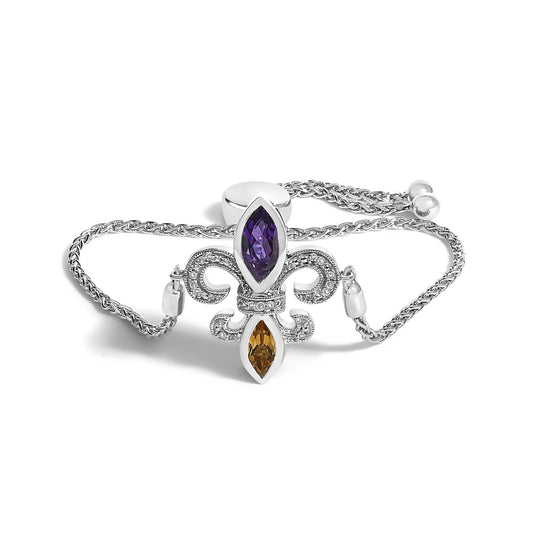
Marquise stones in bracelet settings create an elongated, directional visual rhythm along the piece that differs clearly from the more symmetrical look of round or oval station designs. Oath's marquise bracelets are available in gold and sterling silver. Every marquise bracelet order ships free, with returns accepted within 30 days.
Marquise Bracelets Within the Full Bracelet Category
A marquise bracelet incorporates marquise-cut stones as the primary visual element, using the elongated boat-shaped faceting in a bracelet format where the stone's pointed oval shape is set along the wrist. Marquise bracelets sit within the stone-set bracelet category alongside round, oval, and cushion-cut stone bracelets. The marquise cut's distinctive elongated silhouette and pointed tips create a more dramatic visual identity at the wrist than round or oval-cut stone bracelets at the same stone size. Compare the full range of bracelet styles in the bracelets collection.
Marquise Diamond Bracelets
Marquise diamond bracelets use the marquise cut's modified brilliant faceting in a bracelet format, where the cut's 58 facets deliver strong light return across the elongated stone. A tennis-style bracelet with marquise diamonds set in a continuous line is the most common marquise diamond bracelet configuration because the horizontal orientation of the elongated stones creates a repeating pattern that reads clearly along the wrist. For buyers considering a diamond bracelet with other stone shapes alongside marquise, browse diamond bracelets for the full diamond bracelet range.
Gold Marquise Bracelets: Metal and Setting
Gold marquise bracelets in yellow, white, and rose gold each create a different visual relationship between the metal and the stone. White gold is the most commonly chosen setting for marquise diamond bracelets because the cooler metal tone maximizes contrast with the diamond's brilliance. Yellow gold marquise bracelets provide a warmer, more traditional aesthetic that suits colored gemstones and buyers who prefer gold's classical register. Browse gold bracelets for marquise and other gold bracelet constructions across all three gold tones.
Marquise Bracelets and Tennis Bracelets
The most common marquise bracelet configuration is structurally a tennis bracelet: a continuous line of prong-set stones connected by a flexible chain at a consistent length. The distinction is the stone shape: standard tennis bracelets use round brilliant diamonds, while a marquise version uses the elongated, pointed stone. The marquise cut creates a more directional visual pattern along the bracelet than round stones, reading as a more design-specific choice within the tennis bracelet category. Compare the full range of tennis-style bracelets in the tennis bracelets range. Every order ships free with a 30-day return policy.
Frequently Asked Questions
What is a marquise bracelet?
A marquise bracelet is a bracelet that incorporates marquise-cut stones as its primary decorative element. The marquise cut is characterized by an elongated, pointed oval shape with a modified brilliant faceting pattern of 56 to 58 facets. In bracelet form, marquise-cut stones are typically set in a horizontal orientation along the wrist, with the stone's length running parallel to the wrist line. The elongated shape creates a more directional visual identity at the wrist than round or cushion-cut stone bracelets.
What stone is typically used in a marquise bracelet?
Marquise bracelets most commonly feature diamonds as the primary stone because the cut's modified brilliant faceting maximizes the elongated stone's light return. Colored gemstones including sapphires, emeralds, and rubies are also used in marquise bracelets, where the cut's elongated form adds apparent length to the colored stone. Both diamond and gemstone marquise bracelets are available in continuous tennis configurations and as individual-stone accent styles.
How does a marquise bracelet coordinate with marquise earrings?
Marquise bracelets and marquise earrings use the same elongated, pointed oval cut as their central design element, which makes them natural coordinating pieces. A marquise bracelet at the wrist paired with marquise earrings at the ear creates a thematically consistent combination where the stone's distinctive pointed silhouette appears at multiple visible positions. The scale difference between a bracelet stone and an earring stone prevents the combination from reading as identical. Browse marquise earrings for earring options in the same cut.
What setting works best for a marquise bracelet?
Marquise bracelets most commonly use prong settings because the stone's pointed tips require secure V-prong protection at both ends to prevent chipping. Bezel settings are also used for marquise stones in bracelets, particularly in contemporary styles where a smooth, stone-flush appearance is preferred over the more open look of a prong setting. Both setting styles require periodic inspection for wear at the tip prongs, where flex during wear concentrates stress. Browse rings for marquise cut ring options in similar setting configurations.
Is a marquise bracelet suitable for daily wear?
Marquise bracelets in fine gold settings are appropriate for regular wear with care: avoiding contact with cleaning chemicals that can affect metal prongs, removing before high-impact activities, and having prong settings inspected periodically for security. The marquise stone's pointed tips require more attentive setting maintenance than round stones because the prongs at the tips are the first points of potential wear during everyday use. For the full range of marquise cut jewelry across all formats, see marquise jewelry.
How does the marquise cut affect how a bracelet looks on the wrist?
Marquise bracelets create a directional visual rhythm along the wrist because the elongated stone's pointed oval shape has an inherent orientation that round or cushion-cut stones do not. Set horizontally along the bracelet line, marquise stones create a repeating elongated pattern that reads as more design-specific than round stone bracelets. The elongated shape also creates a subtle lengthening effect at the wrist.
Can marquise bracelets be stacked with other bracelets?
Marquise bracelets stack cleanly alongside plain metal bangles or thin chain bracelets because the stone bracelet's visual presence provides the dominant focal element while the adjacent pieces add framing without competing detail. A single marquise bracelet paired with one or two plain 14k gold bangles is the most common layering approach.
What finger jewelry coordinates with a marquise bracelet?
Marquise bracelets coordinate naturally with marquise-cut rings because both pieces share the elongated stone shape at adjacent positions on the hand. A marquise bracelet at the wrist and a marquise ring on the same hand creates a design-consistent combination without requiring an exact matched set. Plain gold rings or solitaire round-stone rings also work alongside a marquise bracelet, providing a contrasting simplicity that highlights the bracelet's directional stone pattern.
Are marquise bracelets available with colored gemstones?
Marquise bracelets are available with colored gemstones including sapphires, rubies, emeralds, and other faceted stones in the marquise cut. Colored marquise gemstone bracelets are particularly striking because the elongated shape adds apparent length to the stone while the color provides visual contrast to the metal setting. Sapphires in marquise cut are among the most popular colored gemstone choices for bracelets because the stone's hardness suits the daily wear demands of a bracelet format.
How do I choose the right marquise bracelet length?
Marquise bracelets are most commonly available in 6.5-inch to 7.5-inch standard lengths for women, with adjustments available via extender chains on many styles. The correct length allows the bracelet to move freely on the wrist without sliding over the hand or bunching. A bracelet that fits too tightly creates pressure on the stone settings when the wrist bends; one that is too loose risks catching on clothing or surfaces. Measuring the wrist and adding 0.5 to 0.75 inches provides a comfortable everyday fit.
Use left/right arrows to navigate the slideshow or swipe left/right if using a mobile device
choosing a selection results in a full page refresh
press the space key then arrow keys to make a selection