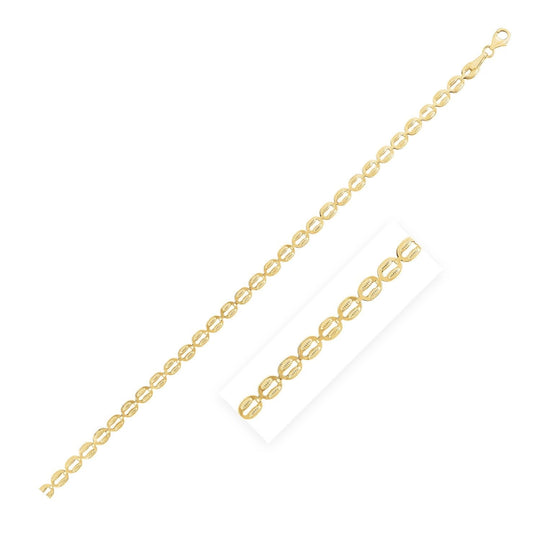
Textured Chains in Gold and Silver
What Textured Chains Are and How Surface Treatment Changes a Chain
Textured chains apply deliberate surface techniques to standard chain constructions, producing a finish that catches and reflects light differently from polished equivalents. Hammered links create irregular facets; diamond-cut chains use precise angled cuts on each link for maximum light reflection; brushed or satin finishes produce a directional, low-shine surface; rope chains with twisted link patterns are also considered textured by construction. Textured chains are produced in gold and silver in all major chain constructions including cable, curb, rope, and box. For the full range of chain constructions in gold and silver, browse the chains hub.
Textured Gold Chains: Visual Richness at Different Karats
Gold textured chains are available in 10k, 14k, and 18k yellow gold, as well as white and rose gold. 14k yellow gold is the most widely produced karat for textured chains because it provides the balance of gold content, durability, and color that suits most buyers for daily wear. Diamond-cut textured gold chains are the most reflective, catching ambient light at each precisely angled facet. Hammered gold chains deliver a more organic, artisanal light response. For the full range of fine gold jewelry, browse gold jewelry.
Textured Chains as Necklaces: Length and Pendant Compatibility
Textured chains work as standalone necklaces in the same length range as standard chains, typically 16 to 24 inches for women and 20 to 24 inches for men. The visual complexity of the surface treatment means textured chains can carry the necklace look without pendant additions, particularly in widths from 2mm and above. When paired with pendants, a textured chain adds background visual interest that creates contrast with a smooth-polished pendant surface. For the full range of ring formats, browse the rings hub.
Caring for Textured Chains
Textured chain surfaces trap residue in worked grooves more readily than smooth-link chains. Warm soapy water applied with a soft brush along the chain length is the most effective cleaning approach. Rinse completely and dry fully before storage. Store flat or coiled loosely in a soft pouch. For the full necklace range across all chain styles, browse necklaces. Every order ships free with a 30-day return policy.
Frequently Asked Questions
What is a textured chain?
A textured chain is a jewelry chain with a deliberately worked surface finish applied to the links or the chain construction itself. Common textured chain types include diamond-cut chains with precise angled facets on each link, hammered chains with irregular struck surfaces, brushed or satin-finish chains with a directional grain, and rope chains whose twisted construction creates inherent surface variation. Textured chains are available in gold and silver across all major chain constructions including cable, curb, rope, and box.
What is the most popular type of textured chain?
Diamond-cut chains are the most popular textured chain type in fine jewelry because the precisely angled facets on each link produce the highest degree of light reflection available without stones. Rope chains are the second most widely purchased textured construction because the twisted strand weaving creates an inherent surface variation that produces a similar shimmer effect. Hammered chains are less common in mass production but are widely sold in artisan and designer fine jewelry for their organic, handworked appearance.
Can textured chains be worn as bracelets?
Textured chains designed as necklaces can also be used as bracelets in shorter lengths by selecting the appropriate size, though most textured chain bracelets are purpose-built with bracelet sizing and clasps from the outset. Diamond-cut and rope chain constructions transition well between necklace and bracelet formats without visual compromise.
How does a textured chain look when layered with plain chains?
Textured chains create effective contrast when layered with plain polished chains because the surface variation reads distinctly against the uniform reflection of smooth links. A diamond-cut gold chain layered with a plain cable chain at a different length produces a stacked look where both chains are visible and visually distinct. A brushed chain paired with a polished curb chain creates a matte-versus-shine contrast.
Are textured gold chains better for daily wear than smooth gold chains?
Textured gold chains are more forgiving in daily wear than highly polished gold chains because minor surface marks and small scratches from regular contact tend to blend into the existing texture rather than standing out against a mirror finish. Diamond-cut textured chains are particularly durable because the angular facets maintain their reflective quality even after extended wear. Hammered finishes are the most resilient to visible wear because the irregular struck surface already appears worked.
What lengths do textured gold chains come in?
Textured gold chains are available in standard necklace lengths from 16 inches as a choker to 24 inches and above for longer layering pieces. The most commonly purchased length for textured chains worn as standalone necklaces is 18 inches, placing the chain at the upper chest. Textured chains in finer widths from 1 to 2mm work well at 16 to 18 inches. Wider textured chains from 3mm and above suit 18 to 22 inch lengths for proportional balance.
Are diamond-cut chains the most reflective textured chain type?
Diamond-cut chains produce the highest light reflectivity of any textured chain construction because the precise angled facets on each link are designed specifically to direct light at maximum angles. Each link face reflects ambient light simultaneously, creating a chain that catches and disperses light more aggressively than rope or hammered constructions. The precise faceting produces a consistently uniform sparkle effect across the full length of the chain.
How do textured chains compare to plain chains for pendant necklaces?
Textured chains paired with pendants create a different visual context than plain chains because the chain's own surface variation adds visual interest behind the pendant. A simple solitaire pendant reads cleanly against both textured and plain chains. A more elaborate pendant may compete visually with a highly textured chain. Matching chain surface treatment to pendant complexity is the most effective pairing approach. For the full range of bangle and bracelet formats, browse bangles.
Are textured chains available in sterling silver?
Textured chains in sterling silver are widely available across diamond-cut, rope, and hammered constructions at accessible price points. Silver holds surface treatment detail well and the cool neutral tone suits both geometric diamond-cut finishes and more organic hammered constructions. Tarnish is the primary care consideration for silver textured chains. For earring options that coordinate with textured chains in silver and gold, browse earrings.
What pendants suit textured chains best?
Simple pendants with clean geometric or solitaire designs read most clearly against textured chain backgrounds because the pendant form creates a distinct shape contrast against the chain's surface variation. A plain hammered disc pendant on a diamond-cut chain reads as an intentional pairing of two different textured surfaces. Elaborate multi-stone pendants can compete with a heavily textured chain. For the full range of pendant formats across all styles and metals, browse pendants.
Use left/right arrows to navigate the slideshow or swipe left/right if using a mobile device