How to Choose Trillion Cut Jewelry for Impact and Durability?
The Trillion Cut and Its Triangular Sibling
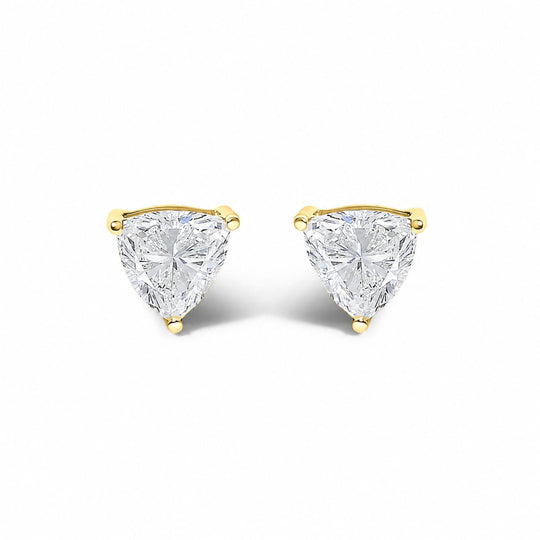
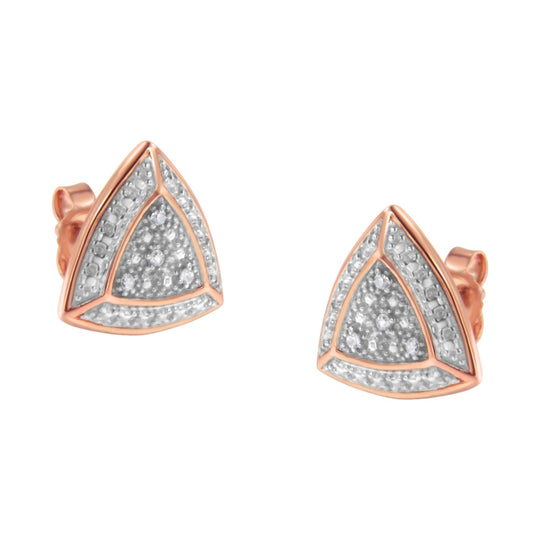
The trillion cut is a trademarked variant of the triangular brilliant cut, characterized by curved convex sides rather than straight edges. The curved profile produces a rounded triangle outline that creates a softer appearance than a pointed triangle while the brilliant facet pattern delivers strong light performance. The trillion became the preferred choice for side stones because its curved base fits naturally against a round or cushion centre without the directional rigidity of a straight-edged triangle. Compare the triangle page for the distinctions between these two related shapes.
Trillion Stones as Side Stones in Three-Stone Rings
A matching pair of trillion cut stones flanking a centre stone is one of the most recognized configurations in fine jewelry. The curved taper of each stone leads the eye toward the centre piece while the slight convexity of the trillion outline creates a unified shape when combined with a round or cushion centre. Setting depth in trillion side stones can be kept shallow because the wide face-up outline maximizes visible surface area relative to setting height. Browse three stone rings for current designs featuring trillion side stones.
Emerald Stones in Trillion Cuts
The trillion cut works particularly well for emerald stones because the facet pattern distributes saturation evenly across the face-up surface without concentrating colour in a deep belly as cushion or oval cuts sometimes do. A trillion emerald pendant or cocktail ring centre reads with stronger colour than a round of equivalent size because the trillion's broad, shallow profile shows more stone surface. The corners require prong protection given emerald's moderate hardness. Browse emerald rings for trillion and other cuts available in emerald.
Trillion vs. Oval: Shape Comparison for Ring Buyers
Trillion and oval cuts occupy opposite ends of the geometric spectrum in ring design. The trillion is angular and striking, suited to buyers who want a visible design statement. The oval is elongated and organic, favoured for its finger-lengthening effect and brilliant sparkle without the directionality of step-cuts. Both shapes sit lower in settings than round stones at equivalent carat weight due to their flatter profiles. Compare both outlines side by side in oval rings to assess which silhouette suits your preference. Every order ships free with a 30-day return policy.
Frequently Asked Questions
What is a trillion cut stone?
A trillion cut stone is a diamond or gemstone faceted in a curved triangular shape, with slightly convex sides rather than straight edges. The brilliant facet pattern is arranged across the triangular face to maximize light performance. Trillion cuts were developed in the late 1970s as a refinement of the basic triangle cut, and the name is a trademarked variation. Today it is used generically to describe rounded triangular brilliant cuts in fine jewelry.
How did the trillion cut develop as a jewelry shape?
The trillion cut was developed in Amsterdam in the late 1970s and introduced commercially in the early 1980s. The curved-sided triangular outline was a deliberate departure from the flat-edged triangles used previously, intended to improve face-up brilliance and reduce corner chipping risk. The shape was initially used for side stones in three-stone ring settings and later adopted for centre stones and pendants as demand for geometric fine jewelry grew.
What settings work best for trillion cut stones?
Three-prong basket settings are the most common for trillion cut stones, with each prong positioned at a corner of the triangular outline. The corner placement distributes pressure evenly and protects the most vulnerable edges. Bezel settings are used for trillion pendants and earrings where corner protection must be more complete. Channel settings are not suitable for trillions because the shape's variable outline does not fit the uniform spacing channel settings require.
Are trillion cut diamonds a good value compared to round cuts?
Trillion cut diamonds typically cost less per carat than round brilliant diamonds of equivalent quality because demand for the shape is lower and material loss during cutting is reduced. The broader face-up outline of a trillion means visible size at the surface appears larger than a round at the same carat weight, giving buyers more apparent stone for the spend. The trade-off is a smaller secondary market and fewer setting options compared with rounds.
What jewelry types suit trillion cut stones best?
Trillion cut stones are most commonly used as side stones in three-stone rings and as pendant centre stones where the angular geometry creates deliberate visual impact. Matched trillion stud earrings are a popular standalone choice because the face-up outline is clearly visible from the front. Bezel-set trillion stones provide corner protection for active daily wear.
How do trillion cut side stones compare to marquise side stones?
Trillion and marquise side stones both taper to frame a centre stone but read differently in finished settings. Marquise stones are elongated with pointed ends that direct the eye horizontally, creating a wider band appearance. Trillion stones taper upward to a rounded peak, directing the eye toward the centre stone and keeping the band profile clean.
Can trillion cut stones be used as centre stones in rings?
Trillion cut stones work well as centre stones in rings designed to showcase geometric character. A trillion diamond or coloured gemstone as a centre reads as considered and unconventional compared with round or oval centres. The shape's broad face-up outline delivers strong colour saturation for coloured gems at moderate carat sizes.
Are trillion cut stones popular in pendant necklaces?
Trillion cut stones appear regularly as pendant centre stones because the wide face-up outline maximizes stone visibility at neckline level. A trillion diamond or coloured gemstone in a three-prong pendant mount makes a graphic geometric statement distinctly different from round and oval pendant options. The curved triangular outline creates strong shadow play at neckline light angles. For pendant formats featuring trillion and other geometric stone shapes, browse diamond pendants.
What coloured gemstones suit trillion cuts?
Coloured gemstones that benefit most from trillion cuts are those with good to excellent transparency where the broad shallow profile shows the stone's colour saturation across a large face-up area. Emerald, sapphire, aquamarine, and morganite all perform well in trillion cuts because their colour reads vividly across the wide face. Ruby is less commonly cut in trillion format because the shape's geometry can show inconsistent saturation in darker stones. For the full range of coloured gemstone jewelry, browse gemstone jewelry.
Are trillion stones suitable for everyday ring wear?
Trillion stones in ring settings require protective corner prongs or bezel settings for daily wear, as the triangular outline has three exposed corner tips that are vulnerable to chipping from impact. Bezel settings provide the most protection and are recommended for trillion rings worn regularly. Three-prong settings protect the corners adequately for moderate daily wear if the setting is maintained with annual inspections. For ring formats suited to trillion and other angular stone cuts, browse rings.
Use left/right arrows to navigate the slideshow or swipe left/right if using a mobile device