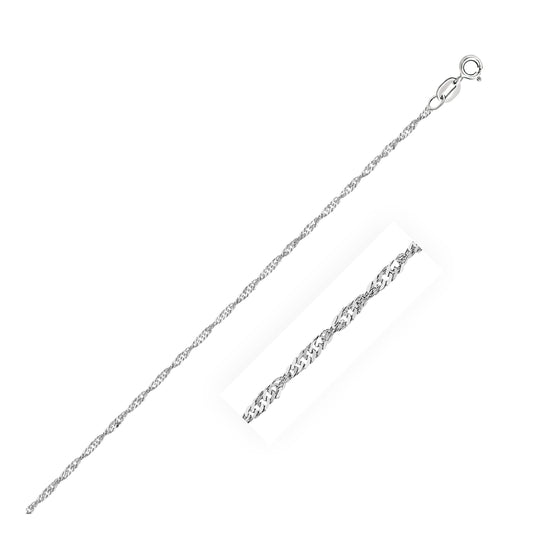
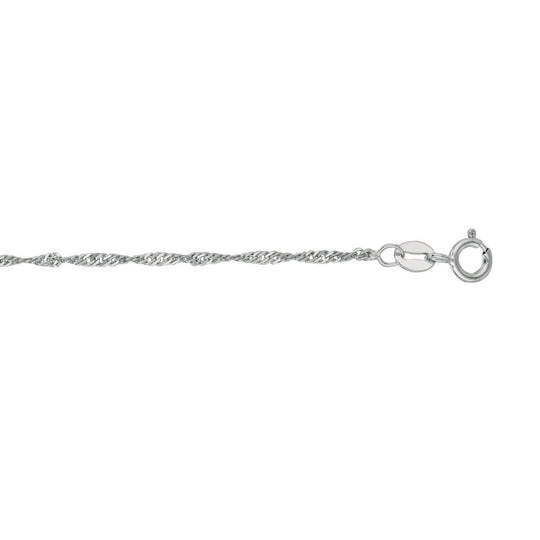
White gold anklets offer the bright, cool finish of the metal in one of jewelry's more understated categories, suited to those who prefer a consistent metal tone across their pieces. Oath's white gold anklets collection covers delicate link and chain styles in 10K and 14K. Every white gold anklet order ships free, with returns accepted within 30 days of delivery.
How to Choose White Gold Anklets: Metal, Style, and Fit
Why White Gold Works for Ankle Jewelry
White gold's cool, bright finish makes it a distinctive choice for anklets compared to the more common yellow gold. It achieves its signature silver-white appearance through rhodium plating over a yellow gold alloy mixed with white metals like palladium. The result is a crisp, contemporary look that suits a range of personal styles, from minimalist chain designs to charm-heavy pieces. One practical consideration for ankle wear is that rhodium plating will wear at friction points over time due to the movement and contact at the ankle, and re-plating by a jeweler restores the finish. For the full cool-toned white metal range, browse white gold jewelry.
White Gold Anklets vs. Yellow Gold: What Changes
The practical difference between white and yellow gold anklets is primarily visual. Yellow gold's warm tone shows well against tanned or warm skin tones in summer and beach settings; white gold's cool tone reads more contemporary and less overtly summery. Both are solid gold, do not tarnish, and wear equally at the ankle. The maintenance difference is that white gold requires rhodium re-plating over time while yellow gold needs none. If you want the ankle-jewelry look without a visible warm-metal signal, white gold is the right choice. For the broader gold range, browse gold anklets.
Sizing and Fit for White Gold Anklets
Anklet sizing follows the same principle as bracelet sizing but runs two to three inches larger. Standard adult ankle sizes fall between 9 and 11 inches, with 10 inches being the most widely sold. To find your size, measure the narrowest part of your ankle with a flexible tape measure and add one inch for comfortable hang. White gold cable and box chain constructions are the most common, and both work well in the 1mm to 2mm range for typical ankle wear. For sizing reference in the same metal, browse white gold bracelets.
White Gold vs. Rose Gold Anklets: Which to Choose
White gold and rose gold are both 14K or 18K gold alloys, but they differ in color tone and maintenance. White gold's cool silver-white finish is achieved through rhodium plating and requires re-plating as the coating wears. Rose gold is naturally blush-pink, color-stable, and requires no plating at all. For ankle jewelry that sees frequent friction, rose gold has the practical advantage of no plating maintenance. White gold suits buyers who prefer the cool contemporary tone. For the blush-tone option, browse rose gold anklets. Every order ships free with a 30-day return policy.
Frequently Asked Questions
Do white gold anklets tarnish?
White gold anklets do not tarnish or oxidize. What changes over time is the rhodium plating on the surface: as it wears through at friction points, the slightly warmer base alloy becomes visible underneath. This is not tarnish but normal wear of the coating. A jeweler can re-plate the piece to restore the bright white finish, typically in under an hour. The gold content itself remains unchanged and unaffected by moisture or air.
How long does rhodium plating last on a white gold anklet?
Rhodium plating wears faster on ankle jewelry than on necklaces or earrings due to consistent friction with skin, socks, and shoes. Most wearers find plating shows wear within one to two years of regular daily use. The practical expectation is more frequent re-plating for ankle pieces than for rings or pendants. When yellow toning becomes visible at the clasp or chain links, that is the signal to re-plate.
How do you clean a white gold anklet?
Warm water, a drop of mild soap, and a soft toothbrush remove salt, sunscreen, and skin residue that accumulate on ankle jewelry. Rinse thoroughly and dry completely before storing. Avoid chlorine bleach, harsh household cleaners, and abrasive cloths, all of which degrade rhodium plating faster. Chlorinated pool water also accelerates plating wear, so removing the anklet before pool swimming extends the life of the rhodium significantly.
What size is standard for a white gold anklet?
The most widely available size is 10 inches, which fits most adult ankles comfortably with a slight hang. Standard sizing runs from 9 to 11 inches. To find your size, measure around the narrowest part of your ankle and add one inch. Anklets with extension chains of 1 to 2 inches accommodate a range within a single purchase and are worth prioritizing if you are between sizes.
Can you wear a white gold anklet in water?
Brief contact with fresh water or salt water does not damage white gold, but it does accelerate rhodium plating wear over time. Chlorinated pool water is more aggressive and is the main source of accelerated wear for ankle pieces. The practical advice is to remove before pool and hot tub use but wear as normal for beach, shower, and general outdoor contact. Drying the piece thoroughly after water contact also helps slow plating degradation.
What is the difference between white gold and silver anklets?
White gold is a gold alloy rhodium-plated to achieve a silver-white finish. Sterling silver is an entirely different metal, 92.5% pure silver alloyed with copper. White gold does not tarnish; sterling silver does. White gold requires periodic re-plating as the rhodium wears; silver requires periodic polishing as it tarnishes. Cost differs significantly between the two. Both are genuine fine metals suited to anklets. For buyers who prefer the silver alternative, sterling silver anklets provide the same ankle jewelry format at a lower price point with a different maintenance profile.
Are white gold anklets good for everyday wear?
White gold anklets handle regular ankle wear well with standard care. The main consideration is that rhodium plating wears faster at the ankle than on a pendant or earring due to friction and contact with skin, socks, and shoes. Expect re-plating every one to two years with daily wear. Removing before chlorinated pool use and avoiding harsh cleaning chemicals extends the plating life significantly.
How do yellow gold and white gold anklets compare?
Yellow gold and white gold anklets use the same karat structure and are both solid gold alloys. Yellow gold's warm tone suits summer and beach aesthetics and requires no plating maintenance. White gold's cool tone reads more contemporary but requires rhodium re-plating as the coating wears. For most buyers, yellow gold is the more practical choice for ankle wear due to the higher plating maintenance frequency the ankle position creates. Browse yellow gold anklets for comparison.
What other white gold jewelry pairs well with an anklet?
A simple white gold chain at the neckline keeps the overall look cohesive without competing with the ankle piece. Small white gold stud earrings or a thin ring maintain the same tonal register throughout. When the anklet is the focal piece, keep necklace and bracelet choices understated. For matching chain options at the neckline, browse white gold necklaces.
What karat white gold is best for an anklet?
14K white gold is the most practical karat for ankle jewelry worn regularly. It contains more alloy than 18K, making it harder and more resistant to the physical contact anklets experience. 10K is harder still and more affordable, making it the right choice for maximum durability. 18K's higher gold content makes it slightly softer and better suited to anklets worn for dressier occasions rather than daily outdoor use. All three are solid gold and will not tarnish. Browse white gold earrings for other white gold fine jewelry in the same cool finish.
Use left/right arrows to navigate the slideshow or swipe left/right if using a mobile device
choosing a selection results in a full page refresh
press the space key then arrow keys to make a selection