
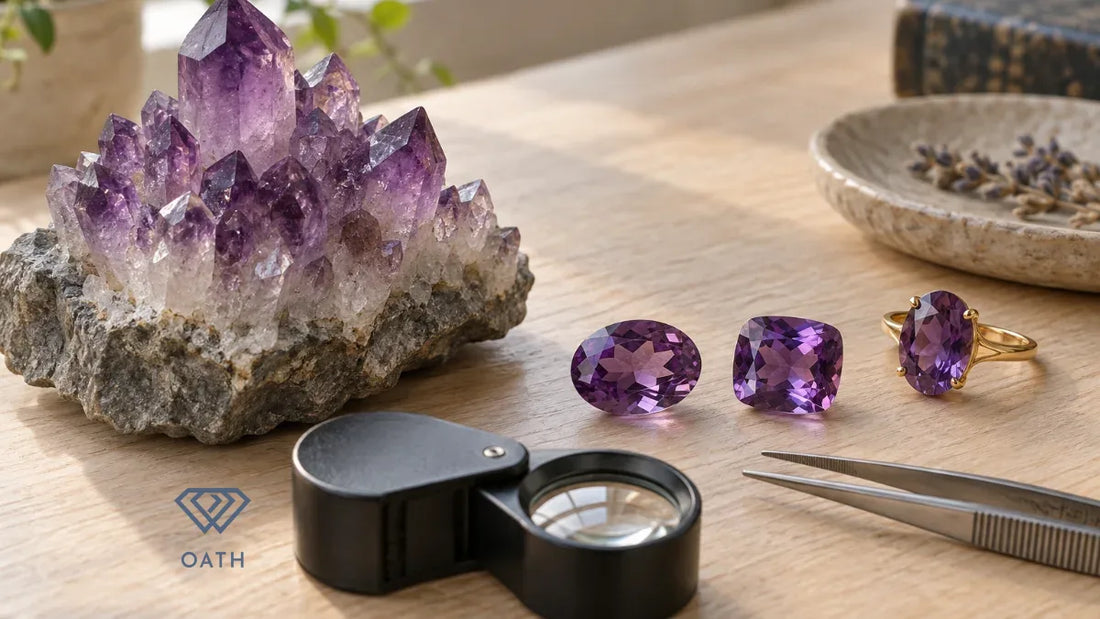
A real amethyst is the purple variety of quartz, colored by iron and natural irradiation. Genuine stones often show angular color zoning and are doubly refractive, unlike single-refractive glass. The harder question is natural versus synthetic: hydrothermal lab amethyst is real quartz, widespread, and so convincing that disclosure and a lab report matter more than any at-home test.
Jump to a section
What real amethyst isThe color-zoning tellSynthetic is everywhereGlass, CZ & treatmentsLab reportsValue & how to chooseAmethyst is one of the most loved and most widely available purple gems, which is exactly why the market is full of look-alikes and lab-grown stones. The good news is that telling amethyst from glass is easy. The subtler task, separating natural amethyst from synthetic quartz, is genuinely hard even for experts, and knowing that is half the protection. Here is how to read amethyst, what a label should disclose, and when a report is worth it.
Amethyst Is Quartz: What Real Means
Amethyst is the purple form of quartz, silicon dioxide, colored by traces of iron together with natural irradiation in the earth. It sits at 7 on the Mohs scale, hard enough for everyday jewelry with reasonable care, and it is the birthstone for February. Its color ranges from a soft lilac to a deep, reddish purple, the most prized being a rich, even violet.
Three categories keep the question clear. A natural amethyst grew in the earth over long spans of time. A synthetic, or lab-grown, amethyst is the same quartz crystallized in a lab, usually by a hydrothermal process, and it is genuine quartz by composition. A simulant is a different material standing in for amethyst, such as purple glass or purple cubic zirconia. The first two are real amethyst; the third is not.
7
Mohs hardness, good for everyday wear with care
SiO2 + iron
Silicon dioxide colored by iron and irradiation
Doubly refractive
Quartz splits light; glass does not
The Color-Zoning Tell
Natural amethyst rarely colors itself perfectly evenly. Under a loupe and good light, it often shows angular color zoning, alternating bands or patches of stronger and weaker purple, sometimes described as a tiger-stripe or chevron pattern. You may also see fine fingerprint inclusions, small negative crystals, or subtle internal veils. These features are signs of natural growth, not flaws to fear.
The quickest way to rule out glass is double refraction. Quartz is doubly refractive, so through the table of a clean stone the back facet edges can look very slightly doubled under magnification; glass, being singly refractive, never shows this. Glass also feels warmer to the touch, can carry round bubbles, and often shows mold seams or swirl. None of those belong in genuine amethyst.
Synthetic Amethyst Is Everywhere
Here is the part most guides skip. Lab-grown amethyst, almost always made by a hydrothermal process that mimics nature closely, has been mass-produced for decades and fills a large share of the market. It is real quartz with the same color, hardness, and optics as mined amethyst, and it can be so convincing that even experienced gemologists cannot always separate it by eye. This is not a scandal; it is simply the reality of the amethyst trade.
Because the two are so alike, the honest tells are subtle and often need a laboratory. Natural amethyst commonly shows a specific internal twinning and angular zoning; synthetic quartz may show seed-related features, breadcrumb-like inclusions, or an absence of that twinning. The practical takeaway is not to chase a perfect home test, but to buy from sellers who disclose origin and to request a report when it matters.
Glass, Cubic Zirconia, and Treatments
Outright imitations are the easy cases. Purple glass is the most common: warm, single-refractive, and often bubbled. Purple cubic zirconia throws far more fire than quartz and feels heavy for its size. Soft purple stones that scratch easily may be fluorite, a 4 on the Mohs scale, far softer than amethyst. A loupe and a moment of attention separate all of these from real quartz.
Treatment Note
Heat is part of the amethyst story. Heating amethyst can lighten overly dark material, and at higher temperatures it turns yellow to orange, which is how most citrine on the market is made. A single crystal that is part purple and part golden is ametrine. Some pale amethyst is irradiated to deepen color. None of this makes a stone fake, but a reputable seller discloses it. The birthstone guide covers the amethyst and citrine connection.
One care note follows from all this chemistry: amethyst color can fade with prolonged, intense sunlight or heat. It is durable enough for daily wear, but it is happiest kept out of long, direct sun, which protects that violet for the long run.
When a Lab Report Helps
For everyday amethyst, ruling out glass by hand and buying from a seller who states the origin is usually enough. When a stone is significant, or when natural origin genuinely matters to you, an independent laboratory is the only reliable way to separate natural quartz from hydrothermal synthetic. The GIA and other respected labs use magnification and instruments that read the features the eye cannot.
"Amethyst, the February birthstone, is the purple variety of quartz."
Gemological Institute of America (GIA)
GIA is the laboratory that defined modern gem grading. Further reading: GIA amethyst overview.
Request a report when value or sentiment runs high, or when a seller cannot tell you plainly whether a stone is natural or lab-grown. Because synthetic amethyst is so widespread and so convincing, a laboratory opinion is the one thing that removes all doubt about origin.
Is Amethyst Worth It? Value and How to Choose
Amethyst value rests mostly on color: the most sought-after is a deep, even purple with flashes of red, neither so dark that it looks black in low light nor so pale that it washes out. Clarity, cut, and size matter too, and fine large amethyst remains genuinely beautiful and attainable. Because both natural and synthetic stones are real quartz, the choice often comes down to whether natural origin matters to you.
So decide by what you value. If natural origin and lasting worth matter, choose a stone with disclosure and, for an important piece, a report. If you simply love the color and want durability, a clearly labeled lab-grown amethyst is an honest, lovely choice. Either way, insist on a plain statement of origin, keep the stone out of harsh sun, and enjoy one of the most rewarding purples in all of gemstones. Every order ships free with a 30-day return policy.
In Short
1Real amethyst is purple quartz colored by iron and irradiation; it is doubly refractive and often shows angular color zoning, which sets it apart from single-refractive glass.
2Hydrothermal synthetic amethyst is real quartz, extremely common, and so convincing that even experts often need a lab to separate it from natural stones.
3Glass and cubic zirconia are easy to catch, heat turns amethyst into citrine, and a lab report is the reliable way to confirm natural origin when it matters.
The Amethyst Buyer's Checklist
A one-page guide to spotting real amethyst, understanding synthetic quartz, reading the color-zoning tells, and the disclosure questions worth asking. We'll email it to you.
Email Me the Guide →


Every order ships free with a 30-day return policy.
Amethyst rewards a little knowledge: the color zoning that marks natural quartz, the double refraction that rules out glass, the honest fact that lab-grown amethyst is real and everywhere, and the moment a report is worth it. Read it that way and February's birthstone becomes a confident, joyful choice. Every order ships free with a 30-day return policy.
Frequently Asked Questions
01
How can I tell if an amethyst is real?
Genuine amethyst is purple quartz and often shows angular color zoning, the tiger-stripe look, along with fingerprint inclusions under a loupe. It is doubly refractive, so back-facet edges can look slightly doubled under magnification, while single-refractive glass never does. Glass also feels warm and may show bubbles. Telling natural from synthetic quartz, however, is much harder and usually needs a laboratory.
02
Is synthetic amethyst a real amethyst?
Yes. Synthetic amethyst, almost always grown by a hydrothermal process, is real quartz with the same chemistry, hardness, and color as mined amethyst, so it is genuine amethyst rather than an imitation. Glass and cubic zirconia are the imitations. Because lab-grown amethyst is so common and so convincing, the honest expectation is simply that a seller disclose whether a stone is natural or lab-grown.
03
How do I spot fake amethyst?
Outright fakes are the easy part. Purple glass feels warm, is singly refractive, and often holds round bubbles or shows mold seams and swirl. Purple cubic zirconia throws far more rainbow fire than quartz and feels heavy for its size. Very soft purple stones that scratch easily may be fluorite. A ten-power loupe and a check for double refraction separate these from real amethyst quickly.
04
Does heated amethyst become citrine?
Often, yes. Heating amethyst can lighten very dark material, and at higher temperatures it turns yellow to orange, which is how most citrine on the market is produced. A crystal that is part purple and part golden is called ametrine. Heating does not make a stone fake; it is an accepted treatment, and a reputable seller will disclose it when asked.
05
Does amethyst fade in sunlight?
It can. Amethyst color may fade with prolonged, intense sunlight or strong heat, since both the iron coloring and natural irradiation that create the purple are light-sensitive over time. Amethyst is perfectly suited to everyday wear, but it lasts best when kept out of long, direct sun and stored away from heat, which preserves that deep violet for years.
06
Where is amethyst found, and do I need a report?
Fine amethyst comes from Brazil, Uruguay, Zambia, and Bolivia, among other sources, with Uruguayan material prized for its deep color. A grading report is worth requesting whenever natural origin or value matters, because it is the reliable way to separate natural quartz from hydrothermal synthetic. For how the quality factors are judged, see how to evaluate amethyst quality.