
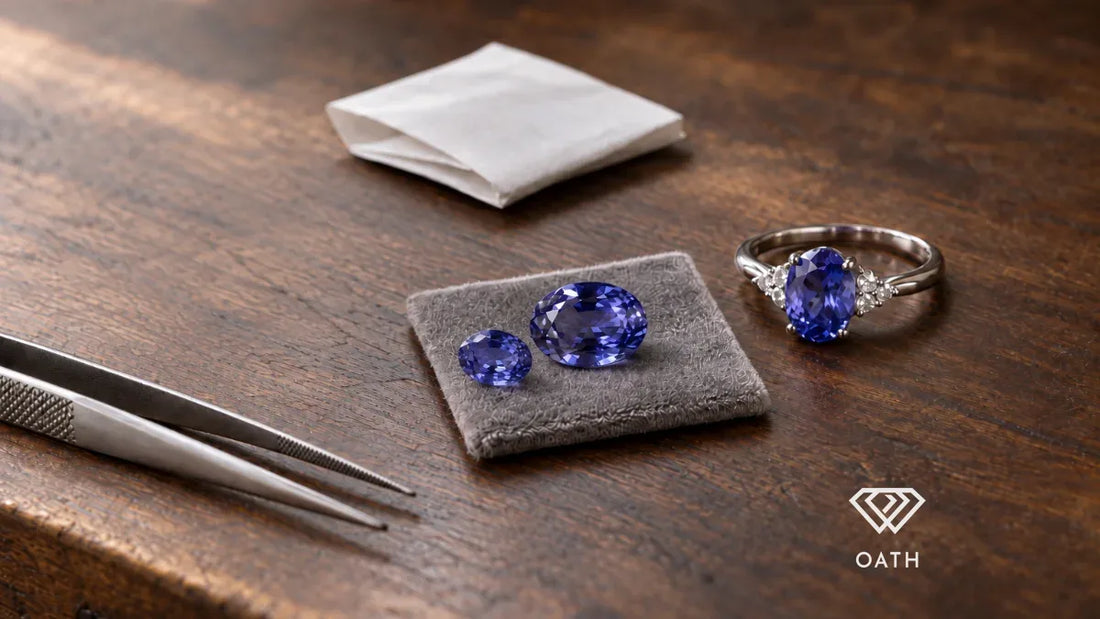
Genuine tanzanite is the blue-violet variety of the mineral zoisite, mined from a single source in Tanzania and almost always gently heat-treated for color. Fakes are usually simulants such as blue cubic zirconia, glass, coated stones, or synthetic forsterite. Trichroism, moderate hardness, and credible provenance are the fastest tells.
Tanzanite's rich blue-violet glow is unmistakable, which is exactly why imitations exist. The good news: genuine tanzanite behaves in ways glass and cubic zirconia cannot copy. This guide shows what real tanzanite is, why heat treatment is normal rather than suspicious, and how to separate the true gem from its look-alikes before you buy.
What Is Real Tanzanite?
1967
Discovered in Tanzania
6.5 to 7
Mohs hardness
3 colors
Trichroism: blue, violet, burgundy
1 source
Merelani Hills, Tanzania
Tanzanite is the blue to violet variety of zoisite, a calcium aluminum silicate. It was discovered in 1967 in the Merelani Hills of northern Tanzania, near Mount Kilimanjaro, and Tiffany and Co. introduced it to the world and named it for its only home. Every genuine tanzanite traces back to that single mining district.
Because zoisite is doubly refractive and strongly pleochroic, tanzanite shows more than one color. Tilt a real stone and it flashes blue, violet, and often a touch of burgundy or reddish brown. That three-color behavior, called trichroism, is one of the gem's defining traits and a fast authenticity signal.
Tanzanite joined the official birthstone list for December in 2002 and serves as the gem for a 24th anniversary. For where it sits among the other December stones, the ultimate birthstone guide lines them up side by side.
Real vs Fake Tanzanite at a Glance
Most tanzanite fakes are simulants: unrelated materials that mimic the color but not the physics. The table below lines up genuine tanzanite against the look-alikes buyers meet most often, using tells you can check with a loupe, a tilt, and a careful eye.
| Stone | Hardness (Mohs) | Optical tell | Giveaway |
|---|---|---|---|
| Genuine tanzanite | 6.5 to 7 | Doubly refractive, strong trichroism (blue, violet, burgundy) | Color shifts as you tilt it and change the lighting |
| Blue cubic zirconia | 8 to 8.5 | Singly refractive, no pleochroism | Extra sparkle and fire, heavier in the hand |
| Glass or paste | 5 to 6 | Singly refractive, often gas bubbles | Warm to the touch, mold lines, no color shift |
| Synthetic forsterite | 6.5 to 7 | Doubly refractive but lacks the burgundy axis | Greenish second color instead of true violet |
| Coated zoisite or stone | Varies | Color sits on the surface | Scratches reveal pale material beneath |
| Blue sapphire | 9 | Doubly refractive, dichroic not trichroic | Noticeably harder, only two colors on a tilt |
No single test is conclusive on its own, but two or three agreeing tells make a confident call. For an important stone, an independent laboratory report removes the guesswork.
Is Heat-Treated Tanzanite Still Real?
Yes. In its rough state, zoisite from Merelani is usually brownish. A gentle, stable heat treatment, near the temperatures the earth itself once supplied, clears the brown and brings out the blue and violet. The change is permanent, and virtually all tanzanite on the market has been through it.
Because heating is the norm, blue-violet color is not evidence of a fake. The opposite claim deserves a closer look: rough that turns a strong, even blue without heat is rare, so a stone marketed as fully untreated should arrive with credible documentation.
Disclosure Note
Reputable sellers describe a stone as genuine tanzanite and disclose that it is heat-treated, rather than leaning on a vague authenticity badge. Clear treatment disclosure is the real mark of a trustworthy source, and the fine jewelry buying guide explains the paperwork worth requesting.
How to Spot a Fake Tanzanite
You can screen most stones in a few minutes without lab equipment. Work through the checks below, and let agreement between them, not any single result, guide your conclusion.
For a deeper grading walk-through covering color zoning and clarity, the guide to evaluating tanzanite quality goes factor by factor.
Tanzanite Simulants and Look-Alikes
Knowing the usual stand-ins makes spotting them easier. Each behaves differently from genuine zoisite under light and in the hand.
Blue cubic zirconia
A singly refractive lab material with no pleochroism. It is harder than tanzanite, heavier, and throws much more fire, so it can look too lively beside the real gem.
Glass and paste
Molded color with no double refraction. Look for trapped gas bubbles, swirl marks, rounded facet edges, and a surface that warms quickly against the skin.
Synthetic forsterite
The closest mimic. It is doubly refractive and pleochroic, but its second color reads greenish rather than the true violet of tanzanite, and the burgundy axis is missing.
Coated zoisite and coated stones
Pale or colorless material wears a thin color coating. An iridescent sheen and color that chips at the edges give it away.
Mistaken blue sapphire
A genuine gem in its own right, but a different species. Corundum is far harder at Mohs 9 and dichroic, showing two colors rather than tanzanite's three.
Caring for Genuine Tanzanite
Tanzanite sits at 6.5 to 7 on the Mohs scale, softer than sapphire and prone to chips and scratches with rough handling. Treat it as an occasion stone, or protect it in a bezel or halo setting for regular wear.
Care Note
Clean tanzanite with warm soapy water and a soft brush only. Avoid ultrasonic and steam cleaners, sudden temperature changes, and household chemicals, any of which can damage the stone or its color.
Stored away from harder gems and worn with a little care, a genuine tanzanite keeps its blue-violet glow for generations.
'Tanzanite is the blue to violet to purple variety of the mineral zoisite.'
Gemological Institute of America (GIA)
Further reading: American Gem Trade Association. GIA and AGTA both classify tanzanite as a zoisite variety and treat heat enhancement as a standard, disclosable practice.
In Short
1Real tanzanite is blue-violet zoisite from a single Tanzanian source; its trichroism shows blue, violet, and burgundy as you tilt it.
2Almost every genuine tanzanite is gently heat-treated, so stable blue-violet color is normal, not a sign of a fake.
3Blue cubic zirconia, glass, coated stones, and synthetic forsterite are the common stand-ins; hardness, double refraction, and provenance separate them from the real gem.
The Tanzanite Authenticity Checklist
A one-page guide to spotting genuine tanzanite at a glance, from the tilt test to the paperwork worth asking for. We will email it to you.
Email Me the Guide →


Every order ships free with a 30-day return policy.
Genuine tanzanite rewards a patient eye. Tilt it for the blue, violet, and burgundy of true trichroism, expect gentle heat treatment as the standard, and ask for an independent report on any important stone. Every order ships free with a 30-day return policy.
Frequently Asked Questions
01
How can I tell if my tanzanite is real?
Genuine tanzanite reveals itself through trichroism: tilt it under good light and it shifts between blue, violet, and a hint of burgundy. Most simulants hold a single flat color, sparkle too aggressively, or feel heavy for their size.
02
Is heat-treated tanzanite considered genuine?
Heat-treated tanzanite is fully genuine. Nearly all rough is gently heated to convert its natural brown to stable blue-violet, an accepted industry practice that does not diminish the stone or make it a fake.
03
Is tanzanite ever lab-grown?
Lab-grown tanzanite is not a commercial product, so look-alikes are simulants rather than synthetic zoisite. Blue cubic zirconia, glass, coated stones, and synthetic forsterite stand in for it, none of which share tanzanite's exact makeup.
04
What is the difference between tanzanite and blue sapphire?
Tanzanite is a zoisite variety at 6.5 to 7 on the Mohs scale with three pleochroic colors, while sapphire is corundum at Mohs 9 with two. Sapphire is markedly harder and better suited to daily wear. For grading either stone, the guide to evaluating tanzanite quality explains the color and clarity factors.
05
Does untreated tanzanite exist?
Untreated tanzanite exists but is uncommon, since most rough needs heat to reach a strong blue-violet. A stone sold as fully natural and unheated should carry credible documentation, which the fine jewelry buying guide outlines.
06
How should I store and clean tanzanite?
Tanzanite responds best to warm soapy water, a soft brush, and storage apart from harder gems. Ultrasonic cleaners, steamers, and sudden temperature swings can harm this softer December birthstone, so gentle handling keeps its color bright.