Skip to content
Every order ships free with a 30-day return policy  ·  Browse new arrivals

14K Bangles

14K Gold Bangles Across All Styles

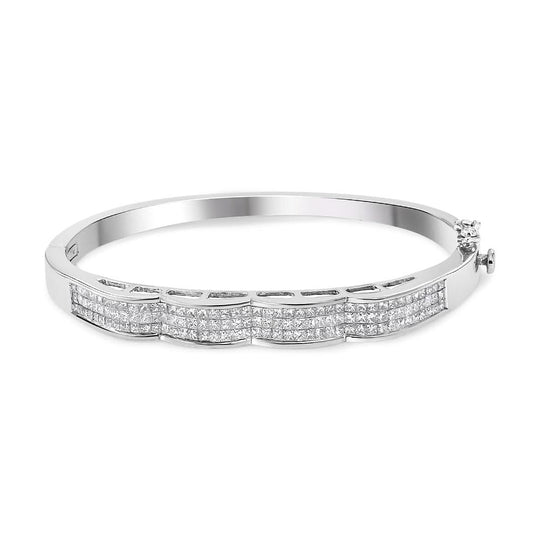
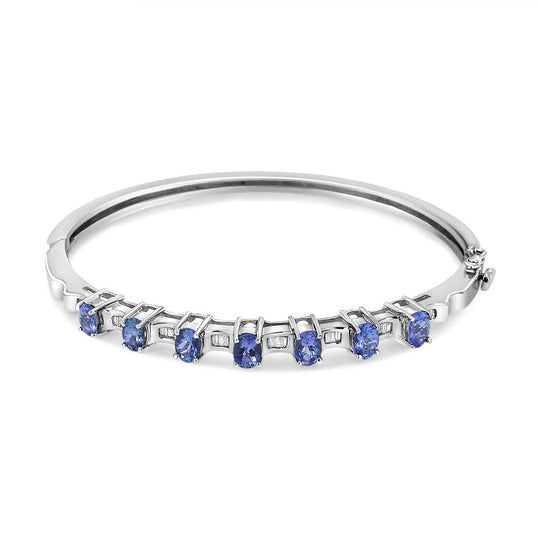
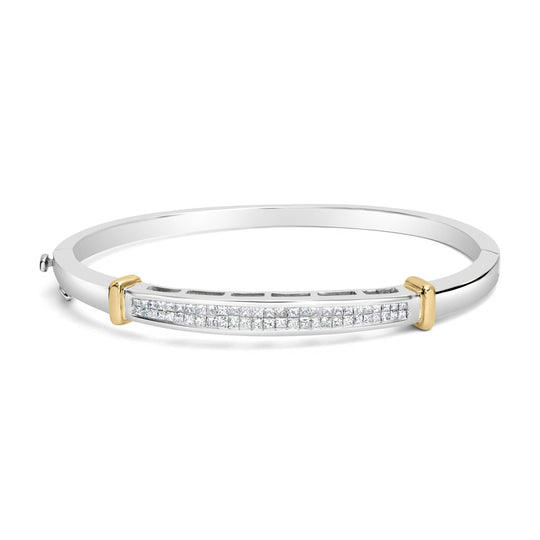
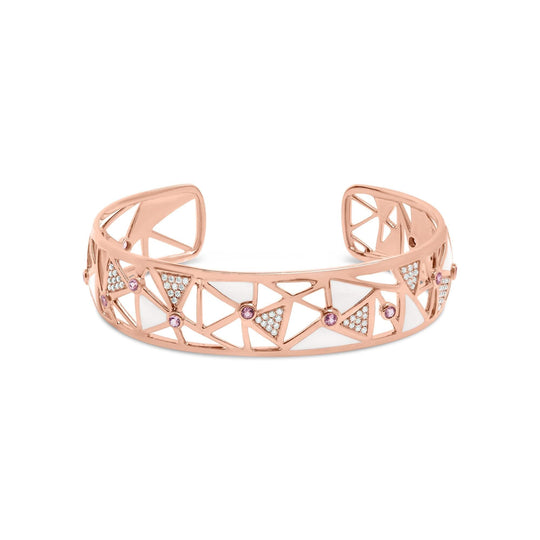
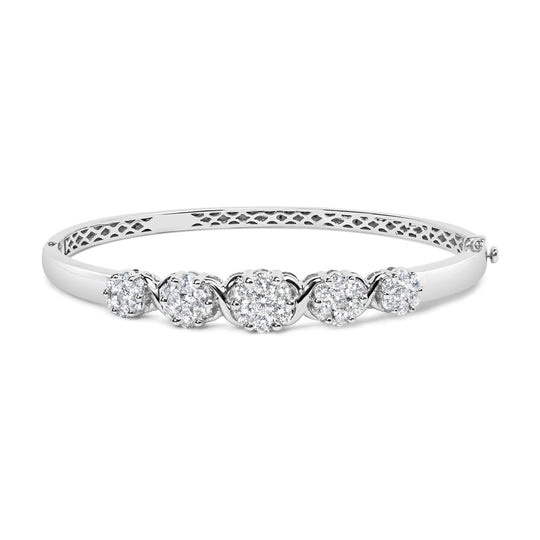
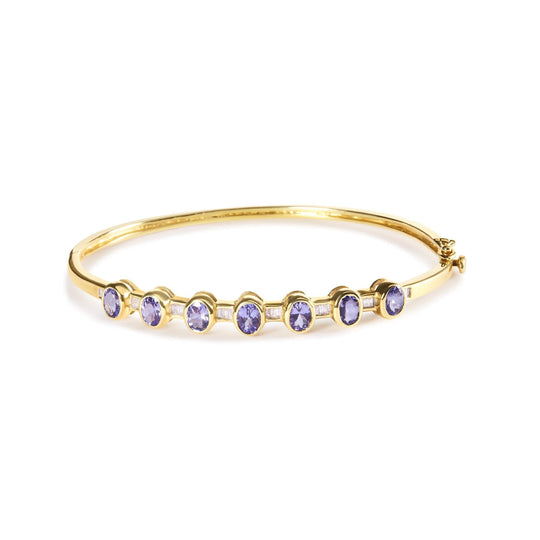
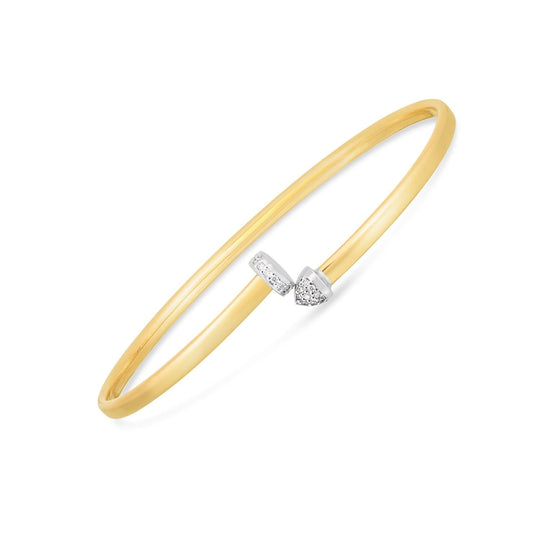
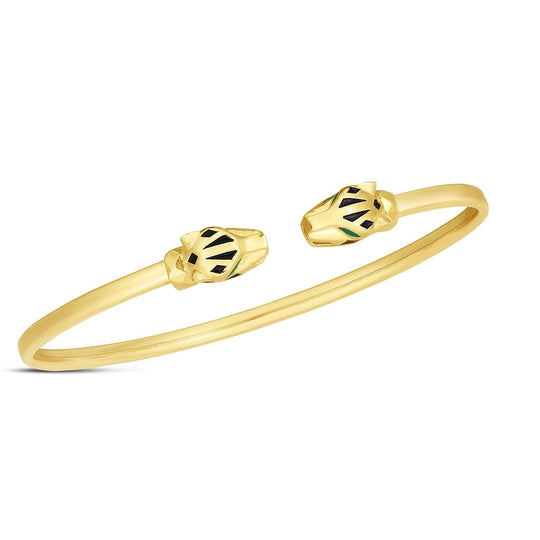
14K gold holds up well to the daily contact that bangles experience, and the karat's warm color reads consistently across yellow, white, and rose gold finishes. Oath's 14K gold bangles cover plain metal, diamond-set, and gemstone styles across classic and contemporary profiles. Ships free on every 14K gold bangle order, with a 30-day return window.

  • Genuine Gemstones
  • Free Shipping
  • 30-Day Returns

Why Is 14k Gold the Recommended Grade for Fine Bangles?

14k Gold Bangles and the Daily Wear Standard

14k gold contains 58.3% pure gold, providing the best balance of gold content, alloy durability, and practical cost for fine jewelry worn daily. For bangles specifically, 14k provides enough alloy hardness to resist the surface marking that accumulates through regular wrist contact while delivering the warm, rich gold tone that defines the material quality of fine jewelry. 14k is the most widely produced karat grade in US fine jewelry for precisely these reasons. Browse the full bangles range for 14k and other karat options in bangle formats.

14k Gold Bangles and Rings: Same Alloy Across Jewelry Categories

14k gold is the same alloy in a bangle as it is in a ring or necklace: 58.3% pure gold with identical colour, tarnish resistance, and wear characteristics. A 14k gold bangle and a 14k gold ring worn simultaneously will match exactly in tone and patina development. For buyers building a coordinated fine jewelry collection at consistent material quality, 14k across all pieces provides tonal and material uniformity. Compare 14k across categories in 14k rings.

14k Gold Bangles and Bracelets: Choosing Between Rigid and Flexible

14k gold bangles and 14k gold chain bracelets use the same alloy but read differently at the wrist. Bangles maintain their geometric circular form independently; chain bracelets conform to wrist movement. For buyers who want a piece with strong structural presence and minimal daily attention, a 14k gold bangle outperforms a chain bracelet. For buyers who prefer fluid, movement-responsive wrist jewelry, a chain bracelet is the better choice. Browse gold bracelets for 14k gold chain bracelet options alongside the bangle range.

14k vs. 10k Gold Bangles for Daily Stacking

14k gold provides a richer, warmer colour and higher gold content than 10k at a slight reduction in alloy hardness. For most daily wear contexts, the hardness difference between 14k and 10k is negligible. 14k is the recommended standard for buyers who prioritize gold appearance quality; 10k suits buyers who prioritize maximum scratch resistance in active daily stacking. Compare both on the 10k bangles page. Every order ships free with a 30-day return policy.


Frequently Asked Questions

Why is 14k gold the recommended grade for bangles?

14k gold contains 58.3% pure gold, alloyed for hardness, workability, and color consistency. It is the standard karat grade for fine jewelry in the United States because it provides optimal balance between gold content and alloy durability for daily wear pieces. For bangles that receive regular surface contact at the wrist, 14k provides enough hardness to resist daily marking while delivering the warm, rich gold tone that defines fine jewelry aesthetics.

What is the difference between 14k and 18k gold for bangles?

14k contains 58.3% gold and 18k contains 75%. 18k bangles show a richer, deeper gold tone and higher material value, but the softer alloy marks more easily from daily wrist contact. For bangles worn every day, 14k provides a practical balance of color quality and durability that 18k does not. 18k bangles are better suited to occasional wear where surface contact is limited.

Is 14k gold the standard for ankle jewelry as well?

14k gold is used as the standard karat in fine jewelry anklets for the same reason as bangles: daily wear durability at a practical cost. Browse 14k anklets to see the same karat standard applied to ankle jewelry, confirming that 14k is the consistent daily-wear gold across the fine jewelry range.

How does 14k gold compare to sterling silver for a bangle?

14k gold provides a richer colour and higher gold content than sterling silver, and does not tarnish under normal wear conditions. Sterling silver is harder in practical terms but requires more maintenance against tarnish. For a bangle that needs no special storage care and maintains its appearance through regular active wear, 14k gold is the more practical long-term choice. Browse textured bangles for hammered and patterned bangle surfaces in 14k gold.

Do gold bracelets use the same 14k standard as bangles?

14k gold bangles share the same alloy standard as most fine gold bracelets in the US market, which means a 14k bangle and 14k bracelet worn together have identical tonal character and comparable wear resistance. Browse 18k bangles for the same slip-on bangle styles in a higher 75% gold content.

Can 14K gold bangles be stacked with bangles in other metals?

14K gold bangles can be stacked with bangles in sterling silver, rose gold, and other metals without any structural issue. Mixing metal tones in a stacked bangle arrangement is a widely practiced styling choice. The practical consideration is that different metals have different hardness ratings and will mark each other's surfaces where they contact during wear. For stacked sets that need to maintain surface condition over time, keeping bangles in the same metal family reduces the amount of cross-surface marking that accumulates.

How do I determine the right inner diameter for a 14K gold bangle?

14K gold bangle sizing starts with measuring the widest part of the hand when the fingers are pressed together and compressed, since the bangle must pass over that point to reach the wrist. This measurement in millimeters is the minimum inner diameter. Standard adult bangle sizes range from 60mm to 70mm inner diameter, with 65mm being the most common. Buyers on the border between two measurements should size up, as a bangle that fits too tightly over the hand is difficult to remove and may not sit comfortably at the wrist.

What chain styles complement a 14K gold bangle stack?

14K gold bangle stacks coordinate with chain necklaces in the same karat and finish to produce a unified look across the wrist and neckline. A yellow 14K bangle stack worn with a yellow 14K cable or rope chain is the most common arrangement. For wrist stacks that include a chain bracelet alongside the bangles, matching the chain gauge to the bangle profile width produces a balanced visual weight across the wrist.

What ankle jewelry pairs well with a 14K gold bangle?

14K gold bangles coordinate from wrist to ankle when paired with 14K anklets in the same finish. Yellow 14K bangle with yellow 14K anklet, or white 14K bangle with white 14K anklet, keeps the karat grade and tone consistent across wrist and ankle without any mismatch. A fine-gauge anklet, typically 1mm to 1.5mm, works well when the bangle stack is relatively delicate; a heavier anklet, 2mm to 3mm, balances a bolder bangle arrangement.

How do 14K gold bangles compare to wheat bracelets?

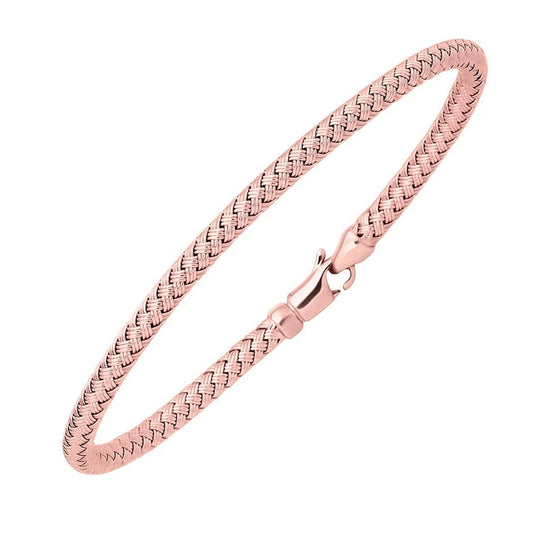
14K gold bangles are rigid slip-on loops; wheat bracelets are flexible chain designs with a clasp using interwoven oval links in a herringbone-like pattern. Both are made from the same 14K gold alloy with the same tarnish resistance, but they wear and feel differently at the wrist. A bangle maintains its circular form independently and is removed by slipping over the hand; a wheat bracelet conforms to wrist movement and is removed via its clasp. Buyers who want structural presence choose bangles; buyers who want a flatter, more flexible daily wear piece often choose a wheat design.

Your Bag
Subtotal (tax excl.) $0
 
Example
Example
Example
(0 )
Example
View detail
Example
Example
Option1
Option2
Option3
Option1
Option2
Option3
Sold out
Quantity
Add To Cart
Buy Now
Compare
Add Wishlist
Share:
0
0