Skip to content
Every order ships free with a 30-day return policy  ·  Browse new arrivals

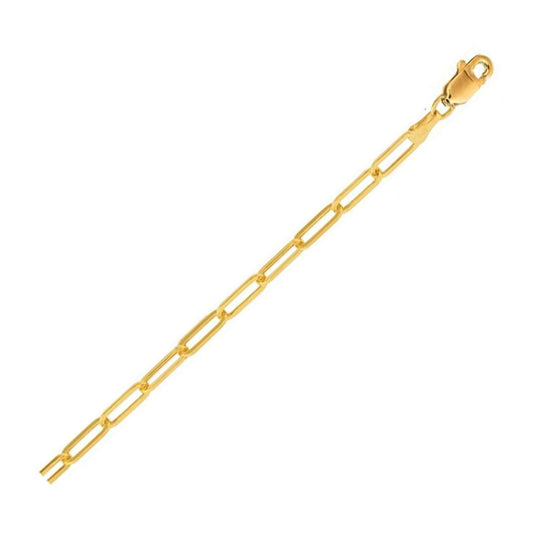
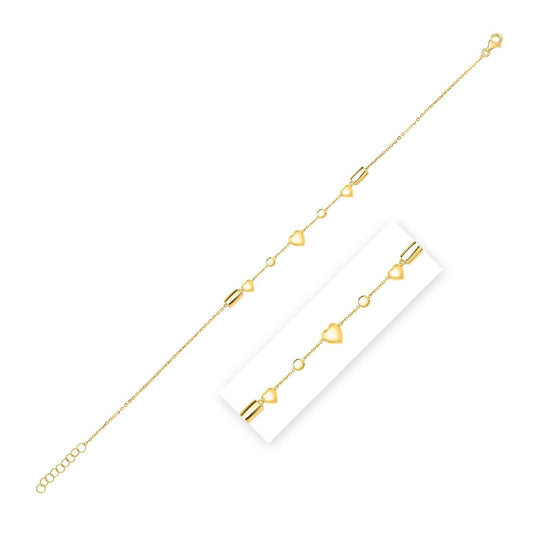
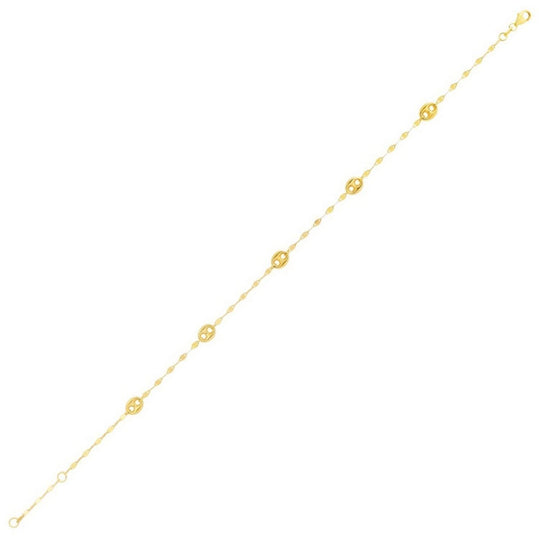
14K Anklets

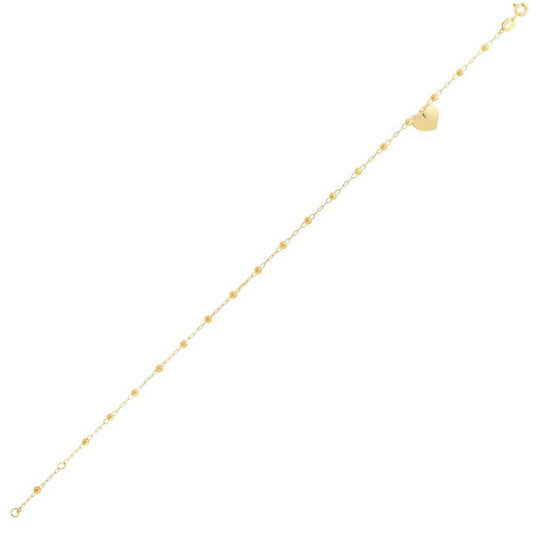
14K Gold Anklets in Classic and Contemporary Styles

14K gold is a reliable choice for anklets worn regularly, holding its finish through the movement and occasional contact the style involves. Oath's 14K gold anklets are available in yellow, white, and rose gold in plain metal, diamond-accented, and gemstone designs. Every 14K gold anklet order ships free, returns accepted within 30 days.

  • Genuine Gemstones
  • Free Shipping
  • 30-Day Returns

Why Is 14k Gold the Most Practical Karat for Ankle Jewelry?

14k Gold Anklets and the Standard for Daily Wear Fine Jewelry

14k gold contains 58.3% pure gold alloyed for hardness, colour, and workability. In the United States, 14k is the standard fine jewelry karat because it provides the best balance of gold content, alloy durability, and practical cost for pieces worn daily. At the ankle specifically, 14k provides better alloy hardness than 18k, reducing surface marking at a position exposed to more incidental friction than rings or necklaces. Browse the full anklets range for 14k and other karat options in ankle jewelry.

14k Gold Anklets and Rings: The Same Alloy at Different Wear Positions

14k gold in an anklet is the same alloy as 14k gold in a ring: 58.3% pure gold with identical colour, hardness, and tarnish resistance. A 14k yellow gold anklet and ring worn simultaneously will match exactly in tone and wear characteristics. For buyers building a coordinated fine jewelry wardrobe, using 14k across all pieces creates tonal and material consistency. Compare 14k styles across categories in 14k rings.

14k White Gold Anklets vs. Yellow Gold Anklets

14k white gold anklets deliver the same alloy quality and durability as 14k yellow gold in a cooler, neutral tone. White gold requires periodic rhodium replating to maintain its bright white surface, which yellows gradually over time as the plating wears. Yellow gold retains its tone without replating. For buyers who prefer a silver-like aesthetic with gold material standards, white gold is the right choice; for lowest long-term maintenance, yellow gold is more practical. Browse white gold anklets for white gold ankle options in 14k.

14k vs. 10k Gold Anklets: Colour vs. Hardness

14k gold provides a richer, warmer colour and higher gold content than 10k, at a slight reduction in alloy hardness. For most daily wear contexts, 14k is durable enough at ankle positions. 10k is the better choice only for buyers who specifically prioritize maximum scratch resistance over gold appearance quality. Both are practical ankle jewelry alloys. Compare on the 10k anklets page. Every order ships free with a 30-day return policy.

Frequently Asked Questions

Why is 14k gold the most common grade for ankle jewelry?

14k gold contains 58.3% pure gold, alloyed with metals that provide hardness, colour, and workability depending on the target tone. In the United States, 14k is the standard karat grade for fine jewelry because it balances gold content, alloy durability, and material value at a price point practical for daily-wear pieces. For ankle jewelry, 14k provides better alloy hardness than 18k, reducing surface marking at a position with higher incidental contact than most other worn pieces.

What is the difference between 14k and 18k gold in ankle jewelry?

14k gold contains 58.3% gold and 18k contains 75%. 18k gold has a richer, deeper colour and higher material value but is a softer alloy that marks more easily with daily surface contact. For ankle jewelry specifically, 14k is recommended over 18k because the ankle position is exposed to more incidental friction than rings or necklaces worn away from contact surfaces. 18k anklets are better suited to occasional and evening wear where contact risk is lower.

Is 14k gold used in pendant jewelry?

14k gold is used across all fine jewelry categories including pendants. Browse 14k pendants for pendant options in 14k gold that use the same alloy standard as 14k anklets, confirming the karat grade's use across the fine jewelry range.

Do gold necklaces use the same 14k standard as anklets?

14k gold anklets and fine gold necklaces use the same standard karat grade in the US market because the alloy balances gold content with durability for daily wear. A 14k gold anklet and a matching 14k gold necklace are made to identical alloy standards and will wear consistently alongside each other. Browse gold necklaces for 14k gold chain options that match the standard used in 14k ankle jewelry.

How does 14k gold look different from 10k gold in an anklet?

14k gold produces a noticeably richer colour and higher-quality surface than 10k gold due to its higher gold content of 58.3% versus 41.7% in 10k. This difference is most visible in yellow gold where the deeper gold content creates a warmer, deeper tone. In practical wear at the ankle, the main difference is that 14k gold develops a slightly more refined patina over time than 10k. Both grades are durable for daily ankle jewelry at standard chain gauges.

Can a 14K gold anklet be worn every day?

14K gold anklets are built for daily wear. The alloy hardness of 14K resists the surface marking that accumulates through regular ankle contact, and the gold content does not tarnish under normal conditions including skin contact, water, and soap. The clasp and chain links are the components that receive the most mechanical wear over time; checking the clasp spring and link condition annually gives buyers early notice of any wear developing at those points.

How should a 14K gold anklet be cleaned?

14K gold anklets are cleaned with warm water, a small amount of mild dish soap, and a soft brush or cloth. The process removes body oil, lotion, and light surface residue that accumulates through daily wear. Clasps and chain joints are the areas where buildup concentrates most, and a soft-bristle brush reaches those spots effectively. Rinsing with clean water and drying with a lint-free cloth completes the process. Chemical cleaning agents and ultrasonic cleaners are not necessary for plain gold ankle chains and may damage gemstone-set versions.

How does a 14K gold anklet pair with a 14K gold bangle?

14K gold anklets and bangles in the same karat and finish produce a matched look from wrist to foot without any tone variation. Yellow 14K pairs with yellow 14K, white with white, and rose with rose across both pieces. The contrast between a rigid bangle at the wrist and a flexible chain anklet at the ankle gives the combination visual variety at different body points. Buyers who want to coordinate both pieces should verify the karat and finish match at purchase.

Are there turquoise-set anklet options available with 14K gold?

Turquoise-set anklets in 14K gold combine the bright blue-green stone with a warm yellow gold or contrasting white gold mounting. Turquoise is a softer stone, rated 5 to 6 on the Mohs scale, which makes it more susceptible to scratching and impact than harder gemstones. Anklet settings that protect the stone with a bezel or partial surround are more suitable for turquoise than open prong settings because of the stone's relative softness at the ankle position.

How does a 14K gold anklet relate to the full bracelet range?

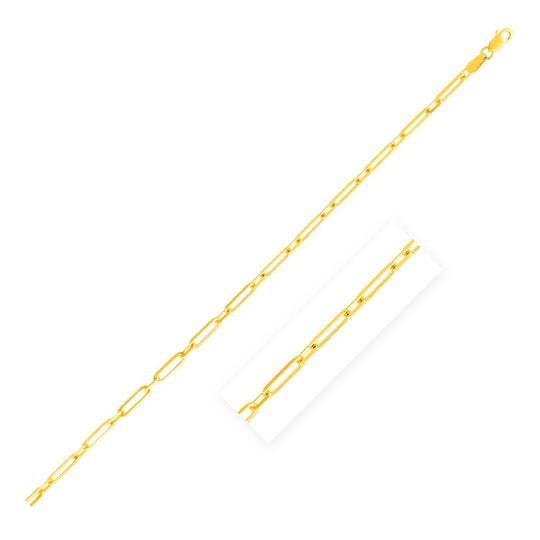
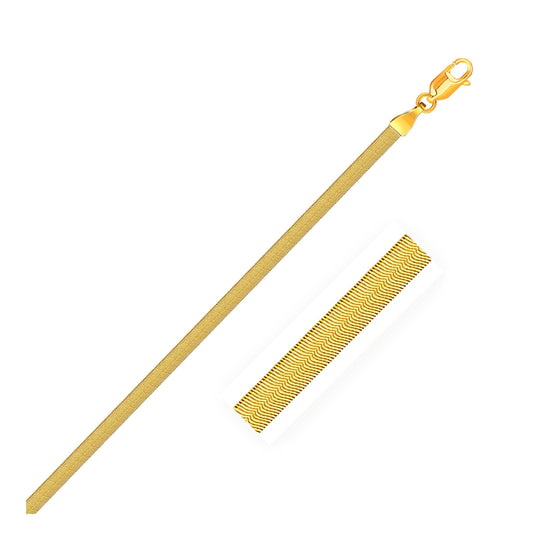
14K gold anklets share the same chain constructions, clasp types, and alloy standards as 14K gold bracelets. Both categories use cable, rope, and Cuban link chain formats in the same karat; the primary difference is sizing. Anklets are cut to 9 to 11 inches to fit the ankle circumference, while bracelets are cut to 6.5 to 8 inches for the wrist. Buyers familiar with 14K chain bracelet quality will find identical construction at the anklet category. For a smooth, woven-link anklet style in gold, browse foxtail anklets.

Your Bag
Subtotal (tax excl.) $0
 
Example
Example
Example
(0 )
Example
View detail
Example
Example
Option1
Option2
Option3
Option1
Option2
Option3
Sold out
Quantity
Add To Cart
Buy Now
Compare
Add Wishlist
Share:
0
0