Choosing a White Gold Engagement Ring Setting
Solitaire Settings Keep the Focus on the Stone
A solitaire setting holds a single center stone with minimal metal showing, letting the diamond or gemstone do the visual work without competing accents. In white gold, the cool tone disappears against the stone rather than reflecting warmth back into it, which is part of why solitaire remains the most requested engagement ring construction. Four-prong settings show slightly more of the stone than six-prong, while a low profile sits closer to the finger for everyday wear. Round, oval, and cushion centers all read cleanly in a solitaire build. solitaire rings covers the full range of solitaire styles available in white gold and other metals.
Halo Settings Add Brilliance Around the Center
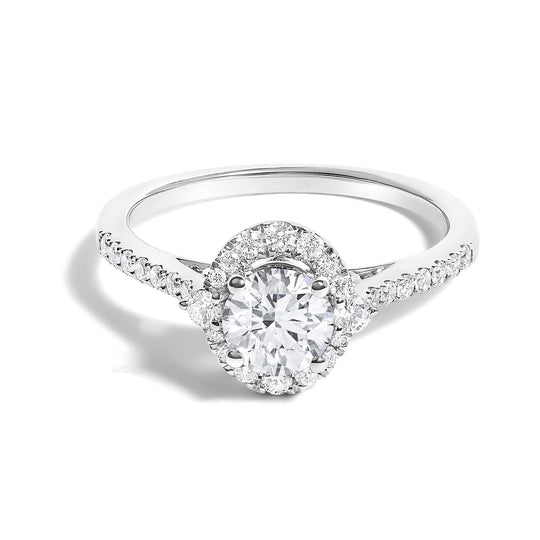
A halo setting surrounds the center stone with a ring of smaller accent stones, increasing the stone's apparent size and adding brilliance without increasing the center carat weight. In white gold, the halo's metal frame stays understated against the diamonds rather than introducing a warm cast, which keeps the focus on sparkle rather than metal color. Double halo constructions add a second row of accent stones for more coverage, and the style works with round, oval, and pear centers alike. halo rings shows the full range of halo styles built in white gold.
Why White Gold Suits a Diamond Center Stone
White gold's cool, silvery tone is the closest match to a colorless diamond, which is why it remains the most common metal choice for diamond engagement rings. Unlike yellow gold, white gold doesn't introduce a warm cast around the stone's edge, so the diamond reads as bright and clear from every angle. The metal is durable enough for daily wear and pairs well with both classic and modern settings. diamond rings covers the full diamond engagement and bridal range across every metal.
Caring for White Gold and Choosing a Karat
White gold engagement rings are typically rhodium-plated, a thin coating that gives the metal its bright white finish and adds a layer of scratch resistance over the gold underneath. That plating wears thin with years of daily contact, so a replating every two to three years keeps the original finish looking fresh. 14k is the most common choice for daily wear because it balances durability with cost, while 18k carries a richer gold content for buyers who prioritize that over hardness. Browse gold engagement rings for karat options across all three gold colors.