
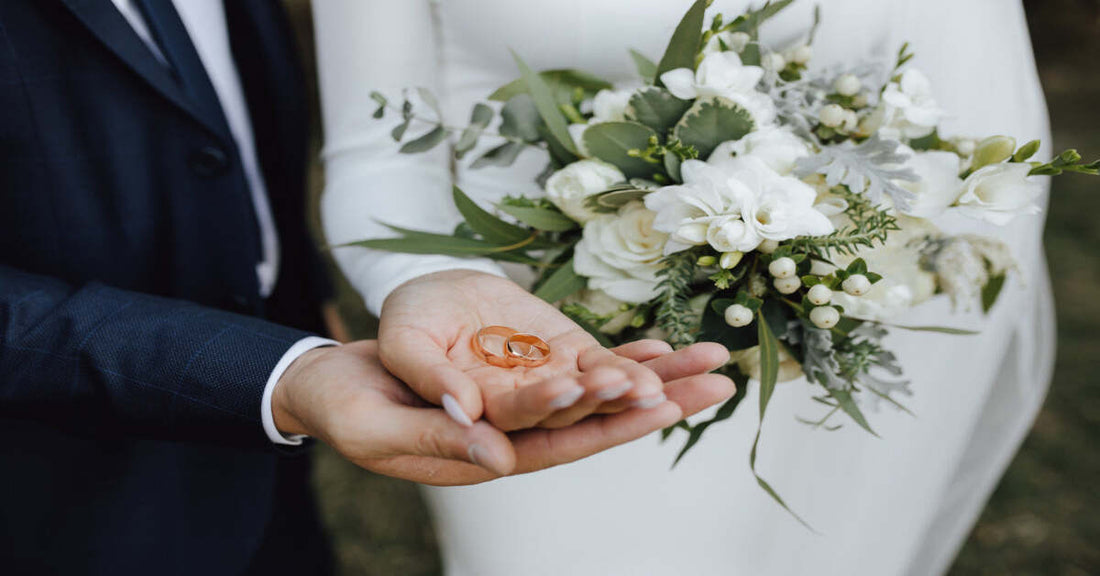
October is the single most popular month to get married in the United States, and fall and late spring carry most of the calendar; January through March are the quietest and cheapest. Beyond cost and weather, every month has its own birthstone, so the date you choose can also shape the jewelry that marks it. This guide covers the trade-offs season by season, the numbers behind them, and what each month brings.
Jump to a section
Choosing a wedding date means balancing three things that rarely line up: the weather you want, the budget you have, and the meaning you want the day to carry. The good news is that the patterns are well documented. Industry data from The Knot shows clear peaks and clear bargains, so you can pick with your eyes open.
This guide walks through the seasons, the real numbers on when couples marry and what it costs, a month-by-month breakdown, and one detail most planning checklists miss: the birthstone attached to each month, which links your date straight to the jewelry you will wear and pass down. If birthstones shape your thinking, the birthstone guide goes deeper on every stone.
The four seasons, honestly compared
Each season sells a different version of the day, and each comes with a real trade-off. Fall is the runaway favorite for a reason: comfortable temperatures across most of the country, peak foliage that decorates the venue for you, and long golden light for photos. The cost of that popularity is competition, since the best fall venues book twelve to eighteen months out and charge peak rates.
Summer offers the longest daylight and the easiest outdoor planning, though July and August heat and vacation-season schedules can work against you. Spring brings blossoms and milder temperatures, with the risk of unpredictable weather and a fast-filling calendar as the peak begins in May. Winter is the quiet season: elegant, intimate, and by far the most affordable, with the caveats of cold-weather travel and holiday conflicts in December. There is no single best season, only the one whose trade-offs you are happiest to accept.
When couples actually marry, and what it costs
The calendar is lopsided. A handful of months carry most of the year's weddings, while the depths of winter sit nearly empty. Seeing the shape of it makes the trade-off obvious: popularity and price rise and fall together.
The cost curve follows that shape almost exactly. The peak months, roughly May, June, September, and October, command the highest venue and vendor pricing and the tightest Saturday availability. The bargains live in the off-season: January through March bring the lowest prices and the easiest booking of the year, while November and early December offer a middle path, milder than deep winter and noticeably cheaper than the fall peak. If budget is your first concern, marrying off-peak is the single biggest lever you have.
"The three lucky months for a wedding are June, October, and December."
Traditional English wedding folklore
A centuries-old superstition; charming, not a planning rule.
Every month at a glance
Your month is also a stone
Choosing a month quietly chooses a gem. Birthstones have marked the months for centuries, and the modern list is maintained today by bodies like the Gemological Institute of America. That gives a wedding date a second life in jewelry: a sapphire band for a September wedding, emerald studs for a May date, or a pearl piece for June carries the day forward every year you wear it.
It is a natural way to make anniversary gifts and bridal-party pieces meaningful rather than generic, and it pairs neatly with the stone you may already be planning around. April's stone happens to be the diamond, so an engagement ring suits any month, while a gift for her in her wedding-month stone is hard to beat. The birthstone guide covers the meaning and history of each one.
Planning tip
Book the venue first; it sets your season, your capacity, and half your budget. Couples in the U.S. plan for around fifteen months on average, and peak-month Saturdays go twelve to eighteen months out, so the earlier you lock the date, the more choice you keep.
In Short
1October is the most popular month, and fall plus late spring carry most U.S. weddings; that popularity drives the highest prices.
2January through March are the cheapest and easiest to book; November and early December are a sensible middle ground.
3Every month has a birthstone, so your date doubles as a jewelry theme for the ring, the gifts, and every anniversary after.
The Wedding Jewelry Timeline
A simple checklist of what jewelry to buy and when, from the engagement ring to the bands and bridal-party gifts. We'll email it to you.
Email Me the Guide →


The best month is the one whose weather, budget, and meaning you are happiest to live with; the data just tells you what you are trading. Once the date is set, the birthstone guide helps you build the jewelry around it, the Fine Jewelry Buying Guide covers choosing the pieces, and the history of diamonds is a fitting read for anyone shopping a ring. You can also explore the full range on the Oath Jewelry home page. Every order ships free with a 30-day return policy.
Frequently Asked Questions
01
What is the most popular month to get married?
October is the most popular wedding month in the United States, accounting for roughly 17 percent of weddings, and fall is the busiest season overall. September and the late-spring favorites of May and June follow close behind.
02
What is the cheapest month to get married?
January, February, and March bring the lowest venue and vendor pricing and the widest availability, since they are the least-booked months of the year. November and early December offer smaller savings in milder weather.
03
What is the best month for good weather?
Comfortable wedding weather depends on your region, but late spring and early fall suit most of the country, with mild temperatures and long daylight. October is popular precisely because it pairs cool air with peak foliage.
04
Does my wedding month have a birthstone?
Every month of the year has its own birthstone, from January's garnet to December's turquoise, so your date carries a built-in jewelry theme. The birthstone guide covers the meaning of each one.
05
How far in advance should I book a wedding date?
Most couples in the United States plan for around fifteen months, and the most sought-after venues book peak-month Saturdays twelve to eighteen months out. Booking the venue first is the fastest way to lock your season and date.
06
Is there a lucky month to get married?
Folklore has long named June, October, and December as the lucky months, and cautioned against May. These are charming superstitions rather than planning advice, but they make a fun footnote to a practical decision.