
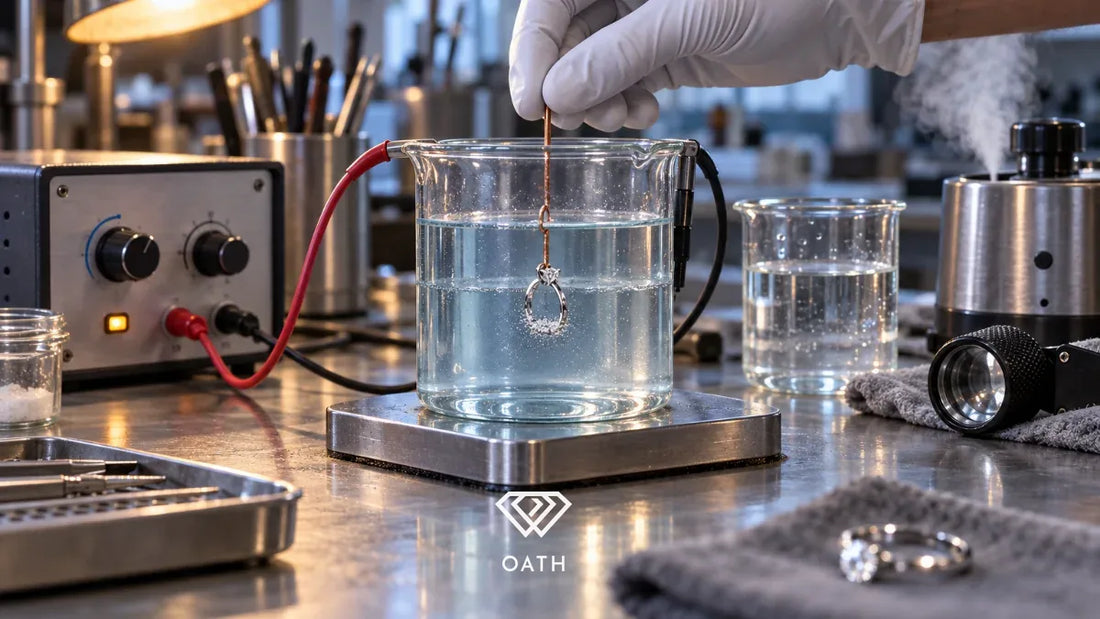
Rhodium plating on a white gold ring worn every day usually lasts one to two years before it needs renewing. Necklaces and pendants often keep their plating two to four years, and earrings longer still. Friction, chlorine and abrasive cleaners wear it fastest. Replating is quick, routine and restores the original bright white finish.
Jump to a section
The answerWhat rhodium isWhat wears itSigns to replateHow replating worksMake it lastFAQMost white gold owes its bright white color to a thin layer of rhodium, and that layer wears with time. Knowing how long it lasts, what speeds up wear and when to replate takes the surprise out of a ring that starts to look slightly warm. This guide explains how rhodium plating works and how to look after it.
How long does rhodium plating last?
Rhodium plating on a white gold ring worn every day typically lasts about one to two years before it needs renewing. Pieces that see less friction last much longer: necklaces and pendants often go two to four years, and earrings can keep their plating for many years. Heavy hand use, chlorine and abrasive cleaners shorten that time considerably.
The plating does not fail all at once. It wears gradually at the points that rub most, such as the underside of a ring band and the edges of a setting, while protected areas stay bright for much longer. That is why a ring can look perfectly white from the top and slightly warm underneath.
1 to 2 yrs
Typical plating life on a ring worn daily
Under 1 micron
Typical thickness of a rhodium coat
0
Plating needed on platinum, which is naturally white
What is rhodium plating?
Rhodium is a rare, very white member of the platinum family of metals. It is hard, highly reflective and one of the least reactive elements, which makes it ideal as a finishing layer. Jewelers apply it to white gold by electroplating: the cleaned and polished piece is placed in a rhodium solution, and an electric current deposits a thin, even layer of rhodium onto the surface.
White gold needs this finish because gold is naturally yellow. White gold is made by alloying gold with white metals such as palladium or nickel, which lighten its color, but the result is usually a pale, slightly warm gray rather than a bright white. Rhodium gives white gold its crisp, mirror-white look. The complete guide to white gold jewelry covers how the alloys differ, and the history of white gold explains how the finish came into use.
The layer is very thin, typically well under one micron, which is why it wears. It is a surface finish, like the clear coat on a car, rather than part of the metal. Underneath, the white gold itself remains solid and does not wear away with the plating.
What wears rhodium plating away?
Friction is the main cause. Every time a ring rubs against a desk, steering wheel, keyboard, gym equipment or another ring, a tiny amount of rhodium wears away. Rings take the most contact of any jewelry, followed by bracelets, which is why their plating needs renewing first.
Chemicals speed up the process. Chlorine in pools and hot tubs, bleach and other household cleaners, and abrasive polishes all attack the plating or the surface beneath it. Some people also find that their skin chemistry seems to wear plating faster, though friction and chemicals account for most differences.
| Factor | Shortens plating life | Extends plating life |
|---|---|---|
| Type of piece | Rings and bracelets that rub surfaces | Earrings and pendants |
| Daily activities | Gym, gardening, housework, typing | Removing rings for hands-on tasks |
| Chemicals | Chlorine, bleach, abrasive cleaners | Mild soap and water only |
| Ring stacking | Bands rubbing against each other | Wearing bands with a spacer or alone |
| Alloy underneath | Warmer, yellower white gold | Whiter palladium or nickel alloys |
| Plating quality | Thin, rushed plating | Careful preparation and an even coat |
The color of the alloy underneath affects how soon wear becomes visible. White gold made with palladium or nickel is already fairly white, so worn plating is hard to spot. Warmer white gold alloys show a yellowish tint as soon as the rhodium thins. If you have sensitive skin, also note that rhodium acts as a barrier over any nickel in the alloy, so a worn coat can matter for comfort as well as color. The guide to the best metals for sensitive skin explains more.
How can you tell when it needs replating?
The clearest sign is a warm, slightly yellow or champagne tint appearing on parts of the piece, usually on the underside of a ring band, the sides of the shank or around prongs. Compare the most protected area of the piece with the most worn: if the protected area looks noticeably whiter and brighter, the plating is thinning.
Other signs include a duller, less reflective surface that does not improve with cleaning, and visible contrast between the plating and the metal where scratches have gone through. Clean the piece first with warm water and mild soap, because a film of lotion or soap can also make white gold look dull or gray. If the tint remains after cleaning, it is time to replate. The guide does gold tarnish? explains why this change is wear rather than tarnish.
Not a Defect
A white gold ring turning slightly yellow after a year or two of daily wear is normal. It does not mean the gold is fake or low quality; the surface finish has simply worn and can be renewed.
How does replating work?
Replating is a routine job for a jeweler. The piece is cleaned thoroughly, any scratches are polished out, and it is steam cleaned and degreased so the new coat will bond. It is then electroplated with fresh rhodium, rinsed and dried. Many jewelers can replate a ring within a day, and some while you wait.
Some gemstones need extra care. Porous or heat-sensitive stones such as pearls, opal, turquoise and many emeralds should not go into the plating bath, so a jeweler may use a pen-plating technique that applies rhodium only to the metal. Replating is also usually done after a ring is resized or repaired, because the work removes plating in that area.
It is worth having prongs checked at the same visit. A jeweler will often spot a worn or bent prong while preparing the piece, and fixing it then is far easier than replacing a lost stone later.
How do you make rhodium plating last longer?
Take rings off for hands-on tasks such as gym workouts, gardening, cleaning and moving furniture, and remove all jewelry before swimming or using a hot tub. Put rings on after lotion and hand cream have dried, and clean pieces gently with warm water, mild dish soap and a soft brush. Avoid toothpaste, baking soda and abrasive polishing cloths, which wear the coat.
Store white gold pieces separately so they do not rub against harder diamonds or other jewelry. If you wear a wedding band and engagement ring together, the point where they touch will wear first; that is normal, and a quick replate of both keeps them matching. If you would rather avoid replating altogether, platinum is naturally white and never needs it. The comparison of platinum and white gold covers the trade-offs.
A simple routine
Clean white gold gently every few weeks, have it checked by a jeweler every six months to a year, and replate when the warm tint appears. Most daily-wear rings settle into a replating rhythm of every year or two.
"White gold jewellery is often electroplated with rhodium to improve its appearance."
Royal Society of Chemistry, Rhodium element profile
Royal Society of Chemistry, rsc.org
Further reading: World Gold Council on gold jewellery and alloys. The Royal Society of Chemistry describes rhodium as one of the rarest non-radioactive metals and one of the least reactive elements, the qualities that make it a durable, bright finish for white gold.
In Short
1Rhodium plating usually lasts one to two years on a ring worn daily, two to four on pendants and longer on earrings.
2A warm, yellowish tint on the underside of a band is the main sign the plating has worn.
3Replating is quick and routine; avoid chlorine and abrasives, and remove rings for hands-on tasks to make it last.
Want the full white gold care reference?
The Oath jewelry guide covers metals, plating and care for every type of fine jewelry in one place. We will email it to you.
Email Me the Guide →


Every order ships free with a 30-day return policy.
Rhodium plating is what keeps white gold bright white, and renewing it every year or two is a normal part of owning a daily-wear ring. Treat it gently, replate when the warm tint shows, and your white gold will look new for decades. Every order ships free with a 30-day return policy.
Frequently Asked Questions
01
How often should white gold be rhodium plated?
White gold rings worn every day typically need rhodium plating every one to two years. Necklaces, pendants and earrings need it far less often because they see less friction. Replate whenever a warm, yellowish tint appears that does not clean away.
02
Why is my white gold ring turning yellow?
A white gold ring turns yellow when its rhodium plating wears thin and reveals the slightly warmer white gold alloy underneath. It is normal wear, not a sign of fake gold, and replating restores the white finish.
03
Is rhodium plating permanent?
Rhodium plating is not permanent. It is a very thin surface layer that wears gradually with friction and chemical exposure. The white gold beneath it is solid metal and does not wear away with the plating.
04
Can you rhodium plate jewelry at home?
Rhodium plating at home is not practical for fine jewelry. Proper plating needs professional cleaning, polishing, degreasing and controlled electroplating to bond evenly. A jeweler can replate most pieces quickly, often within a day.
05
Does platinum need rhodium plating?
Platinum does not need rhodium plating, because it is naturally white. Over time platinum develops a soft satin patina, which can be polished back to a high shine. Some jewelers plate platinum for extra brightness, but it is optional.
06
Does rhodium plating affect diamonds or gemstones?
Rhodium plating does not harm diamonds, but porous or heat-sensitive stones such as pearls, opal, turquoise and many emeralds should not go into the plating bath. A jeweler can use pen plating to coat only the metal around those stones.