
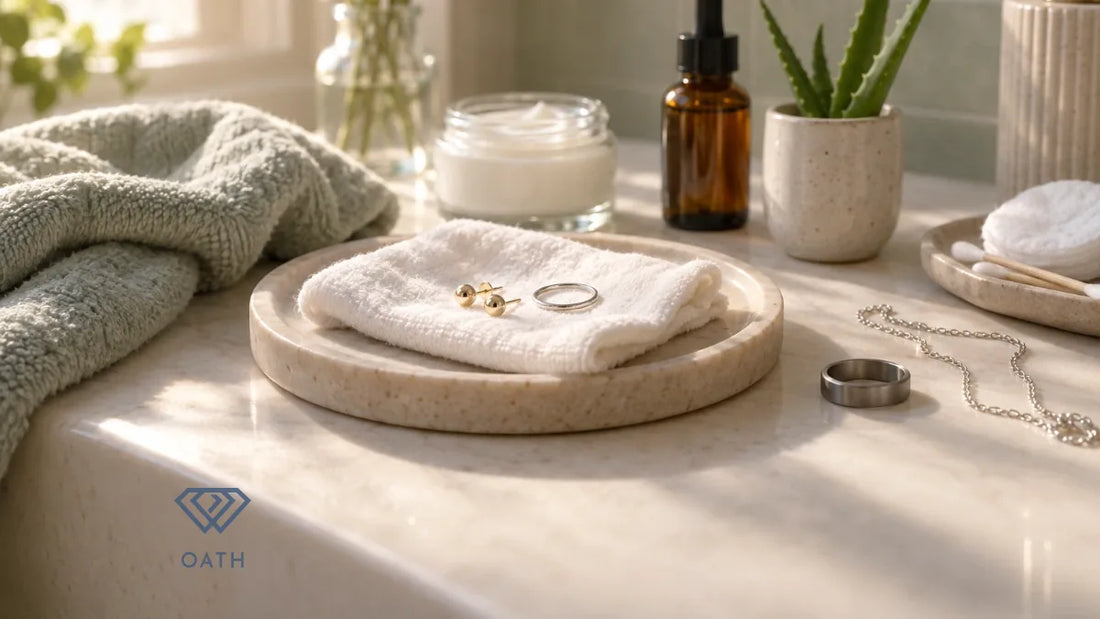
The best metals for sensitive skin are platinum, titanium and high-karat yellow gold such as 18K, followed by 14K yellow gold, sterling silver and nickel-free white gold. Nickel causes most jewelry reactions, so the safest metal is one that contains none. Plated base metals are riskiest once the plating wears.
If earrings make your ears itch or a ring leaves your finger red, the metal is usually the reason, and the fix is usually simple. Most reactions come down to one ingredient, nickel, and the safest jewelry is made from metals that contain none. This guide ranks the common jewelry metals for sensitive skin and explains what to check before you buy.
What is the best metal for sensitive skin?
Platinum is the best metal for sensitive skin, closely followed by titanium and high-karat yellow gold such as 18K. All three contain little or no nickel, the metal behind most jewelry reactions. Next come 14K yellow gold, sterling silver and white gold made with palladium rather than nickel, which suit most people with sensitive skin. Plated base metals are the riskiest, because the metal underneath touches the skin once the plating wears.
The key question is chemistry: what is actually touching your skin, and does it release nickel? A piece can look like gold or silver and still be mostly something else underneath.
Nickel
The most common cause of jewelry skin reactions
95%
Minimum purity of a piece sold as platinum
75%
Gold content of 18K, leaving little room for alloy metals
Why does jewelry irritate sensitive skin?
For most people, a reaction to jewelry is a reaction to nickel. Nickel is used in many alloys because it is hard and inexpensive, and it is common in costume jewelry, some white gold, belt buckles, watch backs and zippers. In people who are sensitive to it, sweat dissolves tiny amounts of nickel from the metal, and the skin responds with redness, itching or a rash where the piece sits.
Nickel sensitivity often appears after repeated or prolonged contact, which is why someone can wear the same earrings for years and then begin reacting to them. Earrings are a common trigger because posts sit in pierced skin. A dermatologist can confirm a nickel allergy with a patch test, which is worth doing if reactions keep recurring.
Not every mark on the skin is an allergy. A green ring line is usually copper reacting with sweat, and a dark smudge under gold can come from makeup rubbing off tiny metal particles. Soap and moisture trapped under a ring can also irritate the skin, so cleaning rings and drying hands well helps.
Which metals are safest?
Platinum. Used at least 95% pure and containing no nickel, platinum is the safest precious metal for very sensitive skin. It is dense and naturally white, so it never needs plating that could wear away. The complete guide to platinum jewelry covers purity marks and how it wears.
Titanium and niobium. These lightweight metals are highly biocompatible, which is why titanium is used in medical implants. Implant-grade titanium is a common recommendation for new piercings.
High-karat yellow gold. 18K yellow gold is 75% gold, and the remaining alloy is usually silver and copper rather than nickel. 14K yellow gold contains more alloy but rarely includes nickel, so it suits most people. 22K and 24K are even purer but too soft for most everyday jewelry. The guide to 14K vs 18K gold explains the trade-off between purity and durability.
Sterling silver. Sterling is 92.5% silver, usually alloyed with copper, and is well tolerated by most people. Tarnish on silver is a surface film, not an allergy, and comes off with gentle cleaning; the guide to cleaning silver jewelry covers how.
White gold, with a question. White gold is gold alloyed with white metals, and that alloy may be palladium or nickel. Palladium white gold is a good choice for sensitive skin; nickel white gold is not. Most white gold is also rhodium plated, which acts as a barrier until it wears. The comparison of platinum and white gold covers how each behaves on the skin over time.
Which metals should you avoid?
The riskiest pieces are gold-plated or silver-plated base metals. The plating looks like precious metal, but it is very thin, and once it wears through, the brass, copper or nickel alloy underneath sits directly on the skin. Fashion and costume jewelry often falls into this group.
Watch for misleading names. Nickel silver, also called German silver, contains no silver at all; it is an alloy of copper, nickel and zinc. Pieces described only as silver tone or gold tone make no promise about the metal. Stainless steel is fine for many people, but it does contain nickel, and the word surgical on a label is not a regulated grade, so very sensitive skin may still react.
| Metal | Contains nickel? | Suitability for sensitive skin | What to check |
|---|---|---|---|
| Platinum (950) | No | Excellent | Look for a 950 or PLAT stamp |
| Titanium | No | Excellent | Implant-grade titanium is the safest for piercings |
| 18K yellow gold | Rarely | Very good | 75% gold, little alloy metal |
| 14K yellow gold | Rarely | Good for most people | More alloy than 18K |
| Sterling silver | Usually no | Good for most people | Copper alloy; tarnish is not an allergy |
| White gold | Sometimes | Depends on the alloy | Ask whether it is palladium or nickel white gold |
| Stainless steel | Yes, mostly bound in | Fine for many, not all | The word surgical is not a regulated grade |
| Gold-plated base metal | Often | Poor once plating wears | Base metal underneath may contain nickel |
If you love a plated or white gold piece, replating with rhodium restores its barrier for a while, and some people use a clear coating on the inside of a band as a temporary fix. Neither is permanent; a nickel-free metal is the lasting answer. The guide to gold-filled, gold-plated and vermeil explains how each construction wears.
What are the best earrings for sensitive ears?
Earrings matter most because the post passes through the skin. For sensitive ears, choose posts and backs made of platinum, implant-grade titanium or solid 14K to 18K gold. Check the backs as well as the posts, since a gold earring can come with a base-metal butterfly back.
Studs and huggies with solid gold or platinum posts are the easiest everyday choice. Hoops with hinged closures should be solid metal throughout. If your ears react even to gold, platinum or titanium is the next step, and a dermatologist can help identify the cause.
Before You Buy
Read the full metal description, not just the color. Look for the karat or purity mark, the white gold alloy if it is white gold, and the metal of the earring backs. If a listing does not say, ask before you buy.
How do you shop for sensitive skin?
Start with the metal you know you tolerate, and buy that. If gold earrings have never bothered you, 14K or 18K yellow gold is a safe choice for rings and necklaces too. If you react to most metals, platinum is the most reliable precious metal, and titanium the most reliable alternative.
Keep jewelry clean and dry. Residue from soap, lotion and sweat trapped under a ring or clasp irritates sensitive skin even when the metal itself is fine. Take rings off to wash your hands and dry the skin underneath before putting them back on. The precious metals comparison sets gold, silver, platinum and palladium side by side.
"Nickel allergy is usually related to earrings and other jewelry."
Mayo Clinic, Nickel allergy: Symptoms and causes
Further reading: World Gold Council on gold jewellery and alloys. Mayo Clinic suggests jewelry made from surgical-grade stainless steel, titanium, 18 to 24 karat yellow gold, nickel-free white gold or sterling silver for people with a nickel allergy.
In Short
1Platinum, titanium and 18K yellow gold are the safest choices; 14K yellow gold, sterling silver and palladium white gold suit most people.
2Nickel causes most jewelry reactions; ask whether white gold uses nickel or palladium.
3Avoid plated base metals and nickel silver, and check earring posts and backs as well as the front.
Want the full metals reference?
The Oath jewelry guide covers karats, metal types, care and which metals suit sensitive skin in one place. We will email it to you.
Email Me the Guide →


Every order ships free with a 30-day return policy.
Choose a metal with no nickel touching the skin: platinum, titanium or yellow gold first, then sterling silver or palladium white gold. Keep it clean and dry, and ask about the alloy whenever a description is unclear. Every order ships free with a 30-day return policy.
Frequently Asked Questions
01
Is 14K gold OK for sensitive skin?
14K yellow gold is fine for most people with sensitive skin, because it is 58.5% gold and its alloy metals are usually silver and copper rather than nickel. 14K white gold depends on its alloy, so ask whether it uses palladium or nickel. Very sensitive skin may do better with 18K or platinum.
02
Is sterling silver hypoallergenic?
Sterling silver is well tolerated by most people, because it is 92.5% silver alloyed with copper and normally contains no nickel. No metal is guaranteed hypoallergenic for everyone, and silver-plated base metals are a different product that can contain nickel.
03
Is white gold safe for a nickel allergy?
White gold is safe for a nickel allergy only if it is made with palladium instead of nickel. Rhodium plating gives temporary protection, but it wears away. Platinum is the safer white metal for anyone with a confirmed nickel allergy.
04
What earrings are best for sensitive ears?
Earrings with platinum, implant-grade titanium or solid 14K to 18K gold posts and backs are best for sensitive ears. Check the backs as well as the posts, and avoid plated base-metal earrings, which expose the metal underneath as the plating wears.
05
Is stainless steel good for sensitive skin?
Stainless steel suits many people, but it contains nickel, and the label surgical is not a regulated grade. Most of the nickel is bound into the alloy, so reactions are less common than with plated base metals, but very sensitive skin may still react. Titanium is the safer alternative.
06
Can you develop a metal allergy later in life?
A nickel allergy can develop after repeated or prolonged contact, so someone can react to jewelry they have worn comfortably for years. A dermatologist can confirm it with a patch test, and switching to nickel-free metals usually prevents further reactions.