
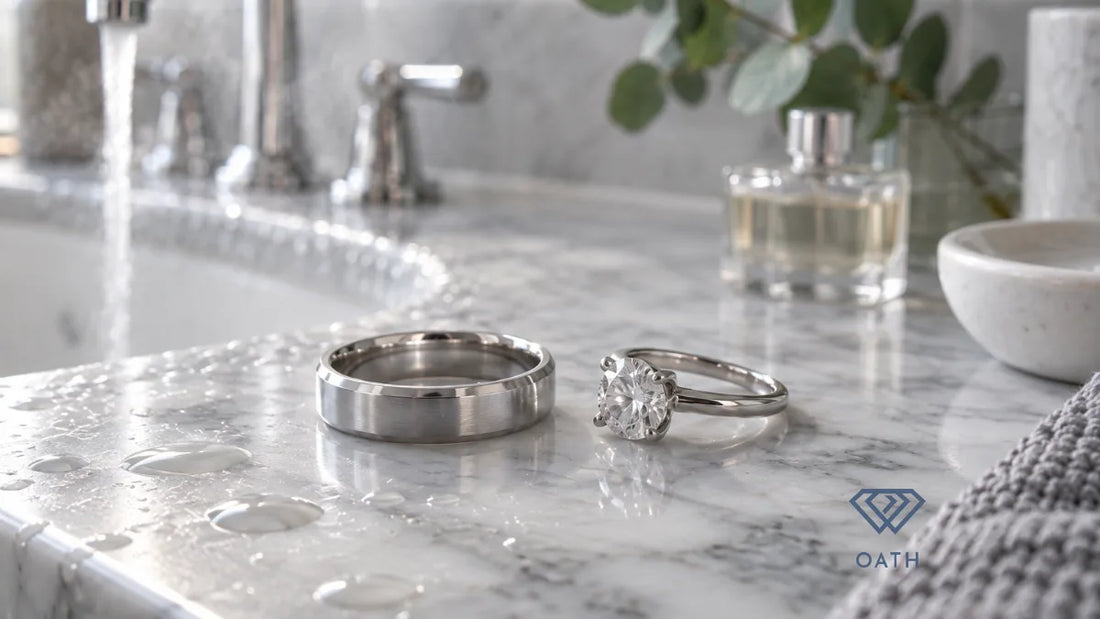
Platinum is a naturally white metal used at least 95% pure, so it never needs plating. White gold is gold alloyed with white metals and usually rhodium plated, which wears and needs renewing every one to three years. Platinum is heavier and best for sensitive skin; white gold is lighter and more widely available.
Jump to a section
The differenceMaintenanceDurabilityFeel and colorSensitive skinWearing bothWhich to chooseFAQPlatinum and white gold look almost identical in a display case, which is exactly why the choice between them is confusing. The real differences show up after months and years of wear: how each metal is maintained, how it ages, how it feels on the hand and how it treats sensitive skin. This guide sets those differences out plainly so the choice is easy.
What is the difference between platinum and white gold?
Platinum is a naturally white precious metal used almost pure. In the United States, a piece sold simply as platinum must contain at least 95% platinum, stamped 950 or PLAT. White gold is yellow gold alloyed with white metals such as palladium or silver, then usually coated with rhodium, a hard, bright platinum-group metal, to give it a crisp white finish.
So the two look almost identical on the day you buy them, but for different reasons. Platinum is white all the way through. White gold is white on the surface, with a faintly warm metal underneath. That one fact explains almost every practical difference between them: upkeep, how each one ages, and how each one feels to wear.
The two metals also share a history. Platinum became the favored setting metal for diamonds in the early twentieth century, and white gold was developed as an alternative to it, and its use grew when platinum was reserved for military needs in wartime. The story is told in full in the history of white gold, and white gold has remained the more widely produced of the two ever since.
950
Parts per thousand platinum in a piece sold as platinum
1 to 3 yrs
Typical rhodium replating interval for white gold
Heavier
Platinum is far denser than gold, so rings feel weightier
Which needs more maintenance?
White gold needs more. Rhodium plating gradually wears away where a ring rubs against other surfaces, usually first on the underside of the band and the edges. As it thins, the warmer gold underneath starts to show. A jeweler restores it by cleaning the piece and replating it, typically every one to three years depending on how hard the ring is worn.
Platinum needs no plating at all. Over time it develops a soft, satin finish called a patina, which some people love and others have polished away every few years. Neither process is difficult, but white gold's maintenance is a recurring task, while platinum's is optional. The complete guide to white gold explains rhodium plating in more detail.
Which is more durable?
They are durable in different ways. Gold alloys, especially 14K, are harder at the surface, so white gold resists fine scratches well. Platinum is softer at the surface but extremely dense and tough: when it is scratched, the metal is pushed aside rather than lost, so a platinum ring keeps its weight and substance over decades of wear.
That toughness is why platinum is often chosen for prongs holding a valuable center stone. Platinum prongs tend to bend rather than snap, and they wear away very slowly. White gold prongs are perfectly secure too, but should be checked once a year, especially in 18K, which is softer than 14K. The guide to 14K vs 18K gold covers how the karat changes durability.
Before You Choose
If a ring will be worn every day for decades, the question is less about which metal is stronger and more about which kind of maintenance you prefer: a scheduled replating, or an occasional polish of a patina.
Does platinum or white gold feel different?
Yes. Platinum is one of the densest metals used in jewelry, so a platinum ring feels distinctly heavier than the same ring in white gold. Many people describe that weight as reassuring; others find a lighter white gold band more comfortable for all-day wear.
Color differs subtly too. Freshly plated white gold is a bright, cool white. Platinum is a slightly grayer, softer white that deepens into its patina. Side by side, a trained eye can tell them apart; across a room, almost no one can. The complete guide to platinum jewelry covers purity, patina and wear.
Which is better for sensitive skin?
Platinum is the safer choice for very sensitive skin, because it is used nearly pure and contains no nickel. White gold is also safe for most people, provided the alloy is nickel-free; many modern white gold alloys use palladium instead of nickel. If someone has a known nickel allergy, ask what the white gold is alloyed with before buying, or choose platinum.
The rhodium plating on white gold also acts as a barrier while it is intact, which is why reactions to white gold sometimes appear only once the plating starts to wear.
Can you wear platinum and white gold together?
Yes, and many people do, but it helps to know how they interact. When two rings sit side by side on one finger, the harder metal slowly wears the softer one where they touch. A white gold wedding band worn against a platinum engagement ring can, over many years, wear a groove into the platinum, and the plated white gold will show its warmer tone sooner than the platinum next to it.
For a bridal set worn together every day, matching the metals is the simplest way to keep both rings wearing evenly and looking the same color over time. For rings worn on different fingers or different hands, mixing is entirely practical. The guide to stacking wedding bands covers how to combine rings so they sit flush and age well.
Care is similar for both: warm water, mild soap and a soft brush. Take rings off for heavy lifting, gardening and chlorinated pools, and have prongs checked once a year whichever metal you choose. The fine jewelry care guide covers cleaning and storage in detail.
Platinum vs white gold: which should you choose?
Choose platinum if you want a metal that stays white with no plating, feels substantial, and suits very sensitive skin. Choose white gold if you prefer a lighter piece, a bright white finish, and a lower outlay, and you are comfortable having it replated every few years.
| Factor | Platinum | White gold |
|---|---|---|
| What it is | At least 95% pure platinum (950) | Gold alloyed with white metals such as palladium or silver |
| Natural color | Naturally gray-white, no plating | Warm, slightly yellowish; usually rhodium plated |
| Upkeep | Occasional polish to remove patina | Rhodium replating every one to three years |
| Weight | Dense and heavy in the hand | Lighter for the same design |
| Wear pattern | Scratches move metal; develops a matte patina | Plating wears through; gold underneath is harder |
| Sensitive skin | Very low risk | Low risk if nickel-free; ask about the alloy |
For most everyday jewelry, such as earrings, pendants and fashion rings, white gold is the practical choice and the one most widely available. For an engagement ring or wedding band intended to be worn for a lifetime, both are excellent; the decision comes down to weight, upkeep and skin. The precious metals comparison adds silver and palladium to the picture.
"Should have at least 950 parts per thousand pure platinum."
Federal Trade Commission, Advertising Platinum Jewelry
Federal Trade Commission, ftc.gov
Further reading: World Gold Council on white gold and rhodium plating. The FTC standard for any piece sold simply as platinum. The World Gold Council explains that white gold is usually rhodium plated for a harder, brighter surface.
In Short
1Platinum is naturally white and at least 95% pure; white gold is a gold alloy usually finished with rhodium plating.
2White gold needs replating every one to three years; platinum needs only an occasional polish of its patina.
3Choose platinum for weight, permanence and sensitive skin; choose white gold for a lighter, bright white piece.
Want the full metals reference?
The Oath jewelry guide covers karats, metal colors, care and which metals suit sensitive skin in one place. We will email it to you.
Email Me the Guide →


Every order ships free with a 30-day return policy.
Decide which kind of upkeep suits you, a scheduled replating or an occasional polish, and the right metal follows. Every order ships free with a 30-day return policy.
Frequently Asked Questions
01
Is platinum better than white gold?
Platinum is better for permanence and sensitive skin, because it is naturally white, needs no plating and is used nearly pure. White gold is better for a lighter piece with a bright white finish and wider availability. Neither is better in every case; the right choice depends on weight, upkeep and skin.
02
Can you tell platinum from white gold?
Platinum and white gold are hard to tell apart by eye when new. Platinum is slightly grayer and noticeably heavier, and over time it develops a matte patina while white gold may show a warm tint as its plating wears. The stamp inside the piece, PLAT or 950 for platinum and 14K or 18K for white gold, is the reliable check.
03
Does white gold turn yellow?
White gold can look slightly yellow as its rhodium plating wears, because the gold alloy underneath is naturally warm. Replating restores the white finish. Platinum does not change color in this way.
04
How often does white gold need replating?
White gold typically needs rhodium replating every one to three years. Rings worn every day need it sooner than earrings or pendants, which rarely rub against hard surfaces.
05
Is platinum good for engagement rings?
Platinum is an excellent engagement ring metal. Its density and toughness keep prongs secure for a long time, it never needs plating, and it suits sensitive skin. Its weight and patina are the two things to be comfortable with before choosing it.
06
Is white gold real gold?
White gold is genuine gold alloyed with white metals, and it carries the same karat marks as yellow gold, such as 14K or 18K. The guide to gold colors explains how white, yellow and rose gold are made.