
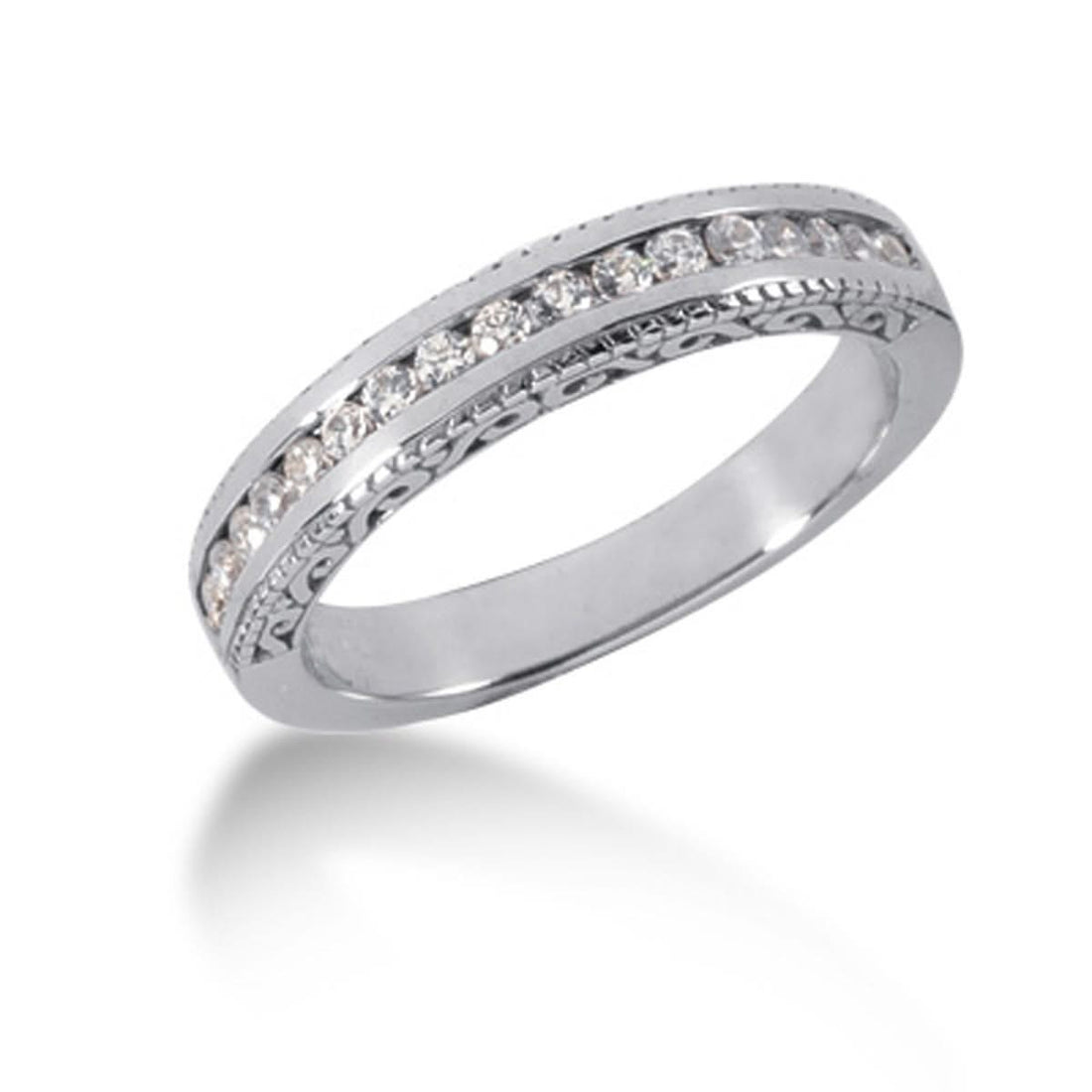
White gold is gold alloyed with white metals, then plated with rhodium for a bright, cool-white surface. The solid gold core lasts a lifetime; the rhodium finish wears slowly and is re-applied periodically, most often on rings. It is routine upkeep, not a defect.
Metal
White gold
Durability
High at 14K
Purity
14K / 18K
Color
Cool white
Everyday wear
Excellent at 14K
Hypoallergenic
Check for nickel
White gold is the bright, cool-toned gold behind a great many engagement rings and diamond pieces, prized for the way it makes diamonds shine. It also comes with one feature every buyer should understand before purchasing: rhodium plating, and the simple upkeep it involves. This guide explains what white gold is, why it is plated, how that plating behaves over time, and how to keep a white gold piece looking its best.
What white gold actually is
White gold is gold engineered to look cool and silvery instead of warm and yellow. It starts as gold, then is alloyed with white metals such as palladium and silver to lighten the tone. Most white gold is then finished with a thin plating of rhodium, a bright white platinum-group metal, which gives it that crisp, mirror-white surface most people picture.
So a white gold piece is really two things working together: a solid gold alloy core that lasts a lifetime, and a rhodium surface layer that delivers the brightest white. Understanding that two-part structure is the key to white gold, because it explains both its beauty and its one maintenance step.
The karat still tells you how much pure gold is inside, exactly as it does for yellow gold. For how karat works across every color, the complete guide to gold jewelry covers it in full.
Rhodium plating and re-plating, explained honestly
Here is the honest part many sellers skip: the rhodium plating on white gold wears gradually with daily contact. As it thins, a faint warm tint from the gold alloy beneath can begin to show, most often on rings, which take the most abrasion. This is completely normal and expected. It is not a defect, and it does not mean the piece is low quality.
The fix is simple. A jeweler re-applies the rhodium plating, a quick and routine service, and the piece looks brand new again. How often depends on wear: a ring worn daily might be re-plated every one to three years, while earrings or a pendant may go far longer or never need it. Think of it like the upkeep any fine thing deserves, not a flaw to avoid.
How often re-plating comes up depends almost entirely on the type of piece and how it is worn. The reference below gives a realistic guide.
| Piece type | Contact level | Typical re-plate interval |
|---|---|---|
Rings
|
Very high | Every 1 to 3 years |
Bracelets
|
High | Every 3 to 5 years |
Pendants and necklaces
|
Low | Rarely; many years apart |
Earrings
|
Very low | Rarely or never needed |
Set Expectations
If you want the cool white look with zero plating upkeep, platinum is the alternative, since it is naturally white. White gold gives a very similar look with a simple re-plate every so often. Knowing this up front is the difference between a happy owner and a surprised one.
Durability beneath the plating
Underneath the plating, white gold is as durable as any gold of its karat. 14K white gold is hard-wearing and well suited to everyday rings and bracelets, while 18K is a touch softer with a higher pure-gold content. The solid gold core does not tarnish, flake, or wear away, so the structure of the piece lasts for decades.
The only ongoing consideration is the rhodium surface, covered above. Separate the two in your mind: the gold core is permanent, the rhodium finish is renewable. With that framing, white gold is a low-fuss metal that simply asks for an occasional refresh to stay at its brightest.
Caring for white gold
Day to day, white gold cleans like any gold: warm water, a drop of mild dish soap, and a soft brush, then a soft-cloth dry. Avoid abrasive cleaners and toothpaste, which can scratch the rhodium surface and shorten the time between re-plates. Chlorine should be avoided too, since it can attack the alloy over time.
Care Note
To make the rhodium last longer, take white gold rings off before cleaning, swimming, and heavy hands-on work, and store pieces separately. The full routine, with what to avoid, sits in the guide to cleaning gold jewelry.
Who white gold suits best
White gold suits cooler skin tones beautifully and is a favorite for engagement rings and diamond pieces, because its bright white setting makes diamonds look whiter and brighter. It sits in the same cool family as platinum and sterling silver, so it layers and mixes easily with both.
If you love the cool look and do not mind a simple periodic re-plate, white gold delivers it at a lighter feel than platinum. For mixing white gold with warmer tones in a stack, the guide to styling fine jewelry shows how to combine metals confidently.
Is white gold right for you
White gold is the right choice when you want a bright, cool-white look, especially for diamonds and engagement pieces, and you are comfortable with a simple re-plate every so often. 14K white gold is the durable everyday pick; 18K offers a higher gold content for those who prioritize it.
If a cool white tone with no plating upkeep matters more to you, platinum is worth comparing, and the precious metals comparison lays the two side by side. To weigh metal against setting and quality overall, the fine jewelry buying guide helps.
"Usually plated with rhodium to create a harder surface with a brighter shine."
World Gold Council
World Gold Council, Gold Jewellery
Further reading: Britannica, karat. Both are long-standing references for gold alloys, plating, and standards.
In Short
1White gold is gold alloyed with white metals such as palladium and silver, then usually plated with rhodium for a bright, cool-white surface.
2The rhodium plating wears slowly and is re-applied by a jeweler, most often every one to three years on rings; this is routine upkeep, not a defect.
3The solid gold core never tarnishes or wears away; only the surface finish is renewed, and platinum is the alternative if you want zero plating upkeep.
Want the white gold and rhodium care cheat sheet?
A one-page reference to white gold, the rhodium plating cycle, and the routine that keeps it brightest between re-plates. We will email it to you.
Email Me the Guide →


Every order ships free with a 30-day return policy.
White gold gives you the cool, bright look that makes diamonds sing, with a simple re-plate now and then to keep it at its best. Understand the plating, and white gold becomes one of the most rewarding metals you can own. Every order ships free with a 30-day return policy.
Frequently Asked Questions
01
Why does white gold need to be re-plated?
White gold needs re-plating because its bright white surface comes from a thin rhodium layer over a gold alloy core. That layer wears gradually with contact, and as it thins a faint warm tint can show through, most often on rings. Re-plating restores the bright white and is a routine jeweler service, not a sign of poor quality.
02
How often does white gold need re-plating?
White gold re-plating frequency depends entirely on wear. A ring worn every day might be re-plated every one to three years, while earrings, pendants, and pieces worn occasionally can go much longer or rarely need it at all. The more abrasion a piece takes, the sooner the rhodium surface will need refreshing.
03
Is white gold or platinum better?
White gold and platinum both give a cool white look, and better depends on your priorities. White gold is lighter and requires periodic rhodium re-plating to stay brightest. Platinum is naturally white, denser, and needs no plating. The full side-by-side comparison sits in the precious metals comparison.
04
Does white gold contain real gold?
White gold contains real gold. It is the same gold as yellow gold, alloyed with white metals such as palladium and silver instead of the copper-heavy mix that keeps yellow gold and rose gold warm. The karat number, such as 14K or 18K, tells you exactly how much pure gold is in the piece, just as it does for any gold color.
05
Will white gold turn yellow over time?
White gold can show a faint warm tint over time as its rhodium plating wears thin, since the gold alloy beneath is slightly warmer in tone. This is gradual and most visible on daily-wear rings. A simple re-plate by a jeweler returns the piece to its original bright white, so the change is fully reversible.
06
Is white gold good for an engagement ring?
White gold is one of the most popular choices for engagement rings, because its bright, cool-white setting makes diamonds look whiter and more brilliant. The trade-off is periodic rhodium re-plating to maintain that brightness. For weighing white gold against platinum and other options, the fine jewelry buying guide walks through the decision.
07
Is white gold hypoallergenic?
White gold is usually well tolerated, but it is not guaranteed hypoallergenic. Some white gold alloys contain nickel, a common contact allergen, while many modern white golds use palladium instead and are nickel-free. If your skin is sensitive, ask for a nickel-free white gold or choose a higher karat, which contains less alloy.
08
How can you tell white gold from platinum or sterling silver?
The quickest way is the stamp inside the piece: white gold reads 14K, 18K, 585, or 750, platinum reads PT or 950, and sterling silver reads 925. White gold and platinum look very similar, though platinum is noticeably heavier, while sterling silver is a softer, lighter metal that tarnishes in a way the others do not.
09
Can white gold be made without rhodium plating?
Yes. White gold can be left unplated, and palladium-based white gold in particular has a naturally white, slightly warmer and softer tone that some people prefer. Unplated white gold skips the re-plating upkeep, though it will not reach the bright mirror-white that rhodium provides. It comes down to whether you want maximum brightness or zero plating maintenance.
10
What gemstones look best set in white gold?
White gold is the classic setting for diamonds, since its cool, bright tone makes them look whiter and more brilliant. It also flatters cool-toned gemstones such as sapphire, aquamarine, and amethyst, whose blues and violets stay crisp against the white. Warm stones can look striking too, read as a deliberate contrast rather than a match.