
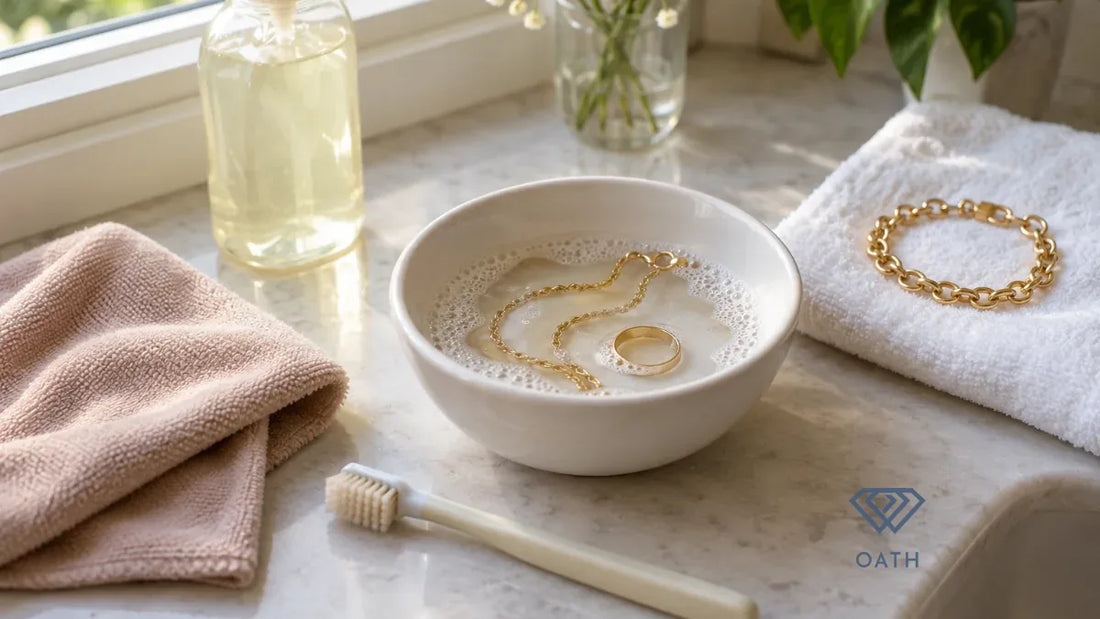
To clean gold jewelry safely, soak solid gold pieces about ten minutes in warm water with a few drops of mild dish soap, brush gently with a soft toothbrush, rinse in clean water, and pat dry with a lint-free cloth. Gold-plated and gemstone-set pieces need a gentler touch and should not be soaked. Skip toothpaste, baking soda, bleach, and ammonia; each can damage gold or its finish.
Jump to a section
Gold jewelry is made to shine, but everyday life dulls it. Skin oils, lotion, perfume, soap, sweat, sunscreen, and the minerals in tap water all leave a film that builds up on rings, necklaces, bracelets, and earrings. The good news is that most gold can be cleaned safely at home with a few simple supplies, as long as you match the method to the type of piece.
This guide covers how to clean each kind of gold, what to use and what to avoid, a simple step-by-step routine, and when a piece is better left to a jeweler. For upkeep across the rest of your fine jewelry, the fine jewelry care guide covers cleaning, storage, and travel for every metal and stone.
First, Identify What You Are Cleaning
Not all gold jewelry is the same, and the safe method depends on the piece in your hand. Identify the metal and the setting before you start; that single step prevents most accidental damage.
What You Need at Home
Routine cleaning calls for very little, and you likely have all of it already.
What to Avoid
Toothpaste and baking soda are abrasive and leave fine scratches; bleach, ammonia mixes, and acetone can harm gold and its finish; paper towels cause micro-scratches; and ultrasonic cleaners are risky for anything you are not certain is safe. When in doubt, mild soap and warm water is the safer choice.
Step by Step: Cleaning Solid Gold
This routine suits everyday pieces in solid yellow, white, or rose gold with no stones, and takes only a few minutes.
Prepare a bath
Fill a small bowl with warm water and add a few drops of mild dish soap.
Soak
Rest the jewelry in the bowl about ten minutes to loosen oils and film.
Brush gently
Use a soft toothbrush with light pressure: inside ring shanks, clasps, chain links, and engraving, where buildup hides.
Rinse
Use a second bowl of clean warm water rather than rinsing over an open drain.
Dry
Pat with a lint-free cloth, then lay the piece flat to air-dry fully; trapped moisture can weaken chains over time.
Polish, optional
Buff with a cloth made for gold to bring back shine, going easy on white gold so you do not thin the rhodium.
For pieces worn daily, repeat this every week or two.
Cleaning Gold Set With Gemstones
Hard, securely set stones such as diamonds, sapphires, and rubies can follow the routine above with two adjustments: use lukewarm water and a shorter soak of about five minutes, then brush carefully around the prongs and behind the stone, where film dulls the sparkle. Rinse in clean water and pat dry. If you see a loose stone or a bent prong, stop and take the piece in for repair, since brushing a loose stone can dislodge it.
Soft or porous stones such as emeralds, opals, pearls, turquoise, and moonstone should not be soaked. Lightly dampen a lint-free cloth with warm soapy water, wipe the gold around the stone, use a barely-damp cotton swab around the setting, then wipe again with a clean damp cloth and pat dry. Never submerge these stones, and keep them away from ultrasonic and steam cleaners. Treatments are part of the reason some stones need this care; the guide on common jewelry questions covers what to ask about a stone before you clean it.
Chains, Bracelets, and Gold-Plated Pieces
Chains and bracelets pick up skin oils fastest, especially woven styles. Soak for about ten minutes, lay the piece flat, and brush gently along the links in the direction of the pattern, then rinse in clean water to clear soap from between the links. Blot and lay flat to dry; never hang a wet chain, since water collects at the lowest point and can stretch delicate links.
Gold-plated jewelry needs the lightest hand of all. Do not soak it or scrub it. Wipe the surface with a barely-damp soft cloth, follow with a clean damp cloth to remove any soap, and pat dry. If a plated piece has dulled or discolored deeply, that is wear rather than dirt, and it may need re-plating rather than cleaning.
For routine care at home, the method gemological authorities recommend is the gentlest one: warm water, a few drops of mild dish soap, and a soft brush. Harsh abrasives and household chemicals cause far more lasting harm than the dullness they are meant to remove.
Standard home-care guidance
Gemological Institute of America and Jewelers of America
Both bodies publish consumer jewelry-care guidance built on the same warm-water, mild-soap, soft-brush method.
When to Leave It to a Jeweler, and How to Keep Gold Bright Longer
Some situations call for a professional. Take a piece in if you hear a stone rattle or feel it move, if a prong is bent or a link is cracked, if the piece is antique or an heirloom, if it holds pearls, opals, or inlay you are unsure how to handle, or if it shows heavy discoloration you do not recognize. A jeweler can clean ultrasonically when settings are sound, steam away residue, tighten settings, re-plate white gold, and polish out light wear.
Prevention keeps cleaning easy. Put jewelry on last, after lotion, perfume, and hair products; take it off before swimming, showering, or exercising; wipe each piece with a dry microfiber cloth after wearing; and store pieces separately in soft pouches or a lined box so gold does not rub and scratch. Avoid keeping gold in the bathroom, where humidity and aerosols speed up dullness. With these habits and the occasional gentle clean, gold jewelry keeps its shine for many years.
In Short
1Match the method to the metal: solid gold can soak, while plated pieces and soft-stone settings get only a careful wipe.
2Warm water, mild dish soap, and a soft brush handle almost everything; toothpaste, baking soda, bleach, and ammonia never touch gold.
3See a jeweler for loose stones, bent prongs, heirlooms, and rhodium re-plating on white gold.
Quick Reference: Cleaning Method by Type
When a row says Caution or No, default to a jeweler. Always confirm a stone's treatment before any soak.
Gold Care Quick Card
A one-page card with the safe method for each kind of gold, what to avoid, and which stones can never be soaked. Built to keep in your jewelry box. We'll email it to you.
Email Me the Card →Gold Jewelry at Oath


Gold rewards gentle, regular care. Match the method to the metal, reach for warm water and mild soap before anything stronger, and hand off loose stones, heirlooms, and white-gold re-plating to a jeweler. For care across every metal and stone, the fine jewelry care guide goes deeper, and the precious metals comparison explains how gold, silver, and platinum differ in daily wear. Every order ships free with a 30-day return policy.
Frequently Asked Questions
01
How often should you clean gold jewelry?
Gold jewelry worn daily benefits from a gentle clean every one to two weeks, with a quick wipe using a dry microfiber cloth after each wear. Pieces worn occasionally need cleaning only when they look dull or after contact with lotion or perfume. Regular light care prevents the heavy buildup that calls for stronger cleaning.
02
Can you clean gold jewelry with toothpaste?
Toothpaste should not be used on gold, since it is abrasive and leaves fine scratches that dull the surface over time, especially on softer high-karat gold. Baking soda has the same problem. Warm water with a few drops of mild dish soap is gentler and just as effective for routine cleaning.
03
Can gold-plated jewelry be cleaned the same way as solid gold?
Gold-plated jewelry needs a far gentler approach than solid gold, since its gold layer is thin and wears away with soaking, scrubbing, or harsh cleaners. Wiping with a barely-damp soft cloth and drying right away is the safe method. Heavy dulling on a plated piece usually means the layer has worn and needs re-plating rather than cleaning.
04
Can you use an ultrasonic cleaner on gold jewelry?
Ultrasonic cleaners suit solid gold set with secure, hard stones such as diamonds, but they can loosen settings and damage softer or porous stones like emeralds, opals, and pearls. Gold-plated and antique pieces are also at risk. When you are unsure, a jeweler can run an ultrasonic clean safely or advise against it.
05
Why does white gold look dull or slightly yellow?
White gold is usually finished with a thin rhodium plating that gives it a bright white color, and that layer slowly wears with everyday contact. As it thins, the warmer tone of the gold beneath shows through, which reads as dull or slightly yellow. A jeweler can re-plate the piece to restore the bright finish, which is normal maintenance rather than a flaw.
06
Is it safe to clean gold jewelry with vinegar?
Vinegar is acidic, and although it is often suggested as a home remedy, it can dull soft high-karat gold, react with the copper in rose gold, and attack the base metal beneath plating. Warm water with mild dish soap is safer and works just as well for routine cleaning. Keep acidic home remedies away from fine jewelry.