Turquoise's blue to blue-green color and natural matrix patterns make each stone distinct, and that variation is particularly visible in bracelet settings where the stone's surface is on display throughout the day. Oath's turquoise bracelets are set in gold and sterling silver, with genuine turquoise throughout. Every turquoise bracelet order ships free, with a 30-day return window.
14k Yellow Gold Crossover Style Hinged Bangle Bracelet with Turquoise and Diamonds
A fascinating pop of color from lovely turquoise and the subtle sparkle of diamonds are matched beautifully with 14k yellow...
Regular price
$1,708.99
Sale price
$1,708.99
Sale
1 review
Turquoise Bracelets in Gold and Silver
What Turquoise Is and Why It Works in Bracelets
Turquoise is an opaque hydrous phosphate mineral ranging from pale sky blue to deep blue-green with natural matrix veining. At Mohs 5 to 6 it is softer than most fine gemstones, which makes setting choice important for wrist jewelry where direct contact is regular. Bezel settings protect the stone's edges most effectively for turquoise bracelets intended for daily wear. Stabilized turquoise, where the stone is treated with resin to increase hardness, is the most practical format for bracelet settings at accessible price points. For the full range of bracelet styles, see our bracelets hub.
Turquoise Bracelets in Gold
14k yellow gold is the most widely paired metal for turquoise bracelets because the warm metal tone against the cool blue-green of turquoise creates a classic, high-contrast result with long visual history in Southwest American, Egyptian, and Persian fine jewelry traditions. White gold suits buyers who prefer a cooler setting that allows the turquoise's own blue-green to lead. For the full range of fine gold jewelry, see gold jewelry.
Turquoise Bracelets as a Gemstone Investment
Natural, untreated turquoise from premium sources such as Sleeping Beauty Mine, Kingman, or Persian Nishapur commands higher values and is meaningfully different from stabilized or synthetic turquoise sold at lower price points. Buyers who want turquoise as a genuine colored stone investment should confirm natural, untreated status from the seller. For the full range of colored gemstone fine jewelry, see gemstone jewelry.
Sterling Silver Turquoise Bracelets: The Most Widely Produced Format
Sterling silver is the most commonly used metal for turquoise bracelets because the combination has the longest commercial history in Southwest American and Native American fine jewelry traditions. Silver's cool tone allows turquoise's blue-green to read without competition from a warm metal cast. Sterling silver turquoise bangles, cuff bracelets, and chain bracelets are among the most widely available formats. For the full fine silver jewelry range, see silver jewelry. Every order ships free with a 30-day return policy.
Frequently Asked Questions
What is a turquoise bracelet?
A turquoise bracelet is a fine or fashion jewelry bracelet featuring turquoise gemstones set in metal, including gold or sterling silver. Turquoise is an opaque blue-to-blue-green hydrous phosphate mineral with natural matrix veining. Turquoise bracelets are available in multiple formats including cuff bracelets with continuous or spaced stone settings, tennis bracelets with matched stones across the full length, bangle bracelets with a single bezel-set stone, and chain bracelets with stone accents at intervals.
Is turquoise good for bracelets?
Turquoise is suitable for bracelets when set appropriately, with bezel or enclosed settings providing the best protection for the stone's relatively soft surface. At Mohs 5 to 6, turquoise is more susceptible to scratching and impact than harder gemstones like sapphire or topaz. Bezel-set turquoise bracelets worn regularly develop fewer surface marks than prong-set equivalents because the metal surround limits direct stone contact. Turquoise bracelets are practical for regular casual wear when removed before activities involving direct wrist impact.
What metals work best with turquoise bracelets?
Yellow gold is the most traditional metal for turquoise bracelets because the warm-cool contrast between gold and blue-green turquoise has a long history in Southwest American, Egyptian, and Persian jewelry. Sterling silver is the most widely produced metal for turquoise bracelets globally, particularly in Southwest American and Native American jewelry traditions. White gold creates a cooler, more contemporary pairing. Rose gold is less traditional but creates an interesting warm-on-warm combination with the mineral's natural matrix.
How do I know if turquoise in a bracelet is real?
Natural, untreated turquoise is the most valuable form and can be distinguished from stabilized or synthetic alternatives by professional gemological testing. Natural turquoise shows characteristic color variation and matrix patterns that look organic and irregular. Stabilized turquoise is treated with resin to increase hardness and improve color uniformity. Synthetic and imitation turquoise can be identified by a too-perfect color and absence of natural matrix. A reputable seller will disclose treatment status clearly.
Are turquoise bracelets a December birthstone gift?
Turquoise is the traditional December birthstone, making turquoise bracelets a natural gift choice for recipients born in December. Turquoise's accessibility at various price points means a meaningful birthstone bracelet in gold or silver is available across most gift budgets. A single bezel-set turquoise in 14k yellow gold on a chain bracelet is the most gift-appropriate format, combining traditional symbolism with a wearable daily piece.
What is a turquoise cuff bracelet?
A turquoise cuff bracelet is a rigid or semi-rigid open-ended bracelet in a cuff format with one or more turquoise stones set along the surface. Silver turquoise cuff bracelets are the most widely recognized format in this category, drawing on Southwest American jewelry traditions where wide silver cuffs with large natural turquoise stones are a standard form. Gold turquoise cuff bracelets are less common but available in finer jewelry formats with smaller, bezel-set stone arrangements.
How should I care for a turquoise bracelet?
Turquoise bracelets require gentle care because the stone is porous and can absorb liquids, oils, and chemicals that permanently affect its color. Remove before swimming, bathing, or applying cosmetics. Clean by wiping gently with a slightly damp soft cloth and drying immediately. Do not soak turquoise in water or use chemical jewelry cleaners, which can dissolve the mineral's surface. Store in a soft pouch separately from other jewelry to prevent scratching from harder stones or metal edges.
Is there a turquoise jewelry collection beyond bracelets?
Turquoise is available across multiple fine jewelry formats including earrings, necklaces, pendants, and rings, where the stone's distinctive blue-green color and matrix pattern create visual interest at different wearing positions. For the full range of turquoise fine jewelry across all jewelry types, see turquoise jewelry.
Are there gold turquoise bracelets in fine jewelry formats?
Gold turquoise bracelets in 14k yellow gold are produced across multiple formats including tennis bracelets with matched turquoise stones, station bracelets with bezel-set turquoise accents, and bangle bracelets with a single large bezel-set stone. Yellow gold is the most traditional metal pairing for turquoise in fine jewelry because of the warm-cool contrast. For the full range of gold bracelet formats including those suited to gemstone setting, see gold bracelets.
Can turquoise bracelets be diamond-accented?
Diamond-accented turquoise bracelets set small diamonds alongside or around the turquoise stones, adding white brilliance to the cool blue-green color of the stone. The diamond-and-turquoise combination works particularly well in yellow gold settings where the three elements of warm gold, cool turquoise, and white diamond create maximum color contrast. For the full range of fine diamond jewelry, see diamond jewelry.
Use left/right arrows to navigate the slideshow or swipe left/right if using a mobile device
choosing a selection results in a full page refresh
press the space key then arrow keys to make a selection


 Adorn your wrist with the mesmerizing allure of this sterling silver bracelet, elegantly punctuated by polished turquoise beads. Each bead...

 Add timeless elegance to your jewelry collection with this 14K Yellow Gold Turquoise Rectangle Links Bracelet. Crafted with precision, its...

 Radiant and refined, this 14K yellow gold Turquoise Pallina bead bracelet features 3.00 mm vibrant turquoise beads that add a...

 Distinctive and divine, this bracelet is artistically crafted from 14k yellow gold, featuring a harmonious sequence of alternating gold and...
 Make a statement with this stunning 14K Yellow Gold Hexagon Turquoise Inlay Links Bracelet, a sophisticated piece from Royal Chain’s...

 An exquisite 14k yellow gold paperclip gem link bracelet, highlighting a blend of gold and turquoise links in a contemporary...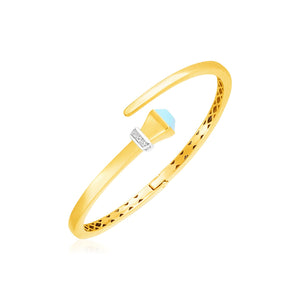
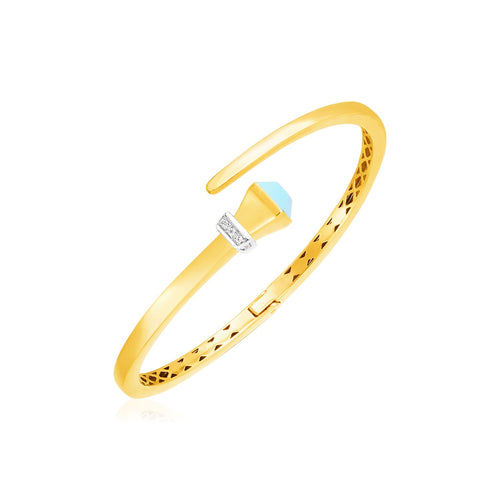 A fascinating pop of color from lovely turquoise and the subtle sparkle of diamonds are matched beautifully with 14k yellow...


