
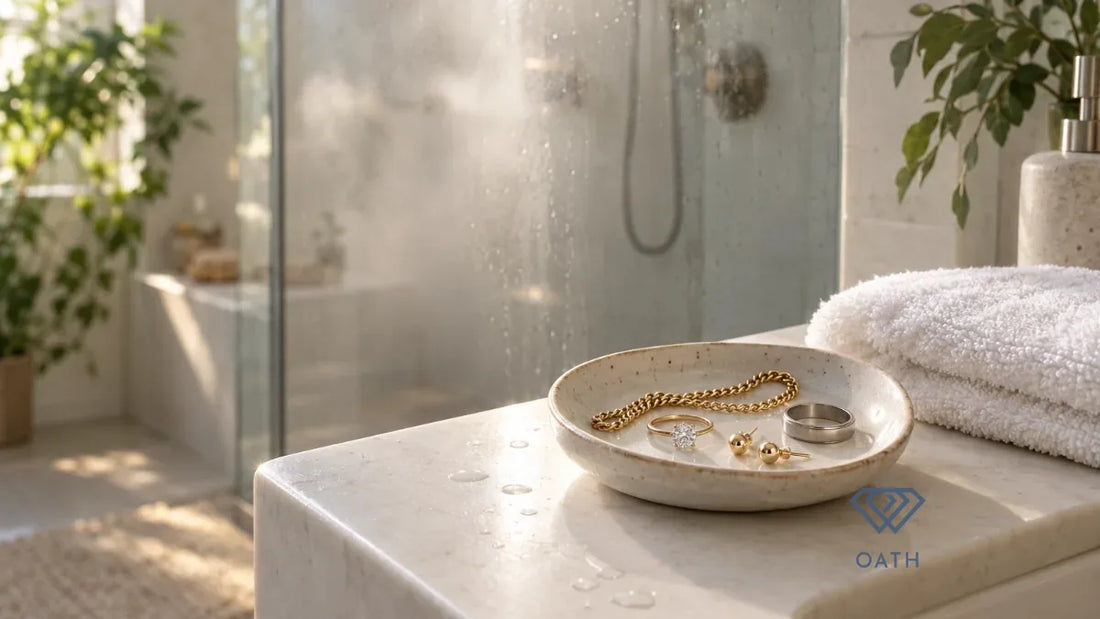
You can wear solid gold and platinum jewelry in the shower without harming the metal, but it is better to take most pieces off. Soap and shampoo leave a film that dulls diamonds and builds up in settings. Plated jewelry, sterling silver, pearls, opal, turquoise and emerald should always be removed before showering.
Jump to a section
The answerGold and platinumDiamond ringsAlways removePools and oceanWhat can stay onFAQTaking jewelry off every time you shower is a chore, so many people simply leave it on. For some pieces that is fine, and for others it slowly does real damage. This guide gives the honest answer for each metal and gemstone, so you know what can stay on and what should come off.
Can you wear fine jewelry in the shower?
You can shower in solid gold or platinum jewelry without damaging the metal, but it is still better to take most pieces off. Plain water does not harm solid precious metal. Soap, shampoo and conditioner, however, leave a film that dulls diamonds and builds up under settings, and plated jewelry, sterling silver, pearls and porous gemstones can all be damaged by regular showers.
A practical rule: simple solid gold or platinum studs, plain bands and sturdy chains can stay on if removing them is a hassle. Diamond rings, white gold, sterling silver and anything with a delicate stone are better taken off. Plated pieces, pearls, opal, turquoise and emerald should always come off.
Water
Does not harm solid gold or platinum
Soap
The film that dulls diamonds fastest
Pearls
Among the gems that should never be showered in
What happens to gold and platinum in the shower?
Solid gold and platinum are not damaged by water. Gold does not rust or corrode, and karat gold alloys handle daily contact with water for decades. Platinum is similarly unreactive. What does change is the surface: soap and shampoo leave a thin residue that slowly dulls the shine and collects in engraving, links and the back of settings.
Shower water usually contains only a small amount of chlorine, far less than a swimming pool or hot tub, so the shower is not the threat to gold alloys that pool water is. Hard water can leave mineral spots, which come off with a soft cloth. The guide does gold tarnish? explains why chlorine matters more than plain water.
The bigger risk for rings is losing them. Soap makes fingers slippery, and a ring that slides off in the shower can disappear down the drain in a moment. Taking rings off and placing them in the same dish outside the shower every time is the simplest protection.
Gold chains are a middle case. A solid gold chain is not harmed by water, but shampoo and conditioner collect between the links and around the clasp, and fine chains can tangle or catch on a loofah or hair. Sturdier styles such as curb, figaro and rope chains cope best if you prefer to leave a necklace on.
Should you shower with a diamond ring?
Showering will not harm a diamond, but it will dull it. Diamonds attract grease, and soap, body wash, shampoo and conditioner all leave residue that coats the underside of the stone. Light enters and leaves a diamond through its facets, so a film on the back of the stone makes it look flat and cloudy much sooner than if the ring were removed.
Conditioner and moisturizing body washes are the worst offenders, because they are designed to leave a coating. If you do shower with your ring on, rinse it well afterward and give it a proper clean each week. The guide to caring for diamond jewelry covers the full routine.
White gold settings deserve a mention too. Most white gold is rhodium plated, and while water does not affect the plating, the combination of soap, scrubbing and friction wears it a little faster. The guide how long rhodium plating lasts explains the signs of wear.
The Slippery Ring Problem
Soapy hands and warm water make rings slide off easily. If you shower with a ring on, keep the drain covered, and never take it off inside the shower where it can fall.
Which jewelry should always come off?
Plated and vermeil jewelry. Gold-plated, silver-plated and vermeil pieces have a thin precious-metal layer over another metal. Soap, friction and moisture wear that layer faster, and once it goes, the base metal can tarnish or leave a green mark on the skin. Gold-filled jewelry is more durable but still lasts longer kept dry. The guide to gold-filled, gold-plated and vermeil explains each construction.
Pearls. Pearls are soft and porous. Soap, shampoo and chemicals in water dull their luster, and the silk thread on a pearl strand weakens and stretches when wet. Pearls should go on last, after showering and styling, and come off first.
Porous and sensitive gemstones. Opal, turquoise, lapis, coral and many emeralds can absorb soap and oils or react badly to heat. Most emeralds are treated with oil or resin to improve clarity, and hot water and soap can draw it out. Opal can be sensitive to sudden temperature changes.
| Jewelry | Shower safe? | Main risk | Recommendation |
|---|---|---|---|
| Solid 14K or 18K gold | Yes | Soap film dulls the shine | Fine for plain pieces; rinse well |
| Platinum | Yes | Soap film | Fine; clean occasionally |
| Diamond rings | Mostly | Film under the stone; ring slipping off | Remove to keep sparkle |
| Rhodium-plated white gold | Mostly | Shampoo and friction wear plating | Remove when convenient |
| Sterling silver | With care | Faster tarnish from some products and water | Remove and dry fully |
| Gold-plated, vermeil, gold-filled | No | Plating wears faster | Remove every time |
| Pearls, opal, turquoise, emerald | No | Porous or sensitive to heat and soap | Remove every time |
Sterling silver. Water itself does not harm sterling, but some shampoos and some tap or well water contain sulfur compounds that speed tarnish, and silver left damp tarnishes faster. Remove it and dry it fully; the guide to cleaning silver jewelry covers how to restore it.
What about pools, hot tubs and the ocean?
Pools and hot tubs are far harder on jewelry than the shower. Pool water contains much more chlorine, which can pit and weaken gold alloys over time and attack solder joints, and hot tub heat speeds up the reaction. Remove all jewelry before swimming in a pool or using a hot tub.
The ocean brings different risks. Salt water and sand are abrasive, and cold water makes fingers shrink, so rings slip off easily. Rinse any jewelry exposed to the sea in fresh water and dry it, but the safest choice is to leave fine jewelry in your bag or hotel safe on beach days.
A simple routine
Take rings off before showering and keep them in a dish by the sink. Put jewelry on after lotion and hair products have dried, and remove everything before the pool, hot tub or beach.
What can you leave on?
Some pieces are practical to leave on. Small solid gold or platinum studs with secure backs, plain solid gold or platinum bands and sturdy solid gold chains handle showers well. Many people also keep new piercing studs in, as their piercer advises. Rinse these pieces well, dry them afterward and clean them every week or two so soap does not build up.
Check the backs and clasps on anything you wear constantly. Wet, soapy fingers loosen friction backs more easily, and a lost earring back often means a lost earring. Screwbacks and locking clasps are worth choosing for pieces you rarely take off. The complete fine jewelry care guide covers how to care for each type of piece.
"Fine jewelry should be removed before diving into a chlorinated swimming pool or before using household cleaners."
GIA, Tips on Caring for Jewelry
Gemological Institute of America, gia.edu
Further reading: GIA on keeping diamonds sparkling. GIA notes that diamonds are natural magnets for grease, which is why soap and shampoo film dulls a diamond ring worn in the shower.
In Short
1Water does not harm solid gold or platinum, but soap and shampoo film dulls diamonds and builds up in settings.
2Always remove plated jewelry, vermeil, pearls, opal, turquoise and emerald before showering.
3Remove everything before pools and hot tubs, where chlorine can damage gold alloys.
Want the full jewelry care reference?
The Oath jewelry guide covers metals, gemstones and everyday care in one place. We will email it to you.
Email Me the Guide →


Every order ships free with a 30-day return policy.
Solid gold and platinum can handle the shower, but most jewelry stays brighter and lasts longer when it comes off first. Keep a dish by the sink, put pieces back on after lotion dries, and save the delicate stones and plated pieces for dry moments. Every order ships free with a 30-day return policy.
Frequently Asked Questions
01
Can you shower with 14K gold?
14K gold can be worn in the shower without damaging the metal, because gold does not rust or corrode. Soap and shampoo will dull its shine over time, so rinse it well and clean it regularly, and remove it before pools and hot tubs.
02
Can you shower with sterling silver?
Sterling silver can get wet without harm, but showering with it is not ideal. Some shampoos and water supplies contain sulfur compounds that speed tarnish, and silver left damp tarnishes faster. Remove it and dry it fully if it does get wet.
03
Can you shower with a diamond ring?
A diamond ring will not be damaged by a shower, but soap, body wash and conditioner leave a film that dulls the diamond quickly. Rings can also slip off soapy fingers. Removing the ring keeps it brighter and safer.
04
Can you shower with gold-plated jewelry?
Gold-plated jewelry should not be worn in the shower. Soap, moisture and friction wear the thin gold layer faster, and once it wears through, the base metal underneath can tarnish or mark the skin.
05
Can pearls get wet?
Pearls can survive a splash, but they should not be worn in the shower. Soap and chemicals dull their luster, and the silk thread on a strand weakens when wet. Wipe pearls with a soft damp cloth after wearing and let them dry flat.
06
Is it okay to sleep and shower in the same earrings?
Small solid gold or platinum studs with secure backs can usually be worn through showers and sleep. Clean them every week or two so residue does not build up, and choose screwbacks for pieces you rarely remove.