
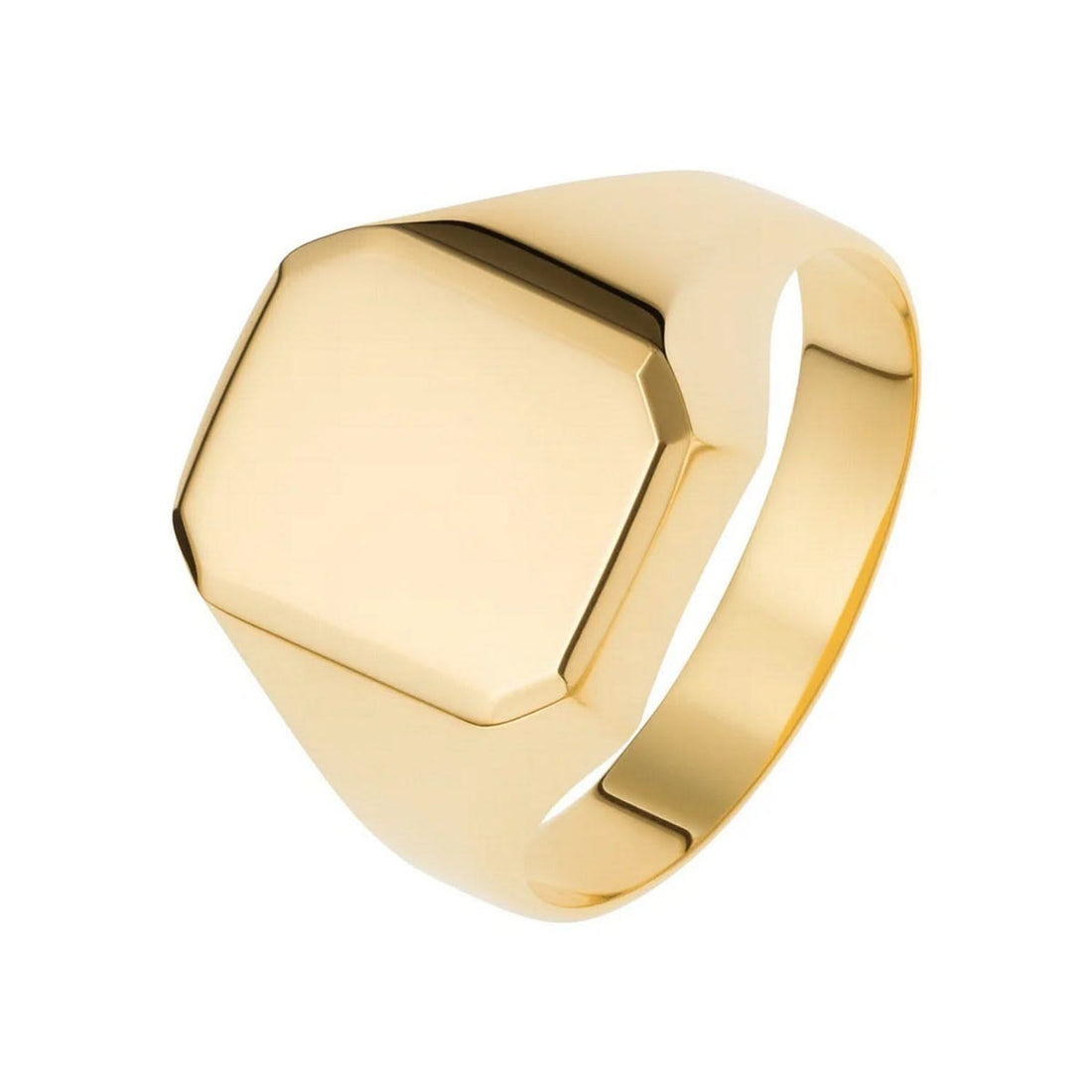
A signet ring is a flat-faced ring, traditionally engraved with initials, a monogram or a family crest so it could be pressed into wax as a personal seal. Today it is worn as a mark of identity and heritage, plain or engraved, usually on the little finger.
The signet ring is the oldest piece in the male wardrobe, and one of the few with a genuine function behind it. For centuries the engraved face was pressed into wax to seal a letter, standing in for a signature. Today the seal is symbolic, but the appeal is the same: a signet is a quiet, personal mark of identity. This guide covers where the signet comes from, the ways it can be engraved, how to choose one, and how to wear it.
A short history of the signet ring
c.1336 BC
Tutankhamun's gold signet ring (the Met)
Rome
Senators sealed documents with a signet
Crest
The medieval mark of a family
Pinky
The traditional finger for a signet today
The signet is among the oldest forms of jewelry still worn. The Metropolitan Museum of Art holds a gold signet ring engraved with the throne name of Tutankhamun, made around 1336 BC, and seals carved into stone go back further still in Mesopotamia. In each case the point was the same: a mark that only one person could make.
In Rome, senators and officials wore engraved signets as marks of office, pressing them into wax to authorise documents. Medieval European families took this further, cutting a coat of arms or crest into the face as both a legal seal and a sign of lineage; a signet was sometimes defaced when its owner died, so the seal could not be forged. The ring stayed a gentleman's staple through the Victorian era, and survives today as a piece worn for heritage and style rather than function.
Engraving options
The engraving is what gives a signet its meaning, and there are four common approaches. The face can also be left plain and engraved later.
| Engraving | What it is | Suits |
|---|---|---|
| Initials or monogram | One to three letters, often interwoven | A clean, personal mark |
| Family crest | A coat of arms or crest | Heritage and lineage |
| Intaglio | A design carved into a gemstone face | A traditional seal look |
| Plain | A polished, unengraved face | Engraving later, or a clean look |
Reverse or surface engraving
A true sealing signet is cut in reverse and in intaglio, so the wax impression reads the right way around. Many modern signets are engraved on the surface instead, for the look rather than for sealing, which keeps the design visible on the ring itself.
Choosing a signet ring
Three things shape the choice of a signet: the face, the metal and the fit. The face shape sets the character, and the classic is a vertical oval, with round, cushion and rectangular faces all common.
The classic signet face is a vertical oval, but round, cushion and rectangular faces are all common.
Gold is the traditional metal, and 14 karat gives a hard-wearing face that holds an engraving cleanly; the complete guide to gold jewelry covers the karats. The broad face can make a signet feel different on the finger, so a comfort-fit band helps; the guide to finding your ring size walks through measuring at home.
Good to Know
Leave room to engrave. A plain signet can be personalised later, so choose a face large enough for the initials, monogram or crest you might want, rather than the smallest one available.
How to wear a signet ring
The signet has a traditional home: the little finger, or pinky, of the non-dominant hand, where it sits clear of a wedding band. The face is worn upright so any engraving reads the right way, and a plain signet also works on the ring finger when worn alone.
A signet looks best as the focus rather than one of many rings, paired at most with a simple band. Keeping the metal consistent with any chain or bracelet ties the look together; the men's fine jewelry guide and the men's ring guide cover wearing a signet alongside other pieces.
Caring for a signet ring
The flat face is the part to look after, since it catches the light and the wear. A harder metal such as 14 karat gold keeps an engraving crisp for longer, and an occasional gentle polish restores the shine on a plain face.
Clean a signet every few weeks with warm water, a drop of mild soap and a soft brush to lift any dirt from the engraving, then dry it fully and store it apart from harder pieces. The fine jewelry care guide sets out a routine for each metal.
The signet ring was used as long ago as 3500 BC.
The History Press
Further reading: Encyclopaedia Britannica. The signet ring is one of the oldest forms of ring, worn as a personal seal pressed into wax to authenticate documents and mark identity.
In Short
1A signet ring is a flat-faced ring once used to seal documents in wax, now worn as a personal mark of identity.
2The face can carry initials, a monogram, a family crest or an intaglio seal, or be left plain to engrave later.
3A signet is traditionally worn on the pinky of the non-dominant hand, in a hard-wearing metal such as 14 karat gold.
Thinking about a signet?
Our fine jewelry guide covers ring types, metals and fit in plain language, so you can choose a signet with confidence. We will email it to you.
Email Me the Guide →


Every order ships free with a 30-day return policy.
A signet ring carries more meaning than almost any other piece a man can wear, which is what has kept it on hands for thousands of years. Choose a face shape and metal you like, engrave it or leave it plain, and it becomes a quiet signature you keep for life. Every order ships free with a 30-day return policy.
Frequently Asked Questions
01
What is a signet ring?
A signet ring is a flat-faced ring traditionally engraved with initials, a monogram or a family crest, originally so it could be pressed into wax as a personal seal. Today it is worn plain or engraved as a mark of identity.
02
What can you engrave on a signet ring?
A signet ring can be engraved with initials or an interwoven monogram, a family crest or coat of arms, or an intaglio design carved into a gemstone face. Many are also left plain and polished, ready to engrave later.
03
Which finger do you wear a signet ring on?
A signet ring is traditionally worn on the little finger, or pinky, of the non-dominant hand, which keeps it clear of a wedding band. Some men wear a plain signet on the ring finger instead.
04
What metal is best for a signet ring?
Gold is the classic and most popular metal for a signet, with 14 karat giving a hard-wearing face that holds an engraving well; the complete guide to gold jewelry covers the karats. Sterling silver is a brighter, softer alternative.
05
How do you choose a signet ring size?
A signet ring is sized like any ring, measured at the end of the day when fingers are largest, though the broad face can make a snug fit feel tighter. The guide to finding your ring size walks through measuring at home.
06
Is a signet ring only for men with a family crest?
A signet ring is not only for those with a family crest; many are engraved with simple initials or a monogram, or worn plain. The men's ring guide covers how the signet fits among the other ring styles, and the history of the signet ring covers where the tradition began.