
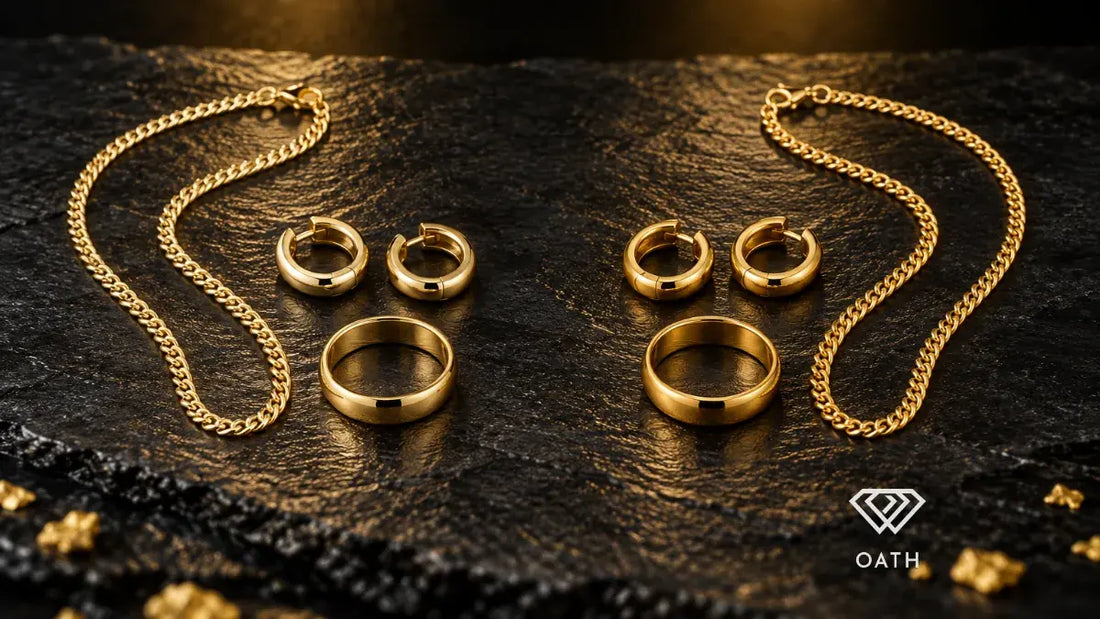
14K gold is 58.5% pure gold and 18K gold is 75% pure gold. 14K is harder and more scratch resistant, which suits rings and chains worn every day. 18K has a richer color, more weight and less alloy metal, which suits earrings, pendants and sensitive skin.
Jump to a section
The differenceDurabilityColor and weightSensitive skinOther karatsWhich to chooseCareFAQIf you are choosing between 14K and 18K gold, the question is really which trade-off you prefer: more durability or more gold. This guide explains exactly what the numbers mean, how each karat wears, looks and feels, and which one suits each kind of piece, so you can choose with confidence rather than by price tag alone.
What is the difference between 14K and 18K gold?
The difference is the share of pure gold. Karat measures gold content in twenty-fourths: 24K is pure gold, 18K is 18 parts gold out of 24, and 14K is 14 parts out of 24. The remaining parts are other metals, usually silver, copper, zinc or palladium, blended in to make the gold harder and to set its color.
That single number drives every practical difference that follows. More gold means a richer color and a softer metal. More alloy means a harder, more durable metal with a slightly paler tone. Neither is better in the abstract; each suits a different kind of piece and a different way of wearing it.
58.5%
Gold in 14K, stamped 585 inside the piece
75%
Gold in 18K, stamped 750 inside the piece
24K
Pure gold, usually too soft for fine jewelry
Which is more durable, 14K or 18K?
14K is the more durable of the two. Pure gold is soft enough to dent with a fingernail, and the alloy metals in 14K make it noticeably harder, so it resists scratches, dents and the gradual thinning of a ring shank better than 18K. For a ring worn every day, or a thin chain that catches on clothing, that extra hardness is the deciding factor for most people.
18K is still a durable fine jewelry metal; it simply shows wear sooner on surfaces that take knocks. On earrings and pendants, which rarely touch anything hard, the difference is negligible. On a ring worn through years of desks, steering wheels and gym sessions, the softer metal will show more fine scratches and may need prongs checked more often.
Before You Choose
Prong settings deserve extra thought. Thin 18K prongs can wear faster than 14K ones, so on a ring with a valuable center stone, have a jeweler check the prongs once a year whichever karat you choose.
Does 18K gold look different from 14K?
Yes, side by side. 18K yellow gold has a deeper, warmer, more saturated yellow because there is less alloy diluting the color. 14K yellow gold is a little lighter and slightly cooler. Seen alone, most people cannot name the karat by eye, but next to each other the 18K piece reads richer.
The difference largely disappears in white gold, because most white gold is rhodium plated, which gives both karats the same bright white surface. In rose gold, the copper content controls the pink, so the two karats can look closer than in yellow. The guide to rose, yellow and white gold explains how each color is made.
Weight is the other difference you can feel. Gold is dense, and 18K contains more of it, so an 18K chain or ring sits noticeably heavier than the same design in 14K. Some people read that weight as quality; others prefer a lighter piece for everyday comfort.
Which karat is better for sensitive skin?
18K is the safer choice for most people with sensitive skin, because it contains less alloy metal. Reactions to gold jewelry are usually caused by the other metals in the alloy, most often nickel, rather than by gold itself.
The metal mix matters as much as the karat. Many white gold alloys today use palladium instead of nickel, and those are well tolerated even at 14K. If someone has a known nickel sensitivity, ask for nickel-free white gold, or choose yellow gold, which rarely contains nickel. The precious metals comparison covers how gold, silver, platinum and palladium compare for sensitive skin.
How do 10K and 22K compare?
14K and 18K sit in the middle of the range. 10K gold is 41.7% gold, the lowest karat most US fine jewelers sell. It is the hardest and most affordable of the common karats, with a paler yellow and the most alloy metal, which makes it the least suitable for sensitive skin. It suits pieces that take real punishment, such as a class ring or a work band.
22K gold is 91.6% gold and is traditional across South Asia and the Middle East, where jewelry is often valued by its gold content. It has a deep, saturated yellow but is soft enough to bend and scratch easily, so it is rarely used for prong-set stones or everyday rings in Western fine jewelry. 24K is pure gold and is mostly reserved for bullion, coins and ceremonial pieces.
For most fine jewelry, the practical choice narrows to 14K or 18K: enough gold to look and feel precious, and enough alloy to survive being worn.
14K vs 18K: which should you choose?
Choose 14K for pieces that work hard and 18K for pieces you want to look and feel their richest. The table below is the shortcut.
| Factor | 14K gold | 18K gold |
|---|---|---|
| Gold content | 58.5% gold (stamped 585) | 75% gold (stamped 750) |
| Hardness | Harder; resists scratches and dents better | Softer; shows wear sooner on rings and bracelets |
| Color | Slightly paler yellow | Deeper, warmer yellow |
| Weight | Lighter for the same piece | Noticeably heavier in the hand |
| Skin sensitivity | More alloy metal, so higher risk for sensitive skin | Less alloy metal, so lower risk |
| Best for | Daily-wear rings, thin chains, active hands | Earrings, pendants, occasional rings, heirloom pieces |
For an engagement ring or wedding band worn every day, 14K is the practical default in the United States and is what most fine jewelers recommend for active hands. For earrings, pendants and a special-occasion ring, 18K gives a deeper color and a heavier feel that many people prefer. If someone already owns several gold pieces, match the karat and color they wear most so new pieces sit naturally beside the old ones.
Whatever the karat, the stamp inside the piece should match the description. US rules require karat gold to be marked with its true karat, and a piece described simply as gold is understood to mean 24K. The complete guide to gold jewelry covers karat marks, colors and care in more detail.
How do you care for 14K and 18K gold?
Both karats clean the same way: warm water, a drop of mild dish soap, a soft brush, then a thorough rinse and dry with a lint-free cloth. Avoid chlorine, which attacks the alloy metals, and store pieces separately so harder stones and chains do not scratch softer gold.
18K benefits from a little more caution with daily knocks, and white gold of either karat will eventually need its rhodium plating renewed. The step-by-step method is in the guide to cleaning gold jewelry safely, and the fine jewelry care guide covers storage and travel.
"24 carat is pure gold with no other metals."
World Gold Council, About Gold Jewellery
Further reading: National Jeweler on the FTC Jewelry Guides. The World Gold Council notes that most 14 carat jewelry is stamped 585, and US rules require karat gold to disclose its karat.
In Short
114K is 58.5% gold and 18K is 75% gold; the rest is alloy metal that adds hardness and sets the color.
214K is harder and better for rings and chains worn every day; 18K is richer in color, heavier and gentler on sensitive skin.
3Match the karat to how the piece will be worn, and to the karat of the gold the wearer already owns.
Want the full metals reference?
The Oath jewelry guide covers karats, metal colors, care and which metals suit sensitive skin in one place. We will email it to you.
Email Me the Guide →


Every order ships free with a 30-day return policy.
Choose 14K where durability matters and 18K where color and weight matter, and check the 585 or 750 stamp inside every piece. Every order ships free with a 30-day return policy.
Frequently Asked Questions
01
Is 14K or 18K gold better?
14K gold is better for pieces worn every day, such as engagement rings, wedding bands and thin chains, because it is harder and more scratch resistant. 18K gold is better for earrings, pendants and occasional pieces, where its deeper color and greater gold content show and durability matters less.
02
Is 18K gold worth it over 14K?
18K gold is worth choosing when color, weight and lower alloy content matter more than maximum durability. It contains more gold, so it costs more by weight, and it shows wear sooner on rings. For a piece that will be worn hard every day, 14K usually gives the better result.
03
Can you tell 14K from 18K by looking?
14K and 18K can be told apart side by side, where 18K looks a deeper, warmer yellow. On their own they are hard to tell apart by eye. The reliable check is the fineness stamp inside the piece: 585 or 14K for 14 karat and 750 or 18K for 18 karat.
04
Does 14K gold tarnish?
14K gold does not tarnish in normal wear, although the alloy metals can dull slightly with exposure to chlorine, sulfur or harsh cleaners. A gentle clean with warm soapy water restores the shine. Pure gold itself does not tarnish.
05
Which karat is best for an engagement ring?
14K gold is the most common karat for engagement rings in the United States because it holds up best to daily wear and holds prongs securely. 18K is a good choice for someone who wants a richer color and is careful with their hands. Platinum is the other main option for a white metal ring.
06
What do 585 and 750 mean on gold jewelry?
585 and 750 are fineness marks showing gold content in parts per thousand. 585 means 58.5% gold, which is 14 karat. 750 means 75% gold, which is 18 karat. The guide to the 925 stamp explains how silver is marked the same way.