
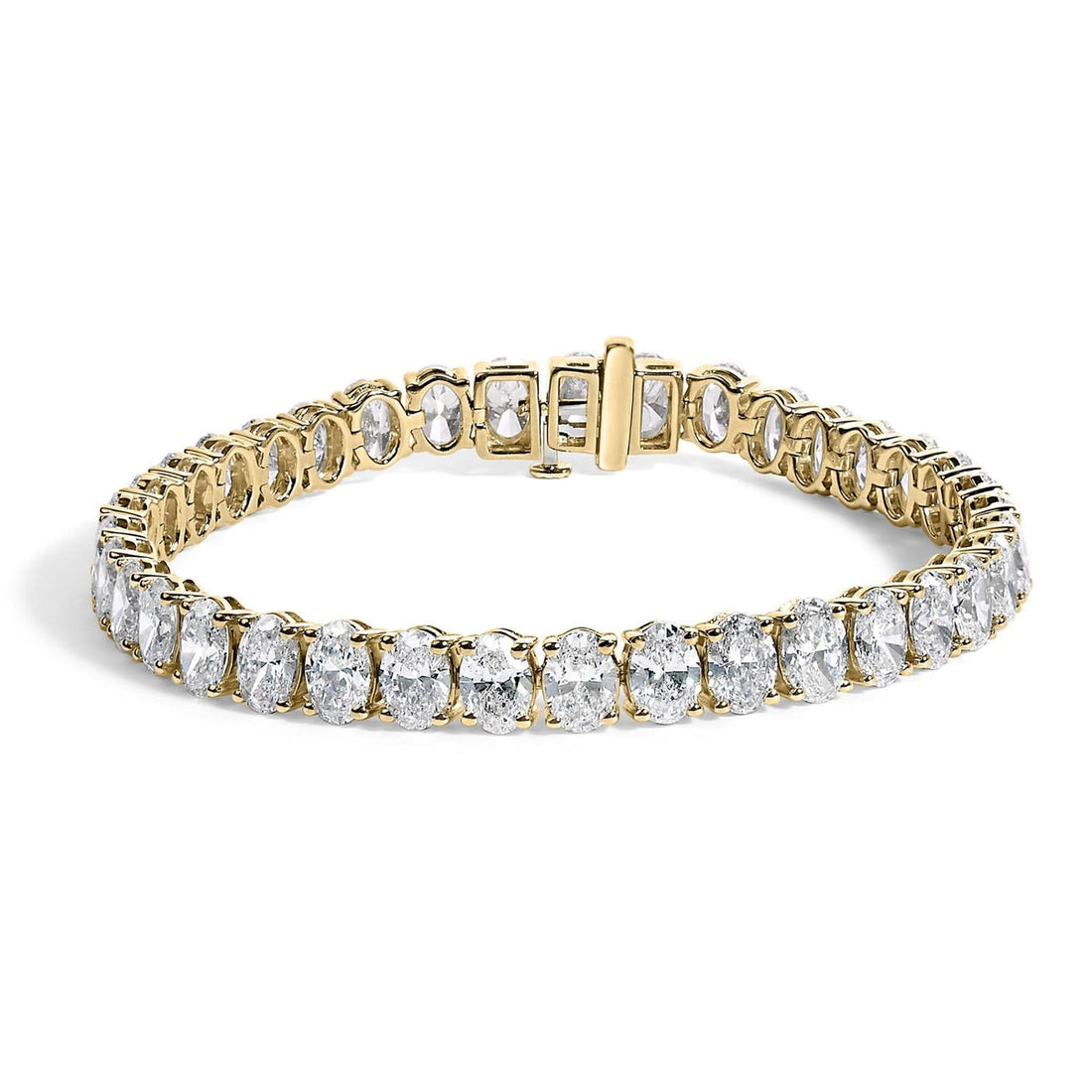
Gold is a naturally occurring precious metal valued for its warm color, rarity, and resistance to tarnish. Pure 24K gold is too soft for everyday jewelry, so it is alloyed into 10K, 14K, or 18K for strength. Karat measures the gold content; the alloy metals set the color.
Metal
Gold
Durability
Rises with alloy
Purity
10K to 24K
Color
Warm
Everyday wear
Excellent at 14K
Hypoallergenic
Usually
Few materials carry the weight that gold does. It has been money, ornament, and symbol across nearly every culture on earth, and it remains the metal most people picture when they imagine fine jewelry. Yet the word gold on a tag hides a surprising amount of detail: how much gold is actually in the piece, what gives it its color, and how it will hold up to a lifetime of wear. This guide answers all of it, plainly, so you can buy gold with the confidence of someone who knows exactly what they are choosing.
What gold actually is
Gold is a chemical element (symbol Au) and one of the few metals that occurs in nature in its pure, ready-to-use form. It is dense, highly malleable, and chemically stable, which is why a gold coin pulled from a shipwreck still gleams after centuries. That same stability is what makes gold the foundation of fine jewelry.
Pure gold is 24 karat, meaning 24 out of 24 parts are gold. The catch is that pure gold is genuinely soft; a 24K ring would bend, scratch, and lose its shape with normal wear. To make gold wearable, refiners blend it with stronger metals such as copper, silver, zinc, and palladium. That blend is an alloy, and the proportion of pure gold in it is what the karat number measures.
Karat is sometimes confused with carat, the unit for gemstone weight. They sound identical but mean different things. The simplest way to read a piece of gold jewelry is to find its karat stamp, then translate it into a percentage of pure gold. The chart below does exactly that. For how gold stacks up against other metals, the precious metals comparison is the place to start.
Karat by karat: how much gold you are really getting
Pure gold content rises with karat; the remainder is alloy metal that adds strength and color. Source figures: World Gold Council.
58.3%
Gold in 14K, the most popular karat in the US
10K
Legal minimum to be called gold in the US
2.5-3
Mohs hardness of pure gold before alloying
Each karat is a trade-off between purity and toughness. Higher karat means more gold and a deeper color, but a softer metal that marks more easily. Lower karat means more alloy, which adds scratch resistance and a slightly paler hue. There is no single best karat; there is only the best karat for how you live.
| Karat | Pure gold | Fineness | Best suited to | Trade-off |
|---|---|---|---|---|
10K
|
41.7% | .417 | Active daily wear | Palest color, most alloy |
14K
|
58.3% | .585 | Everyday rings and chains | The all-round default |
18K
|
75% | .750 | Heirloom and statement pieces | Softer; shows wear sooner |
22K
|
91.7% | .917 | Traditional high-purity gold | Quite soft for rings |
24K
|
99.9% | .999 | Collecting and gifting, rarely worn daily | Too soft for most jewelry |
Before You Choose
If a piece will see hard daily contact, like a wedding band or a bracelet, 14K is usually the wiser choice than 18K. The higher alloy content holds detail and resists dents better, which matters more over decades than a marginal difference in warmth of color.
Yellow, white, and rose: where gold color comes from
Gold's natural color is yellow, but the alloy metals can shift it. Yellow gold keeps copper and silver in balance to preserve the classic warm tone. White gold replaces those with white metals such as palladium, then usually adds a rhodium plating for a bright, cool finish. Rose gold leans on copper, whose red tone gives the metal its soft pink complexion.
The karat is independent of the color: you can buy 14K in yellow, white, or rose, and each contains the same 58.3 percent pure gold. The difference is entirely in the alloy recipe. When you are deciding which tone flatters your skin and wardrobe, the guide to styling fine jewelry walks through mixing metals and matching tones to outfits.
Each gold color has its own complete guide if you want to go further: the yellow gold guide, the white gold guide, and the rose gold guide.
Durability and everyday wear
Solid gold is built to last, but durability depends on karat and construction more than on the word gold alone. Pure gold sits around 2.5 to 3 on the Mohs hardness scale, which is soft; alloying lifts the working hardness considerably, and 10K and 14K resist scratching noticeably better than 18K or 22K. For rings and bracelets that take daily knocks, that difference is felt over years of wear.
The more important durability fact is what solid gold does not do: it does not flake, peel, or wear away to reveal a different metal underneath. That is the failure mode of plated jewelry, where a thin gold layer eventually rubs off a base-metal core. Solid gold is the same material all the way through, so a scratch is just a scratch, polished out rather than a sign the finish is failing.
Caring for gold jewelry
Caring for gold is refreshingly simple because the gold itself is so stable. Warm water, a few drops of mild dish soap, and a soft brush lift away the oils, lotion, and dust that dull a piece. Rinse, then dry with a soft lint-free cloth. That gentle routine, done every week or two, keeps gold bright without any special products.
A few things shorten a piece's life: chlorine in pools and hot tubs can weaken gold alloys over time, and abrasive cleaners or toothpaste leave micro-scratches. Take rings off before swimming, cleaning, or heavy lifting. For a full walk-through with photos, the step-by-step guide to cleaning gold jewelry covers each step and what to avoid.
Care Note
Store gold pieces separately, ideally in soft pouches or a lined box. Gold is soft enough that harder gemstones, and even other gold pieces, can scratch it when they jostle together in a drawer.
How gold compares to other metals
Gold's closest alternatives in fine jewelry are sterling silver and white metals like platinum. Against sterling silver, gold wins on stability: silver tarnishes and needs regular polishing, while solid gold essentially does not. Silver is bright and beautiful in its own right, but it asks for more upkeep.
Against platinum, the comparison is subtler. Platinum is denser, naturally white, and prized for bridal pieces, but it is also heavier. White gold delivers a similar cool-white look, with the trade-off of occasional rhodium re-plating. Yellow and rose gold have no real equivalent in the white metals; their warmth is unique to the gold alloy itself.
Where gold truly separates itself is permanence of color and freedom from routine upkeep. A solid gold piece asks for almost nothing beyond an occasional wash, while silver needs polishing and platinum benefits from the odd re-shine. The full side-by-side, including silver and palladium, lives in the precious metals comparison.
Which gold is right for you
Choosing gold comes down to three questions: how the piece will be worn, which color suits you, and how the karat fits your priorities. For a ring or bracelet in daily rotation, 14K in any color is the dependable default; it holds up, holds its color, and holds detail. For a special-occasion piece or a future heirloom, 18K rewards you with a richer, deeper tone.
If you are buying gold for the first time, or buying it as a gift, the broader decision-making framework in the fine jewelry buying guide helps you weigh quality, setting, and value together. Once you have settled on color and karat, the rest is simply finding a piece you love.
"A gold karat is 1/24 part, or 4.1667 percent, of the whole."
Encyclopaedia Britannica
Further reading: World Gold Council, Gold Jewellery. Both are long-standing references for precious-metal purity and standards.
In Short
1Karat measures pure gold content: 10K is 41.7 percent, 14K is 58.3 percent, 18K is 75 percent, and 24K is 99.9 percent.
214K is the everyday default because it balances warm color with the strength to resist daily wear; 18K offers a richer tone for special pieces.
3Solid gold resists tarnish and never wears through to another metal, so a simple warm-water-and-soap routine keeps it looking new for life.
Want the printable gold karat and care cheat sheet?
A one-page reference to karats, colors, and the simple routine that keeps gold bright. We will email it to you.
Email Me the Guide →


Every order ships free with a 30-day return policy.
Gold rewards the buyer who understands it. Match the karat to your life, pick the color that feels like you, and a solid gold piece will look as good in thirty years as it does the day it arrives. Every order ships free with a 30-day return policy.
Frequently Asked Questions
01
What karat of gold is best for everyday jewelry?
14K gold is the best all-round choice for daily wear. Its 58.3 percent gold content keeps a warm, unmistakably gold color while the alloy adds enough hardness to resist the scratches and knocks of everyday life. 18K is wonderful for pieces worn less roughly, where its richer tone can shine.
02
Does solid gold tarnish?
Pure gold does not tarnish, rust, or corrode under normal conditions, which is one of its most prized properties. Lower-karat alloys contain more copper and silver and can show very faint surface dulling over years of exposure to sweat and chemicals, but a quick clean restores them; this is nothing like the flaking of plated jewelry.
03
Is higher karat gold always better?
Higher karat gold contains more pure gold and gives a deeper color, but it is also softer and shows wear sooner. Lower karat gold is more durable against daily knocks. Better depends entirely on the piece and how hard it will be worn, not on the karat number alone.
04
What is the difference between solid gold and gold plated?
Solid gold is gold alloy throughout the entire piece, so it never wears through to another metal. Gold plated jewelry is a thin gold layer over a base-metal core that rubs off over time. The full breakdown of metal types sits in the precious metals comparison.
05
How do I keep gold jewelry looking new?
Gold stays bright with a gentle wash in warm water and mild dish soap every week or two, followed by a soft-cloth dry. Avoid chlorine and abrasive cleaners. The step-by-step guide to cleaning gold jewelry shows the full routine with the products to use and avoid.
06
Can you wear gold in the shower?
Gold itself is fine in water, but the shower is not ideal for gold jewelry. Soap and shampoo leave a film that dulls the shine, and chlorinated or hard water can affect lower-karat alloys over time. Removing gold before showering keeps it brilliant and avoids buildup in detailed settings.
07
What do the numbers stamped inside gold jewelry mean?
Gold is stamped with its karat or fineness, so 14K and .585 both mean 58.3 percent pure gold, 18K and .750 mean 75 percent, and 10K and .417 mean 41.7 percent. A stamp reading 925 is sterling silver, not gold. The mark is a quick way to confirm what you are buying.
08
Which gold color is best for sensitive skin?
Higher-karat yellow and rose gold tend to be gentler because they contain more pure gold and less alloy. Rose gold relies on copper, which a small number of people react to, while white gold can contain nickel unless it is labeled nickel-free. If your skin is reactive, choose 18K or a confirmed nickel-free white gold.
09
Can you wear different colors of gold together?
Yes. Mixing yellow, white, and rose gold is a deliberate and timeless look, and stacking rings or layering chains in different tones reads as intentional rather than mismatched. The guide to styling fine jewelry covers how to balance the tones.
10
What everyday habits are hardest on gold jewelry?
Chlorine from pools and hot tubs can weaken gold alloys, abrasive cleaners and toothpaste leave fine scratches, and hard impacts can bend thin or high-karat pieces. Taking rings off before swimming, cleaning, and the gym keeps gold looking its best for far longer.